

Building Your Preschooler's First Library: A Digital Age Reading List
Look, I get it. Your preschooler can navigate an iPad better than you can work the TV remote. They're growing up in a world where Siri answers their questions and YouTube has unlimited Bluey clips. So why are we talking about physical books?
Because here's the thing: reading actual books with your preschooler is one of the few parenting strategies that literally every piece of research agrees on. It builds vocabulary, attention span, emotional intelligence, and bonding time that no app can replicate. Even the best educational apps (and yes, some are genuinely good) can't replace the experience of cuddling up with a book and talking about what's happening on the page.
Plus, in an age where your kid will spend plenty of time looking at screens, books offer something genuinely different: no notifications, no autoplay, no ads for toy unboxing videos. Just you, them, and a story.
Before we dive into the list, let's talk about what actually works for ages 3-5:
Repetition and rhythm - Preschoolers love predictable patterns. It helps them feel smart when they can "read" along or predict what comes next.
Clear, expressive illustrations - At this age, kids are "reading" the pictures as much as listening to words. Good illustrations tell their own story.
Relatable emotions and situations - Books that help kids process big feelings (fear, anger, excitement, jealousy) are worth their weight in gold.
Not too long - If a book takes more than 5-10 minutes to read, it's probably not hitting the sweet spot for most preschoolers' attention spans.
For Building Vocabulary and Language
"Brown Bear, Brown Bear, What Do You See?" by Bill Martin Jr. and Eric Carle
The ultimate repetitive text book. Your kid will memorize this one, and that's exactly the point. The rhythm makes it perfect for early readers, and the bold illustrations are iconic for a reason.
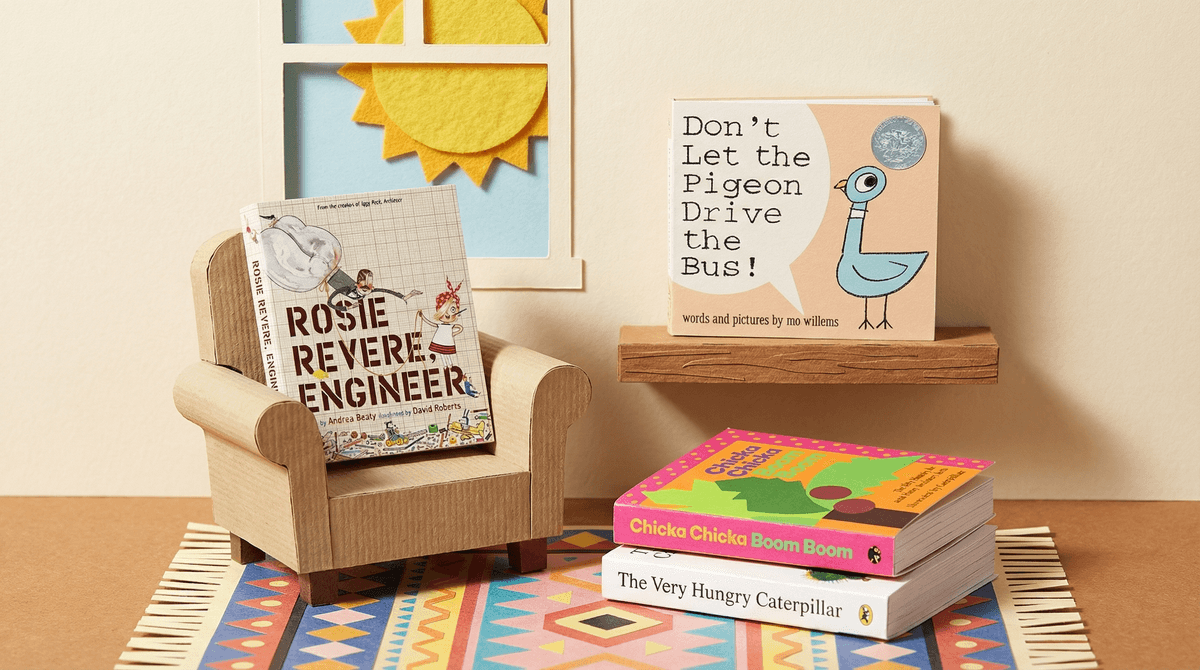
"Chicka Chicka Boom Boom" by Bill Martin Jr. and John Archambault
Alphabet books can be boring. This one is not. The rhythmic text makes letters feel like characters in an adventure, and kids genuinely ask to read it again and again.
"The Snowy Day" by Ezra Jack Keats
Simple, beautiful language that describes childhood wonder perfectly. Plus, it's one of the first major picture books to feature a Black protagonist, which was groundbreaking in 1962 and remains important today.
For Emotional Intelligence
"The Feelings Book" by Todd Parr
Todd Parr's bold, simple illustrations make this perfect for talking about emotions without getting preachy. "Sometimes I feel silly. Sometimes I feel brave." It validates all feelings as normal.
"Llama Llama Red Pajama" by Anna Dewdney
Separation anxiety is REAL for preschoolers, and Llama Llama captures that panicky feeling of being alone at bedtime. The rhyming text makes it fun to read even when you're exhausted.
"When Sophie Gets Angry - Really, Really Angry" by Molly Bang
This book shows a kid having a complete meltdown and then self-regulating by taking space. It's basically a manual for emotional regulation disguised as a picture book.
For Pure Joy and Silliness
"Don't Let the Pigeon Drive the Bus!" by Mo Willems
Mo Willems understands preschooler humor. The pigeon's increasingly desperate pleas are hilarious, and kids love being the authority figure who gets to say no.
"Press Here" by Hervé Tullet
This interactive book has no story, just instructions to press dots, shake the book, tilt it. It feels like magic to preschoolers and proves that physical books can be interactive without batteries.
"We Don't Eat Our Classmates" by Ryan T. Higgins
A T-Rex goes to school and has to learn not to eat her classmates. It's absurd, funny, and actually teaches empathy and friendship. My kind of book.
For Representation and Inclusion
"Last Stop on Market Street" by Matt de la Peña
A boy and his grandmother ride the bus through the city. It's about finding beauty in everyday life, and it features a diverse urban setting that many kids will recognize.
"Julián Is a Mermaid" by Jessica Love
A boy sees women dressed as mermaids and wants to be one too. His grandmother helps him create a mermaid costume. It's joyful, affirming, and the illustrations are stunning. Some families might have questions about gender expression, but this book handles it with such lightness and love that it's just a story about a kid being creative and a grandma who supports him.
"Hair Love" by Matthew A. Cherry
A Black father learns to do his daughter's hair. It's a sweet story about love and trying hard at something new, and it centers Black hair culture in a way that feels natural and important.
For Bedtime
"Goodnight, Goodnight, Construction Site" by Sherri Duskey Rinker
Trucks going to sleep. That's it. That's the book. And it WORKS. The rhyming text is soothing, and vehicle-obsessed kids love it.
"The Going to Bed Book" by Sandra Boynton
Sandra Boynton books are preschool gold. This one has animals on a boat doing their bedtime routine, and the silly illustrations make the mundane feel fun.
For Early STEM Thinking
"Rosie Revere, Engineer" by Andrea Beaty
A girl who loves to build things faces failure and learns to keep trying. It's about creativity, persistence, and not being afraid to fail. The rhyming text makes it fun to read aloud.
"The Very Hungry Caterpillar" by Eric Carle
A classic for a reason. It teaches days of the week, counting, and the butterfly life cycle while telling a simple story. The die-cut pages make it tactile and engaging.
Here's my take: e-books are fine as a supplement, not a replacement.
There's research showing that parents talk less and kids comprehend less when reading e-books compared to physical books. The interactivity can be distracting rather than helpful. That said, e-books on a tablet can be great for car trips or waiting rooms when carrying physical books isn't practical.
If you do use book apps, look for ones that:
- Let you turn off the "read to me" feature so you can read together
- Don't have games or activities that interrupt the story
- Don't have ads or links to other content
Epic! is a popular digital library for kids that has thousands of books, and it can be a good option if you use it intentionally. Just be aware that unlimited access can lead to mindless swiping rather than engaged reading.
Having great books doesn't matter if you're not reading them. Here's what actually works:
Make it part of the routine - Before bed, after lunch, whenever. Consistency matters more than duration.
Let them choose - Even if they pick the same book seventeen nights in a row. Repetition is how they learn.
Talk about the pictures - Don't just read the words. Ask questions. Point things out. Let them tell you what they see.
Don't force it - Some days they won't want to sit still. That's fine. Try again tomorrow.
Model reading - If they never see you read for pleasure, they're learning that books are just for kids.
Your preschooler is going to encounter plenty of screens in their life. YouTube Kids, PBS Kids, Minecraft - they're all coming. And some of that media is genuinely good! But books offer something different: focused attention, rich language, and connection time that doesn't involve a screen.
You don't need every book on this list. Start with a few that match your kid's interests. Visit your library (they usually have amazing preschool sections). Ask other parents what their kids love. Trade books with friends.
The goal isn't to create a perfect literary preschooler. The goal is to build positive associations with reading so that when they're old enough to choose between a book and Roblox, books feel like a genuinely appealing option at least some of the time.
That's not too much to ask, right?
Want more guidance on building healthy media habits for young kids? Check out our guide on screen time for preschoolers or explore alternatives to YouTube for young kids.
And if you're wondering how to balance physical books with the inevitable requests for tablet time, we can help you think through that too .
.