

The Best Nonfiction Books That Actually Keep Kids Reading
Look, we all want our kids to read more. But here's the thing: when we think "reading," we often default to fiction. Chapter books. Novels. Stories with characters and plots. And while fiction is great, nonfiction is where a lot of kids actually light up—especially the ones who claim they "don't like reading."
You know that kid who will spend 45 minutes reading Minecraft wiki pages but won't touch a novel? Or the one who memorizes dinosaur facts but zones out during story time? That's your nonfiction reader. And honestly, we should be celebrating that instead of trying to force them into fiction.
Nonfiction builds critical thinking, expands vocabulary in context, teaches research skills, and—here's the kicker—it's actually what most adults read. When's the last time you picked up a novel versus a news article, a how-to guide, or a biography?
Kids are naturally curious. They want to know how things work, why things happen, and what's real in the world. Nonfiction feeds that curiosity directly. No waiting for the plot to develop—just straight to the good stuff.
Plus, nonfiction readers develop different skills than fiction readers: they learn to navigate text features (indexes, glossaries, diagrams), evaluate sources, distinguish fact from opinion, and synthesize information across multiple texts. These are the exact skills they'll need for every research paper, college essay, and adult decision they'll ever make.
And let's be real: some kids just prefer facts to feelings. That's not a deficit. That's a reading preference, and we should honor it.
Here's the thing about nonfiction for kids: it needs to be visually engaging, well-organized, and—this is critical—not condescending. Kids can smell dumbed-down content from a mile away.
Ages 5-8: Building Curiosity
At this age, nonfiction should be heavily illustrated with clear, simple text. Look for books that answer the "why" and "how" questions kids are constantly asking.
-
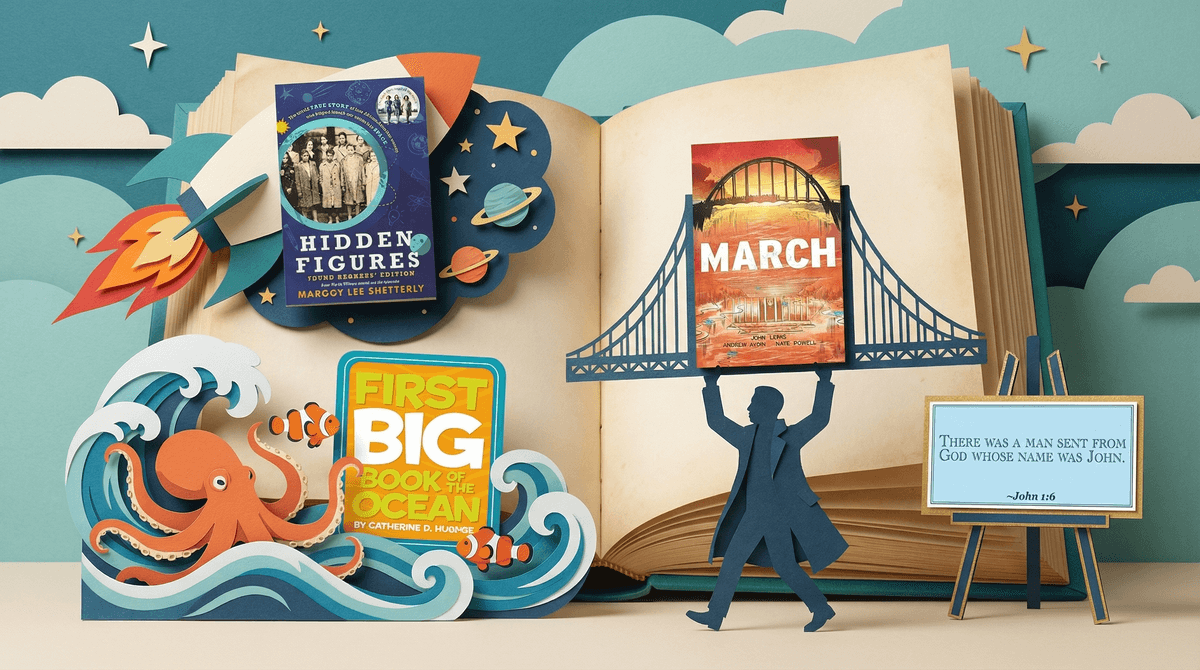
National Geographic Little Kids First Big Book series - These are gorgeous, photo-heavy books on everything from animals to space. The pictures do a lot of the heavy lifting, which is perfect for early readers.
-
Who Would Win? series by Jerry Pallotta - Okay, these are kind of ridiculous (Killer Whale vs. Great White Shark, anyone?), but kids are OBSESSED. They compare two animals across various metrics and then imagine a battle. It's engaging, fact-filled, and gets kids comparing and contrasting—a key reading skill.
-
Actual Size by Steve Jenkins - This book shows animals (or parts of them) in their actual size. A gorilla's hand. A giant squid's eye. It's stunning and makes abstract concepts concrete for little kids.
Ages 8-11: Feeding the Deep Dive
This is the age where kids start to develop specific interests and want to go deep. They're ready for more text, more complex ideas, and books that treat them like intelligent humans.
-
I Survived series by Lauren Tarshis - Wait, these are technically historical fiction, but they're so grounded in real events (with substantial nonfiction back matter) that they belong here. Kids learn about Pompeii, the Titanic, Hurricane Katrina, and more through gripping narratives.
-
Who Was/What Was/Where Is series - These biographies and history books are incredibly accessible without being babyish. The illustrations are engaging, the writing is clear, and they cover everyone from Frida Kahlo to Steve Irwin to the Beatles.
-
Guinness World Records - Is this the highest quality nonfiction? No. Will your kid read it cover to cover multiple times? Absolutely. Sometimes engagement wins.
-
Brains On! books - If your kid loves the podcast (and they should—check out our guide), the books deliver the same smart, funny approach to science topics.
-
Brown Girl Dreaming by Jacqueline Woodson - This memoir in verse is stunning. It's accessible for reluctant readers (short poems, lots of white space) but deeply moving and beautifully written.
Ages 11-14: Real Talk, Real Issues
Tweens and young teens want nonfiction that takes them seriously. They're ready for complex topics, multiple perspectives, and books that don't shy away from hard truths.
-
The 57 Bus by Dashka Slater - This true story about a hate crime on a bus in Oakland is gripping, nuanced, and raises important questions about justice, identity, and accountability. It reads like a thriller but it's all real.
-
Stamped: Racism, Antiracism, and You by Jason Reynolds and Ibram X. Kendi - A remix of Kendi's "Stamped from the Beginning" for young readers. It's direct, engaging, and doesn't talk down to teens about race in America.
-
Bomb: The Race to Build—and Steal—the World's Most Dangerous Weapon by Steve Sheinkin - If you think history is boring, you haven't read Sheinkin. This reads like a spy thriller but it's meticulously researched World War II history.
-
Hidden Figures (Young Readers' Edition) by Margot Lee Shetterly - The story of the Black women mathematicians at NASA who helped win the space race. It's inspiring without being cheesy, and it's real.
-
March trilogy by John Lewis, Andrew Aydin, and Nate Powell - This graphic novel memoir of John Lewis's role in the Civil Rights Movement is powerful, accessible, and absolutely essential reading.
Not all nonfiction is created equal. Some nonfiction books are just walls of text with a few sad clipart images. Those aren't going to cut it. Look for:
- Strong visual design - Photos, illustrations, infographics, varied layouts
- Text features - Captions, sidebars, bold vocabulary, indexes
- Author credentials - Who wrote this? Do they know what they're talking about?
- Publication date - For science and current events, newer is usually better
- Engaging writing - Nonfiction doesn't have to be dry
Also, let kids read "low-quality" nonfiction. Guinness World Records. Sports stats books. Those weird fact books from the grocery store checkout. If it gets them reading, it counts. You can always introduce higher-quality options alongside the junk food reading.
Once a kid finds a nonfiction series they like, they'll often devour the entire thing. This is GREAT. Let them. Series provide:
- Familiar structure (less cognitive load)
- Predictable quality
- Natural progression through topics
- Built-in motivation to keep reading
The Who Was/What Was series alone has like 300+ books. That's a lot of reading.
Your kid reading Wikipedia articles about World War II? That's nonfiction reading. Watching Crash Course on YouTube? That's engaging with nonfiction content. Reading Minecraft strategy guides? Still counts.
We're weirdly precious about what "counts" as reading, but consuming nonfiction in various formats builds the same skills . Obviously, we want balance and we don't want screens replacing all book reading, but don't dismiss digital nonfiction entirely.
The best nonfiction book for your kid is the one they'll actually read. Period.
If that's a graphic novel about the Civil Rights Movement, great. If it's a book about farts (yes, those exist), also fine. If it's the same book about sharks they've read seventeen times, still good.
Reading nonfiction builds knowledge, vocabulary, and critical thinking skills that will serve kids forever. And for a lot of kids—especially those who struggle with fiction—nonfiction is the gateway to becoming a lifelong reader.
So hit up your library, browse the nonfiction section (Dewey Decimal 000-999, baby), and let your kid pick something that genuinely interests them. The goal isn't to make them read what we think they should read. The goal is to make them readers.
- Visit your library - Librarians are nonfiction wizards. Tell them your kid's interests and they'll hook you up.
- Try audiobooks - Nonfiction audiobooks are fantastic for car rides and can introduce kids to topics they might not pick up in print.
- Follow their interests - Kid obsessed with space? Get space books. Dinosaurs? Dinosaur books. YouTube drama? Well... maybe find some books about media literacy.
- Mix it up - Offer both fiction and nonfiction. Let kids choose. Some kids will naturally gravitate toward one or the other, and that's okay.
The world is full of fascinating real stuff. Let's help kids discover it.