

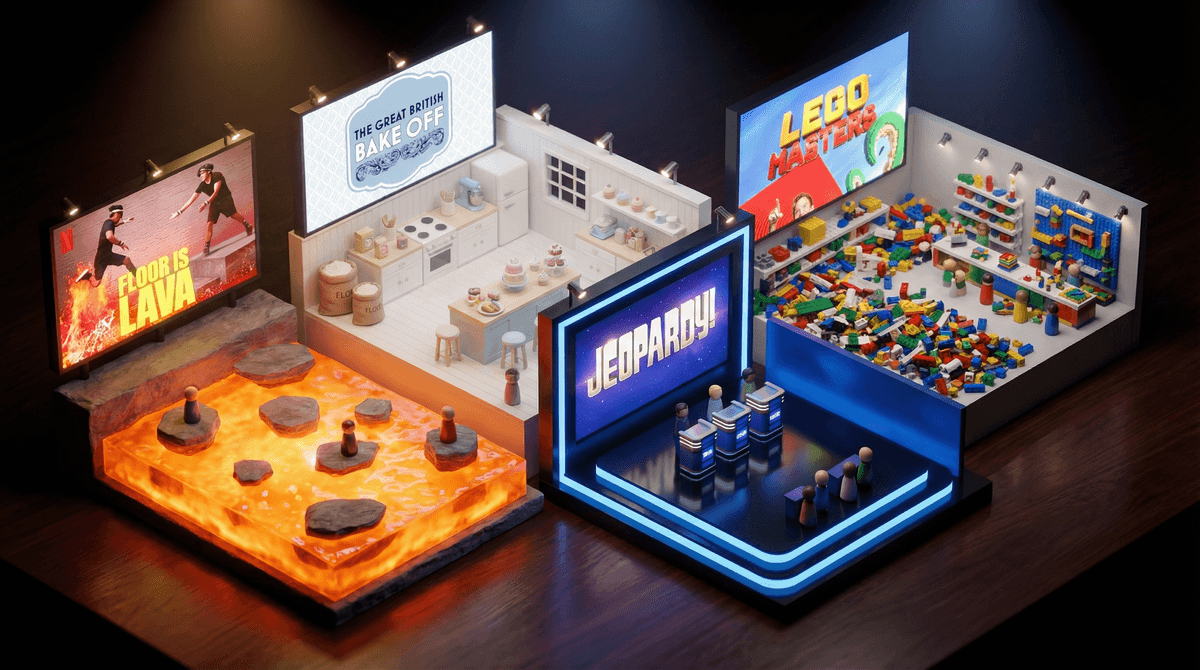
Look, we're talking about that specific breed of television where people compete for prizes, answer questions, or complete challenges—and you can actually watch it with your kids without diving for the remote. From classic network staples like Jeopardy! to streaming originals like Floor is Lava, family game shows occupy this beautiful sweet spot: they're entertaining enough that nobody's checking their phone, but also not so intense that your 8-year-old is having nightmares about elimination rounds.
The game show format has evolved way beyond Bob Barker and The Price Is Right (though honestly, Drew Carey's still holding it down). Now we've got everything from physical competition shows to trivia battles to cooking challenges—all with varying degrees of family-friendliness.
Here's the thing: game shows are genuinely interactive in a way that most passive TV watching isn't. Your family is shouting answers at the screen, debating strategies, and actually engaging with each other instead of just sitting there absorbing content like little content sponges.
Plus, they teach stuff without feeling like homework:
- Critical thinking and problem-solving (watching people strategize)
- Sportsmanship (how to win gracefully, how to lose without melting down)
- General knowledge (trivia shows are sneaky educational)
- Teamwork (for team-based competitions)
And honestly? They're just fun. In a digital landscape where so much content is designed to be consumed alone on devices, game shows are one of the few things that genuinely work better as a group activity.
Ages 5-8: Keep It Simple and Silly
Floor is Lava (Netflix) This is exactly what it sounds like: people jump around on furniture trying not to touch the "lava." It's ridiculous, it's colorful, and young kids absolutely love it. Zero educational value, 100% entertainment. Sometimes that's perfectly fine.
Nailed It! (Netflix) Amateur bakers try to recreate fancy cakes and fail spectacularly. It's hilarious, nobody's mean about it, and it actually makes kids feel better about their own creative attempts not being perfect. The host Nicole Byer is genuinely funny without being inappropriate.
Ages 8-12: Add Some Strategy
Lego Masters (FOX/Hulu) Teams compete to build the most impressive Lego creations. It's creative, the challenges are genuinely interesting, and if your kids are into Lego, they'll be glued to the screen. Will Arnett hosts with the right mix of humor and enthusiasm.
The Great British Baking Show (Netflix) Okay hear me out—I know it's technically British and technically not a "family" show, but it's so wholesome and drama-free that it works for this age range. People are nice to each other. They help competitors who are struggling. It's shockingly pleasant, and you might actually learn how to make a proper Victoria sponge.
MasterChef Junior (FOX/Hulu) Kids cooking at an absurdly high level. Gordon Ramsay is surprisingly gentle with children (who knew?). It's inspiring without being stressful, and the kids on the show are genuinely talented and kind to each other.
Ages 12+: Bring on the Competition
Jeopardy! (ABC/streaming) The classic. Your teens might roll their eyes initially, but once they start getting answers right, they're hooked. It's actually a great way to sneak in some learning, and the format rewards genuine knowledge over just guessing.
The Amazing Race (CBS/Paramount+) Teams race around the world completing challenges. It's fast-paced, shows different cultures, and the relationship dynamics between teams can actually spark good conversations about communication and partnership. Just be aware some seasons have more interpersonal drama than others.
Top Chef (Bravo/Peacock) For families with teens who are into cooking or food culture. It's more intense than the baking shows, but it showcases real culinary skill and creativity. Some mild language and occasional drama, but nothing too wild.
Not all game shows are created equal for family viewing. Here's what can make them less than ideal:
Manufactured drama and cruelty: Shows like Hell's Kitchen or older seasons of American Idol thrive on humiliation and conflict. That's not the vibe we're going for here.
Overly sexualized content: Some dating-adjacent game shows (Love Island, Too Hot to Handle) are absolutely not family-friendly despite being technically "game shows."
High-stakes anxiety: Shows with massive financial consequences or really intense elimination formats can be genuinely stressful to watch, especially for younger or more sensitive kids.
Mean-spirited humor: If the "fun" comes from laughing at people rather than with them, skip it.
Play along actively: Don't just watch—compete against each other, keep score, make it interactive. Who can guess the Jeopardy! answer first? Who would've made the same decision on Lego Masters?
Pause for discussions: Use the show as a springboard. "Would you have helped that other team?" "How would you have solved that challenge differently?" "Why do you think the judges chose that one?"
Try it yourselves: After watching Nailed It!, attempt your own baking disaster. After Floor is Lava, rearrange the couch cushions. The show is just the inspiration.
Respect different preferences: Not everyone will love every show, and that's fine. Rotate who picks, or have different shows for different family members.
Game shows are honestly one of the better screen time options for families. They're designed for group viewing, they encourage interaction, and they can actually teach useful skills (even if that skill is just "how to lose gracefully when your sister gets the answer first").
The key is choosing shows that match your family's age range and values. A show that's perfect for a family with teens might be boring for younger kids, and vice versa. But there are genuinely great options across the spectrum.
Are game shows going to replace board game night or outdoor time? No, and they shouldn't. But as far as screen time goes, watching Lego Masters together and then building your own creations is a pretty solid way to spend a Friday evening.
Start with one: Pick a show from the age-appropriate list above and commit to one episode as a family. See if it sticks.
Create your own: After watching a few episodes, try creating your own family game show night with homemade challenges. Kids love this.
Check out alternatives to passive TV watching if you want to expand beyond game shows but keep the interactive element.
And if you need help figuring out what streaming services have which shows, or want personalized recommendations based on your kids' specific ages and interests, that's literally what Screenwise is here for. We've got detailed guides for pretty much every major show, plus the ability to ask specific questions about content, age-appropriateness, and whether something is actually worth your limited family time.
Because honestly, in a world where we're all drowning in content options, sometimes you just need someone to say "yes, this one is actually good, your kids will like it, and you won't want to gouge your eyes out." That's the service we're providing here.