

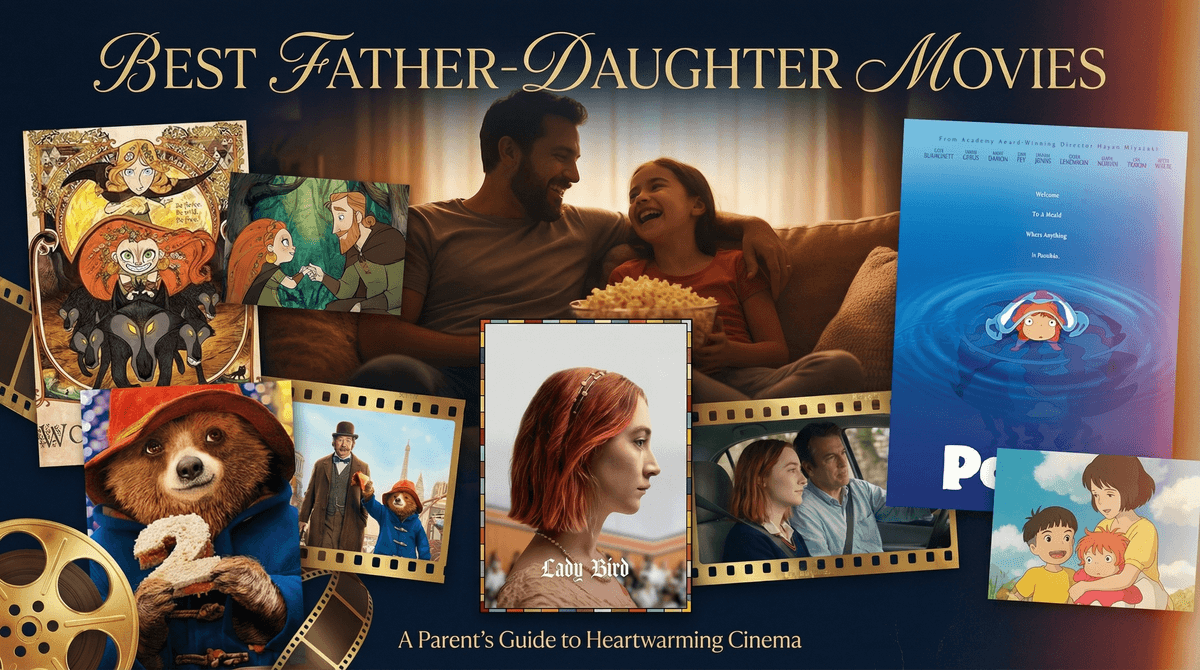
Best Father-Daughter Movies: Building Connection Through Film
TL;DR: Movie nights are low-key one of the best ways to bond with your daughter and open up conversations about life, relationships, and what matters. Here are the films that actually nail the father-daughter dynamic, organized by age and vibe. Skip the Disney princess marathon (unless that's your thing) and try these instead.
Quick picks by age:
- Ages 5-8: Ponyo, Finding Nemo
- Ages 8-12: Matilda, Hunt for the Wilderpeople
- Ages 12+: Lady Bird, The Farewell
- All ages: Paddington 2, Wolfwalkers
Look, you don't need a movie to connect with your kid. But there's something about sitting in the semi-dark, sharing an experience, and then having something concrete to talk about afterward that just works. Especially as kids get older and conversations get harder to start.
The best father-daughter films don't just show perfect dads being perfect. They show complicated relationships, repair after conflict, and the reality that parent-kid bonds take work. They give you both a shared language for talking about hard stuff.
Plus, representation matters. When daughters see fathers on screen who show up, listen, mess up, and keep trying, it shapes their expectations for relationships. And when dads see themselves reflected in characters who are vulnerable and emotionally present, it normalizes that behavior.
Studio Ghibli magic without the heavy themes
This one's about a goldfish who wants to be human and the 5-year-old boy who befriends her, but the real heart is the boy's relationship with his dad, who's a ship captain. The father is present, patient, and models healthy masculinity. It's gentle, weird in the best Miyazaki way, and the animation is stunning. Perfect for the age when kids are still figuring out how relationships work.
Content notes: Mild peril (tsunami scenes), but handled in a dreamlike, non-scary way. No violence, no scary villains.
The overprotective parent learns to let go
Yes, it's about a father and son. But the themes of overcoming fear, learning to trust your kid's capabilities, and the journey of letting go hit hard for any parent-daughter relationship too. Marlin is anxious, controlling, and has to learn that protecting his kid means preparing them for the world, not hiding them from it.
Content notes: The opening scene is genuinely traumatic (Nemo's mom dies). Some kids handle it fine, others need a heads up. Barracuda attack is intense.
Mother-daughter film with a great dad
Technically this is about Merida and her mom, but King Fergus is one of Pixar's best dads. He's goofy, supportive, and clearly adores his daughter even when he doesn't fully understand her. The film is about family communication, tradition vs. independence, and learning to see each other clearly.
Content notes: Bear attacks are scary for younger viewers. The mom turning into a bear is played for comedy but might freak out sensitive kids.
Found family in the New Zealand bush
A rebellious foster kid and his grumpy foster uncle go on the run in the wilderness. It's hilarious, heartfelt, and shows how chosen family can be just as powerful as biological bonds. The uncle-nephew relationship reads as father-daughter adjacent, and the film handles themes of loss, belonging, and what it means to show up for someone.
Content notes: Some mild language, references to the kid's troubled past (nothing graphic), and a funeral scene. The humor is dry and might go over younger kids' heads.
When your real family isn't your chosen family
Matilda's father is terrible. Like, genuinely awful. But Miss Honey becomes the parent figure Matilda deserves, and the film is a powerful story about recognizing toxic relationships and finding people who see your worth. Great for conversations about what healthy parent-child relationships should look like.
Content notes: The Trunchbull is legitimately terrifying. Emotional abuse is a major theme. Best for kids who can handle darker content and understand the fantasy elements.
Boy and his robot, but also about father figures
Hogarth's mom is raising him alone, and the giant becomes a father figure who teaches him about choice, sacrifice, and what it means to be good. The film is about masculinity, violence, and choosing who you want to be. Absolutely devastating ending that will wreck you both.
Content notes: Cold War paranoia, guns, military violence. The ending is emotionally intense. Have tissues ready.
Perfect family film, period
Mr. Brown starts as the anxious, risk-averse dad and learns to be brave through Paddington's influence. The whole Brown family dynamic is goals. It's funny, warm, and surprisingly sophisticated in its storytelling. Honestly one of the best family films of the last decade.
Content notes: Mild peril, a villain in prison, but all handled with such warmth and humor that it's appropriate for basically everyone.
The mother-daughter film with a quietly great dad
Lady Bird and her mom fight constantly, but her dad is the steady, supportive presence trying to keep peace. He's dealing with his own struggles (depression, job loss) but shows up for his daughter. The film is painfully accurate about the senior year of high school, first love, class dynamics, and the complicated love between parents and almost-adult kids.
Content notes: Sexual content (teenagers being teenagers), drinking, language. A character attempts suicide (off-screen). Best for mature teens.
Multigenerational family dynamics
Billi's relationship with her dad is subtle but powerful as they navigate cultural differences about truth-telling, family obligation, and saying goodbye. The film is about what we owe our parents, what they owe us, and how immigrant families carry multiple cultural codes. Gorgeous, funny, devastating.
Content notes: The entire premise is about terminal illness and lying to the grandmother about it. Heavy themes around death and grief, but handled with warmth and humor.
Single dad trying his best
Kayla's dad is doing everything right and she still cringes at him constantly. The film perfectly captures the middle school experience and the specific pain of being a parent to a kid who's pulling away. The final scene between them is one of the most honest parent-child moments in recent cinema.
Content notes: Social media anxiety, a very uncomfortable scene with an older boy in a car (nothing happens but it's tense), discussions of sex and bodies. Language. For mature middle schoolers and up.
Father-daughter bond in a magical Ireland
A hunter's daughter befriends a girl who can turn into a wolf. Her father is trying to protect her but learns to listen to who she actually is. The animation is breathtaking, the story is about colonialism and environmental destruction, and the relationship between Robyn and her dad is the emotional core.
Content notes: Some violence (wolves vs. humans), themes of loss and cultural erasure. The English are definitely the bad guys, which, fair.
The best films in this category share a few things:
Dads who are present and flawed: Not perfect heroes, but people trying to figure it out. They make mistakes, apologize, and grow.
Daughters with agency: Not passive princesses waiting to be saved, but characters with their own goals, personalities, and arcs.
Conflict that feels real: The tension comes from genuine differences in perspective, not manufactured drama. And it gets resolved through communication, not magic.
Emotional honesty: The films don't shy away from hard conversations about growing up, letting go, and what we owe each other.
Let them pick sometimes: Alternate who chooses. Yes, you might have to sit through something you wouldn't pick, but that's part of the deal.
Create the vibe: Popcorn, blankets, phones away (yours too). Make it a thing.
Don't force the conversation: Some kids want to debrief immediately, others need time to process. Follow their lead.
Ask open questions: "What did you think about when the dad said..." works better than "What's the moral of the story?"
Connect it to real life gently: "That reminds me of when we..." but don't make every movie a teaching moment. Sometimes it's just entertainment.
Respect their emotional reactions: If they cry, don't tease. If they don't cry at the "sad part," that's fine too.
For younger kids (5-8): Stick with films where conflict is resolved positively and scary elements are clearly fantasy. They're still figuring out what's real.
For middle grade (8-12): They can handle more complex themes and moral ambiguity, but still need clear resolution. This is when you can start introducing films that show imperfect parents.
For teens (12+): They're ready for messy, unresolved relationships and can appreciate films that don't tie everything up neatly. They might even be ready to watch films that show parents getting it wrong.
Trust your kid: You know your daughter better than any rating system. A sensitive 10-year-old might not be ready for something a bold 8-year-old can handle.
The best father-daughter movies aren't about perfect relationships. They're about real ones. They show dads who mess up and repair. Daughters who push back and are heard. Families that don't look like the sitcom version but are trying anyway.
Movie night won't solve everything. But it creates a space where you're both focused on the same thing, feeling the same emotions, and building a shared language for talking about hard stuff. And sometimes, that's exactly what you need.
Start with one film from this list. Make the popcorn. Put the phones away. See what happens. And if she falls asleep on your shoulder during the credits, that's a win.
Next steps: Check out best mother-son movies for balance, or explore family movies that don't suck for broader recommendations.