

Look, finding a show the whole family can actually watch together without someone getting bored, someone else getting traumatized, and you getting secondhand embarrassment from outdated humor is genuinely hard. But when you find a good family sitcom? That's the sweet spot — everyone's laughing, no one's reaching for their phone, and you might even get some real conversations started afterward.
Family sitcoms are basically the comfort food of TV. They're designed to be funny without being mean, relatable without being preachy, and entertaining across generations. The best ones work on multiple levels — kids laugh at the physical comedy while parents catch the clever wordplay and cultural references. And unlike a lot of content kids consume solo on YouTube or TikTok, these shows give you shared references and inside jokes as a family.
Binge-watching gets a bad rap, but honestly? Intentional co-viewing is one of the best things you can do with screen time. You're there to pause and explain jokes, catch concerning themes before they land wrong, and model how to think critically about what you're watching. Plus, these shows often deal with real issues — friendship conflicts, school stress, family dynamics — in ways that can open up conversations your kid might not start on their own.
The key word is "intentional." We're not talking about using the TV as a babysitter while you doom-scroll Instagram. We're talking about actually watching together, discussing what you're seeing, and building shared family culture around it.
The Wonder Years (Ages 10+) The original (1988-1993) remains genuinely excellent — Kevin Arnold growing up in the late 60s/early 70s, navigating middle school, first crushes, and family drama. The nostalgia works even if your kids weren't alive in the 60s OR the 80s. The reboot (2021) is also solid and offers a Black family's perspective in the same era.
Full House (Ages 6+) Yes, it's cheesy. Yes, the "lesson moments" are heavy-handed. But it's genuinely wholesome, the humor is clean, and it handles real topics (death, divorce, peer pressure) in age-appropriate ways. Plus, if you grew up with it, there's something nice about sharing that with your kids. Fuller House is also available if you need more Tanner family content.
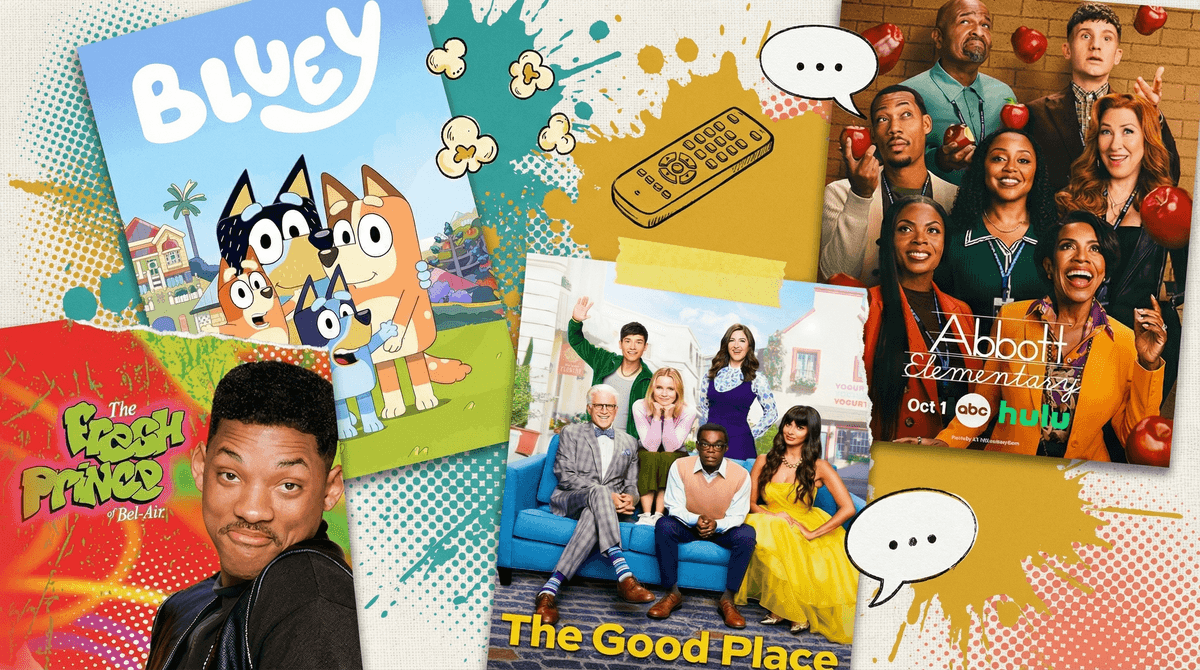
The Fresh Prince of Bel-Air (Ages 10+) Still funny, still relevant, still dealing with class, race, and identity in ways that hold up remarkably well. Will Smith's physical comedy appeals to younger viewers while the social commentary gives you plenty to discuss with older kids. A few dated references and mild language, but nothing that should derail family viewing.
Abbott Elementary (Ages 10+) A mockumentary about underfunded public school teachers that's genuinely hilarious and surprisingly heartfelt. Your kids will recognize some of their own school experiences, and you'll appreciate the teacher perspective. Some mild adult humor but nothing explicit. Great for sparking conversations about education, dedication, and systemic issues.
The Good Place (Ages 12+) Technically not a sitcom about a family, but it becomes one. Philosophy, ethics, and what it means to be a good person, wrapped in legitimately funny comedy. Gets progressively more complex, which is perfect for tweens and teens who are ready for deeper thinking. Fair warning: the whole show is built on a major twist in episode one, so go in blind.
Schitt's Creek (Ages 13+) A wealthy family loses everything and has to live in a small town they once bought as a joke. Character growth, found family, and genuinely touching moments alongside sharp comedy. Some sexual references and adult themes, so better for older kids, but it handles LGBTQ+ relationships beautifully and naturally. The family dynamics are the real heart of the show.
Brooklyn Nine-Nine (Ages 11+) A workplace comedy about detectives that manages to be both hilarious and thoughtful about serious issues. Diverse cast, positive relationships, and characters who actually grow and learn. Some crime-related content (it's about cops, after all), but it's handled with a light touch. The found-family dynamic is strong here.
Bob's Burgers (Ages 10+) The Belcher family runs a struggling burger restaurant and genuinely loves each other, which is shockingly rare in animated sitcoms. Weird humor, musical numbers, and characters who support each other even when they're driving each other crazy. Some adult jokes will fly over younger kids' heads, which is kind of perfect.
Bluey (Ages 3+, but honestly all ages) If you haven't watched Bluey yet, you're missing out. Yes, it's technically for little kids. Yes, adults are obsessed with it anyway. The episodes are short, the parenting is aspirational but realistic, and it deals with real emotions in profound ways. You will cry during "Sleepytime." This is a warning and a promise.
Even in family-friendly sitcoms, you'll encounter:
- Outdated humor - Older shows especially may have jokes about gender, sexuality, or race that haven't aged well. This is actually a teaching moment.
- Laugh-track manipulation - Some shows tell you when to laugh. Talk about why that works and how it affects what we find funny.
- Stereotypes - Even well-meaning shows can rely on character stereotypes. Point them out and discuss.
- "Very special episodes" - When sitcoms tackle serious issues, they sometimes do it clumsily. That's okay — you're there to provide context.
Ages 6-9: Stick with clearly kid-focused content like Full House, Bluey, or The Wonder Years. They need straightforward humor and clear lessons.
Ages 10-12: You can branch into Abbott Elementary, Brooklyn Nine-Nine, or Bob's Burgers. They're ready for more nuanced humor and complex situations.
Ages 13+: The Good Place and Schitt's Creek offer sophisticated comedy and themes worth discussing. They can handle adult concepts with appropriate context.
Set the scene: Make it an event. Popcorn, phones away, everyone commits to at least one episode together.
Start with one episode: Don't commit to a whole series if you're not sure. Watch one, gauge reactions, discuss.
Pause and talk: If something's confusing, problematic, or just really funny, pause and talk about it. This is the whole point.
Let them have opinions: Your kid might hate a show you loved growing up. That's fine. Their taste is developing, and that's healthy.
Balance the picks: Rotate who chooses. Fair is fair.
The best family sitcom is the one your family actually enjoys together. These recommendations are starting points, not mandates. Some families will love the absurdist humor of Bob's Burgers, others will prefer the earnestness of Abbott Elementary.
The magic isn't in finding the "perfect" show — it's in the shared experience, the inside jokes that develop, and the conversations that happen when you're all laughing at the same thing. In a world where everyone's usually on their own device consuming their own algorithmically-curated content, watching something together is actually kind of radical.
So pick something, commit to a few episodes, and see what happens. Worst case? You've wasted an hour and learned what your family doesn't like. Best case? You've found your new shared obsession and created memories that'll last way longer than any individual episode.
Next Steps: Browse our guide to age-appropriate Netflix shows or explore alternatives to mindless YouTube watching. And if you're wondering whether your family's screen time is typical, See if your family's screen time is typical .
.