

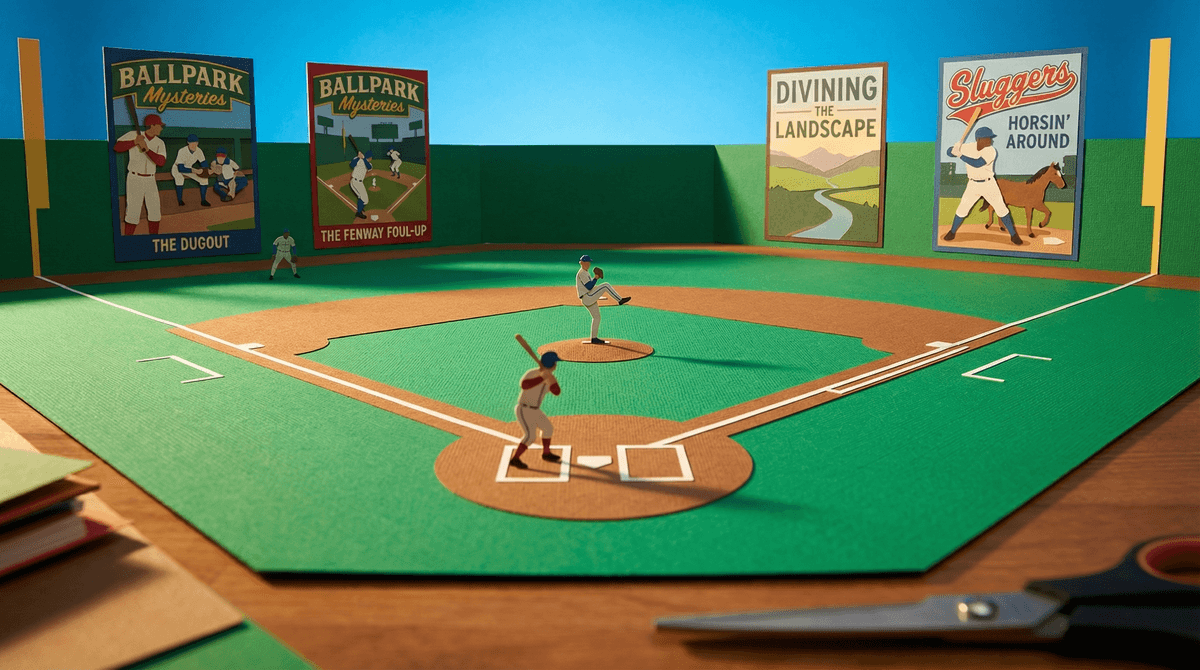
We're talking about that sweet spot between picture books and middle-grade novels—chapter books designed for kids roughly ages 6-9 who are building reading stamina and confidence. Baseball chapter books combine two powerful motivators: short chapters that feel achievable and stories about a sport they're already obsessed with.
These aren't dense novels. Think 50-100 pages, larger text, some illustrations sprinkled throughout, and plots that move quickly enough to keep a kid who'd rather be outside playing catch actually turning pages.
Here's the thing about sports-loving kids: they'll consume endless stats, memorize player names, and debate lineup changes for hours, but hand them a book and suddenly they "don't like reading." Baseball chapter books hack this resistance because the content meets them where their passion already lives.
The familiar vocabulary helps too. A kid who knows "RBI" and "stealing bases" isn't stumbling over unfamiliar terms—they're reading with confidence from page one. And let's be real, anything that gets them choosing a book over YouTube or Roblox deserves a spot in the rotation.
Ages 6-9 | Reading Level: 2nd-3rd grade
This series is the MVP for early readers. Mike and Kate solve mysteries at real MLB ballparks, so kids get actual baseball facts woven into the story. The mysteries are genuinely engaging (not just "who took the missing glove"), and each book features a different stadium. If your kid is into Scooby-Doo or mystery-solving games, this is the perfect bridge to independent reading.
Why it works: Short chapters (like, 5-7 pages), lots of illustrations, and the mystery hook keeps them reading "just one more chapter."
Ages 7-10 | Reading Level: 2nd-4th grade
These books focus on character development through sports—dealing with nerves, being a good teammate, handling losses. They're less about winning the big game and more about the social-emotional stuff that happens around youth sports. Great for kids who need to see themselves in stories about not being the star player.
Ages 8-10 | Reading Level: 3rd-4th grade
Set in 1899, this series follows a traveling baseball team. It's got adventure, history, and baseball—basically a gateway drug to historical fiction for sports kids. Fair warning: these are slightly longer and more complex than the others on this list, so save them for kids who've built some reading stamina.
Ages 6-9 | Reading Level: 2nd-3rd grade
Beautiful illustrations (Loren Long illustrated The Little Engine That Could) and a story about believing in yourself even when you're small. The baseball action is exciting, but the message about perseverance is what sticks.
Ages 7-10 | Reading Level: 2nd-4th grade
Okay, not exclusively baseball, but Hank plays and several books feature baseball heavily. The real win here? Hank has dyslexia and learning differences, making this series incredibly validating for struggling readers. A kid who finds reading hard reading about a character who finds school hard? That's powerful.
These books won't rot their brains. I know we're all trying to balance screen time with book time, and there's sometimes this worry that "easy" books or series books aren't "real reading." But here's the truth: a kid reading books they love is building skills, period. Reading stamina, vocabulary, comprehension—it all counts, even if the book has pictures and is about baseball.
Series books create readers. When a kid finishes one Ballpark Mysteries book and immediately wants the next one, that's not a problem—that's reading momentum. Let them binge the series. You can introduce variety later.
Reading level vs. interest level matters. A 3rd grader reading at a 1st grade level might feel babyish reading books "for their level" if the content is too young. Baseball chapter books often have higher interest levels than reading levels, which means they can read it AND care about it.
Baseball chapter books are secret weapons for building confident readers. They're short enough to feel achievable, engaging enough to compete with screens, and familiar enough that kids aren't fighting both new vocabulary AND new content.
The goal isn't to turn your kid into a bookworm overnight (though that'd be nice). It's to show them that reading can be about something they already love. Once they experience that feeling of being absorbed in a story—even a story about stealing home plate—they're more likely to pick up another book.
Start with one book, not a whole series. Grab The Ballpark Mysteries #1: The Fenway Foul-Up or whichever features their favorite team's stadium. See if it clicks.
Read together at first. Even if they can read independently, reading the first chapter together builds excitement and helps them get into the rhythm of the book.
Connect it to real life. Watching a game together after reading about one? Going to a ballpark they read about? That's how you make reading feel relevant and exciting.
And if you're wondering how to balance book time with their current screen time habits , or what to do when they only want to read the same series over and over, Screenwise can help you figure out what makes sense for your family.