

TL;DR
The Artemis Fowl series by Eoin Colfer is officially marketed to ages 10+, but the sweet spot is really 11-14 years old. The first book features a 12-year-old criminal mastermind who kidnaps a fairy for ransom, which is... a lot. If your kid loved Percy Jackson but is ready for something darker and more morally complex, this could be perfect. If they're still firmly in the "good guys always win" stage, maybe wait a year.
Reading level: 5th-7th grade (Lexile 600-700) Content concerns: Violence (magical and tactical), morally gray protagonist, some language, complex themes about redemption Best for: Kids who can handle antiheroes and enjoy heist stories with high-tech fantasy twists
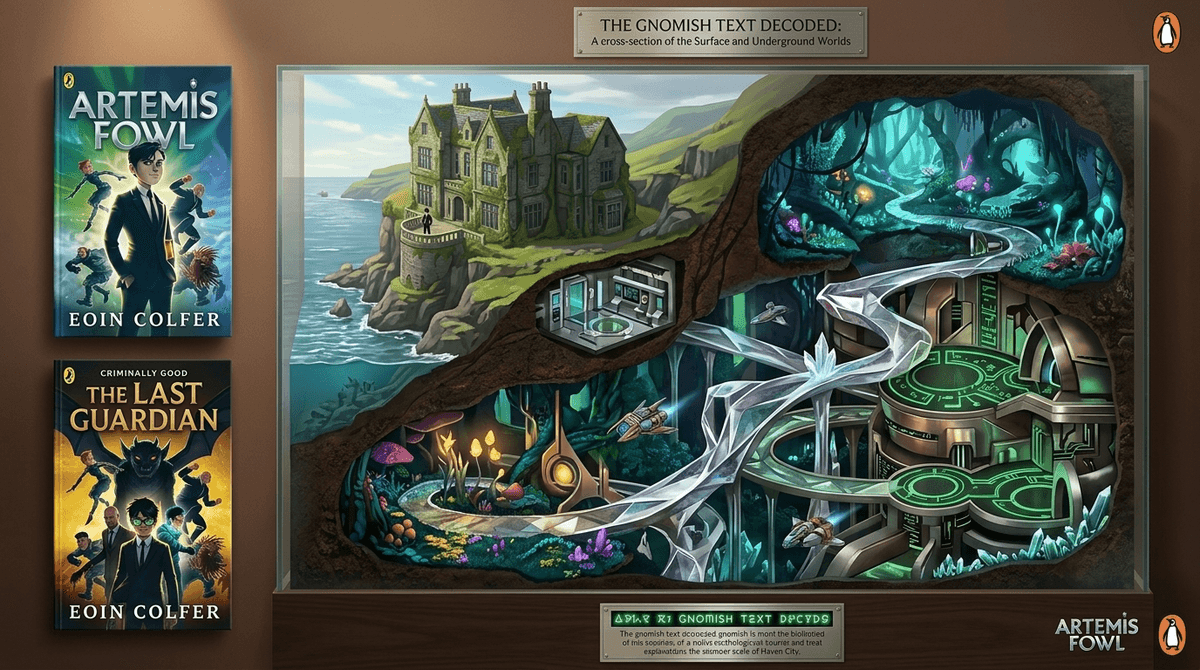
Artemis Fowl is an eight-book series that starts with a 12-year-old Irish genius and criminal mastermind who discovers the existence of fairies, kidnaps one (Captain Holly Short of the LEPrecon fairy police), and holds her for ransom to restore his family's fortune. Think "Die Hard meets Ocean's Eleven but with a child villain and underground fairy civilizations with plasma weapons."
Over the course of the series, Artemis evolves from calculating antagonist to reluctant hero, forming genuine friendships with the magical creatures he initially exploited. The books blend high-tech gadgetry, Irish mythology, witty banter, and increasingly complex moral questions about loyalty, family, and what it means to be "good."
Eoin Colfer published the first book in 2001, and it became a massive hit—spawning seven sequels, a graphic novel adaptation, and a 2020 Disney+ movie that... well, let's just say the books are better. Much better. The movie tried to age Artemis up and make him more sympathetic from the start, which completely missed the point.
It flips the script. Instead of another Chosen One hero, Artemis starts as the villain. He's smarter than the adults, colder than most protagonists, and genuinely morally questionable in the first book. For kids who are tired of predictable "good defeats evil" stories, this is refreshing.
The world-building is incredible. Colfer creates an entire underground fairy civilization with its own technology, politics, and rules. The LEP (Lower Elements Police) use neutrino blasters, time-stop fields, and iris-cam surveillance. It's fantasy that feels like sci-fi, which appeals to kids who might not typically reach for "magic" books.
Artemis is wickedly clever. Every book features elaborate plans, heists, and tactical maneuvers. Kids who love puzzles, strategy games like chess, or shows where the protagonist outsmarts everyone will eat this up.
The humor is sharp. Butler (Artemis's bodyguard) is a 6'6" martial arts master who serves tea. Mulch Diggums is a kleptomaniac dwarf who tunnels by unhinging his jaw and eating dirt. The fairy tech manual excerpts that start each chapter are hilarious. Colfer doesn't talk down to kids.
Reading Level: Manageable for Most 5th Graders
The books clock in around Lexile 600-700, which is solidly middle-grade territory. Sentence structure isn't overly complex, vocabulary is challenging but contextual, and chapters are short with lots of action. If your kid can handle Harry Potter and the Goblet of Fire, they can handle the reading level of Artemis Fowl.
That said, there's a lot of technical jargon (fairy technology, criminal terminology, tactical planning) that can slow down younger or less confident readers. The first 50 pages of Book 1 are particularly dense with world-building.
Emotional Maturity: The Real Consideration
The protagonist is a criminal. In the first book, Artemis drugs his own mother (who has mental health issues), manipulates everyone around him, and shows zero remorse about kidnapping Holly. He's not a lovable scamp—he's genuinely ruthless. Some kids will find this fascinating; others will be uncomfortable rooting for someone so cold.
Violence is present but not gratuitous. There are firefights with plasma weapons, hand-to-hand combat, explosions, and casualties (mostly trolls and goblins, but still). Characters get injured, and there's real danger. It's not gory—Colfer doesn't linger on blood or pain—but it's more intense than Percy Jackson's monster dust.
Moral complexity increases. As the series progresses, Artemis grapples with genuine ethical dilemmas. Should he save his father or protect his fairy friends? Can someone who's done terrible things become good? These aren't simple questions, and Colfer doesn't provide easy answers.
Mental health themes. Artemis's mother struggles with depression and delusions after his father's disappearance. It's handled with sensitivity, but younger kids might not fully grasp the weight of it.
The Sweet Spot: 11-14 Years Old
Ages 10-11: Possible if your kid is an advanced reader who's ready for morally gray characters. They might struggle with the slower, exposition-heavy opening and may need to discuss why Artemis's actions are wrong even if they're clever.
Ages 11-13: Perfect range. Kids this age are starting to understand that people can be complicated—not purely good or evil. They can appreciate Artemis's character arc and the series' themes about redemption and growth.
Ages 14+: Still enjoyable, especially for kids who missed it earlier. The later books (particularly The Last Guardian) deal with sacrifice, time paradoxes, and existential stakes that older readers will appreciate more deeply.
The First Book Is the Darkest
Artemis is at his worst in Artemis Fowl Book 1. If your kid is disturbed by his actions, that's actually a good sign—it means they have a moral compass. The entire series is about his redemption arc. By Book 3 (The Eternity Code), he's actively trying to be better.
Some parents choose to start with Book 2 (The Arctic Incident), which is more of a traditional adventure story, then circle back to Book 1 once their kid understands Artemis's character arc. This is totally valid.
The Disney+ Movie Is Not the Books
The 2020 Artemis Fowl movie fundamentally misunderstood the source material. It aged Artemis up, made him sympathetic from the start, and turned the story into a generic "boy discovers magic" adventure. If your kid watches the movie and isn't interested, don't assume they won't like the books. They're completely different.
Language and Content
There's minimal profanity—a few "hell" and "damn" instances, nothing stronger. No sexual content whatsoever (Artemis is 12-15 throughout the series and romance is barely a footnote). The violence is the main content concern, and it's more tactical/strategic than brutal.
Series Commitment
Eight books is a lot. The quality stays relatively consistent through Book 6 (The Time Paradox), though some readers feel Books 7-8 are slightly weaker. Each book is 300-400 pages. If your kid loves the first one, they'll likely devour the series; if they're lukewarm, it's okay to stop.
Read the First Few Chapters Together
The opening of Book 1 is crucial—it establishes Artemis's character and the fairy world. Reading it together lets you gauge your kid's reaction and discuss Artemis's actions in real time. Ask questions like:
- "What do you think about Artemis drugging his mother? Is that ever okay?"
- "Why do you think he's doing this? What would you do in his situation?"
- "Do you think he can change?"
Get tips on discussing morally complex characters with kids
Frame Artemis as a Character Study
Help your kid understand that just because Artemis is the protagonist doesn't mean his actions are right. The books are about whether someone who starts as a villain can become a hero. That's a much more interesting story than "good kid saves the day."
Use It as a Gateway to Other Complex Fiction
If your kid loves Artemis Fowl, they're ready for more sophisticated narratives. Try:
- Ranger's Apprentice (medieval fantasy with strategic warfare)
- The Mysterious Benedict Society (puzzle-solving kids vs. evil mastermind)
- A Series of Unfortunate Events (darkly comic, morally complex)
- Ender's Game (tactical genius child, though this is better for 13+)
Explore more books for kids who love strategic protagonists
For younger readers (8-10) who want adventure but need clearer heroes:
- Percy Jackson (mythology, humor, heroic protagonist)
- The Land of Stories (fairy tale mashup, twins as heroes)
- Wings of Fire (dragon protagonists, complex world, but clearer morality)
For kids who want fantasy/sci-fi blend but lighter tone:
- The Last Kids on Earth (post-apocalyptic adventure, graphic novel style)
- Hilo (robot boy, sci-fi action, graphic novel)
For kids who specifically love heist/strategy stories:
- Liar & Spy by Rebecca Stead (kid detectives, realistic fiction)
- Escape from Mr. Lemoncello's Library (puzzle-solving competition)
Artemis Fowl is a fantastic series for kids who are ready to move beyond straightforward hero stories into more nuanced territory. The books are funny, clever, and genuinely exciting, with a protagonist who grows from cold criminal to self-sacrificing friend over eight books.
Start at 11+ if possible. Younger kids can read them, but they'll get more out of the moral complexity and character development if they're a bit older. If your kid is 10 and asking about it, read the first book together and see how they respond to Artemis's actions.
Don't let the movie scare you off. The books are so much better.
Embrace the discussion. These books are perfect for conversations about redemption, privilege (Artemis is obscenely wealthy), using intelligence for good vs. evil, and what makes someone a hero. That's valuable stuff.
And honestly? In a world where 30% of families let their kids have independent streaming access (according to our Screenwise data), reading a book series together—even one about a criminal mastermind—is quality time well spent.
Find more book recommendations based on your kid's interests