

Look, we all know that kid. The one who can spend three hours building a Minecraft castle but treats reading time like it's a dental appointment. The one who suddenly needs water, a snack, and to tell you about that thing from last Tuesday the moment you suggest picking up a book.
Here's the thing: they're not broken. They're just wired for a world where stories come with sound effects, immediate feedback, and the ability to tap, swipe, and interact. And honestly? There are some genuinely clever apps out there that meet kids exactly where they are—turning reading into something that feels more like leveling up than homework.
These aren't your typical "read along with the narrator" apps (though those have their place). These are game-like experiences that trick kids into reading by making it feel like anything but traditional reading. Think choose-your-own-adventure stories where their choices actually matter, apps that let them create their own comics, or reading challenges that unlock rewards and build streaks like they're trying to maintain a Snapchat flame.
The secret sauce? Instant gratification and agency.
Traditional books ask kids to commit to 200 pages with no idea if they'll even like it. These apps let them sample stories, make choices, see consequences immediately, and bail if something's not working—all without the guilt of a bookmark gathering dust on page 12.
Plus, many of these apps understand that reluctant readers often struggle with finding books at their interest level that match their reading level. A 12-year-old reading at a 3rd-grade level doesn't want picture books about talking animals, but they also can't tackle Percy Jackson yet. These apps often do a better job of bridging that gap than the school library's limited selection.
And let's be real: there's something about reading on a device that just feels less like "work" to kids. Same reason they'll happily read Discord messages for an hour but groan about a three-page assignment.
Epic! (Ages 4-12)
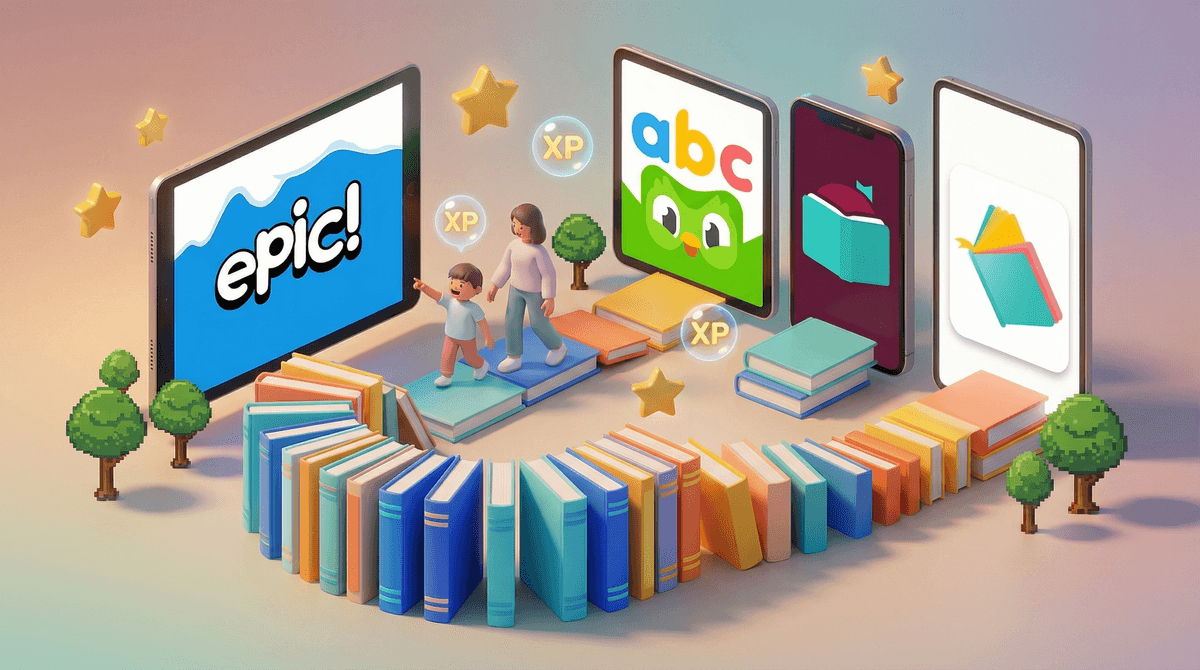
Epic! is basically Netflix for kids' books—40,000+ titles, audiobooks, learning videos, and quizzes. The interface is colorful and game-like, with badges and rewards for reading streaks.
The catch: The free version is pretty limited. The full version is around $10/month, but many schools provide free access, so check before paying. Also, the sheer volume of choices can be overwhelming—you might need to help curate collections for your kid initially.
Hooked (Ages 12+)
Stories told entirely through text message conversations. Each "chapter" takes like 2 minutes to read. It's literally designed for the TikTok generation's attention span, and it works. The stories are genuinely engaging—mysteries, thrillers, horror, romance—and kids don't even realize they're reading thousands of words because it feels like scrolling through texts.
Parent note: Some stories deal with mature themes (relationships, mild violence). The app is rated 12+, but preview content for younger kids. There's a free version with limited stories and a premium version ($7.99/month) that unlocks everything.
Readability (Ages 8+)
This one's clever: it takes any text—websites, PDFs, ebooks—and adjusts the reading level, font size, spacing, and even adds definitions inline. Great for kids with dyslexia or processing challenges who want to read the same stuff their friends are reading but need some scaffolding.
Not exactly "game-like," but it removes barriers and lets kids access content they actually care about, which is half the battle.
Choices: Stories You Play (Ages 13+)
Full disclosure: this is primarily a game, but it's a game where you're reading thousands of words per session. Interactive fiction where your choices shape the story. Think visual novels meets choose-your-own-adventure.
The warning: Uses the typical mobile game monetization model—free to play but with premium choices that cost "diamonds" (aka real money). You can play for free, but kids will definitely ask to buy diamonds. Set expectations early. Also, some stories are pretty romance-heavy and teen-drama-focused, so this skews older.
Libby (All Ages)
Not game-like at all, but worth mentioning because it's free through your library card and has a massive selection of ebooks and audiobooks. The interface is clean and simple. If your kid is willing to read but just needs easier access to books, start here before paying for anything else.
Duolingo ABC (Ages 3-8)
For the younger reluctant readers, this is basically Duolingo's approach applied to early literacy. Game-like lessons, cute characters, immediate feedback. Kids are learning to read but think they're just playing a game with that green owl.
Free, no ads, genuinely well-designed. If you have a kindergartener or first-grader who's resistant to traditional reading instruction, this is worth trying.
These apps are tools, not magic bullets. They work best when they're part of a broader approach to building reading habits. If your kid spends 20 minutes on Epic! before bed instead of doomscrolling YouTube, that's a genuine win. But don't expect them to suddenly pick up War and Peace.
Watch the monetization. Many of these apps use freemium models or subscriptions. Understand how in-app purchases work before handing over a device. Set up parental controls and talk about spending limits.
Reading is reading. Some parents worry that "this doesn't count as real reading" because it's on a screen or because it's genre fiction or because it's text messages instead of paragraphs. Respectfully: that's not helpful. A kid reading Hooked stories is building vocabulary, comprehension, and most importantly, the habit and identity of being someone who reads. You can sneak in the classics later.
Audiobooks count too. If your kid is truly resistant to reading text, audiobooks through Libby or Audible still build literacy skills. They're absorbing complex narratives, learning new vocabulary, and developing comprehension. Don't let anyone tell you it's "cheating."
Ages 4-7: Start with Duolingo ABC or Epic! with heavy parental curation. At this age, you're building foundational skills and positive associations with reading.
Ages 8-11: Epic! is still great here. Also consider Libby if they're ready for chapter books. This is the age where reading habits really solidify—or don't.
Ages 12+: Hooked, Choices, and Libby are all solid. At this age, follow their interests hard. If they're into gaming, find books about game design. If they're into true crime podcasts, find thriller novels. The goal is building the habit, not forcing specific content.
Reluctant readers aren't lazy or deficient—they just haven't found their entry point yet. These apps work because they remove friction, provide immediate feedback, and meet kids in the digital space where they already live.
Will these apps turn your kid into a bookworm who devours classic literature? Maybe not. But they might turn a kid who "hates reading" into someone who reads 20 minutes a day without being asked. And that's genuinely worth celebrating.
Start with the free options—Libby and Duolingo ABC—and see what sticks. If you're willing to pay, Epic! has the most bang for your buck for elementary ages.
And remember: the goal isn't to create a specific type of reader. It's to help your kid discover that stories—in whatever form—can be something they actually want, not just something they have to do.
- Check your local library for free Epic! or other digital reading platform access through schools
- Try one app for two weeks without pressure—just make it available and see if your kid gravitates toward it
- Learn more about building reading habits without the battle
- Follow their interests ruthlessly—if they're into Minecraft, find books about Minecraft. If they're into gross facts, find books about gross facts. There are no wrong answers here.