

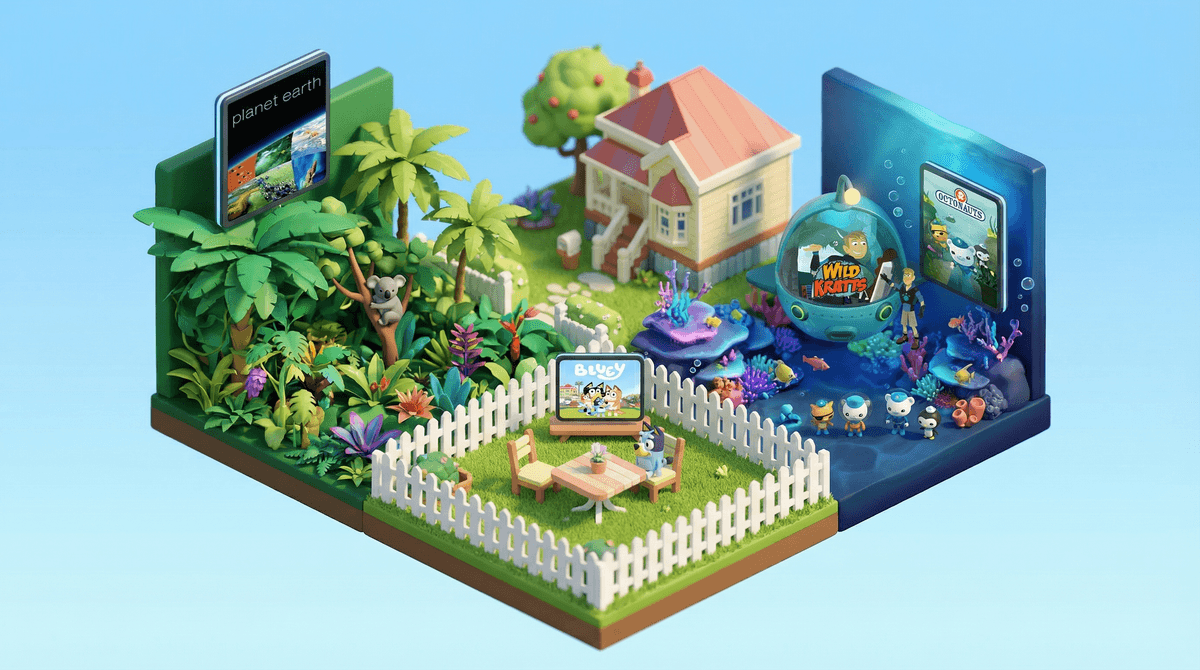
Animal TV shows for kids are exactly what they sound like—shows centered around animals, whether real or animated, that aim to entertain and often educate young viewers. We're talking everything from the scientifically rigorous Wild Kratts to the adorable underwater adventures of Octonauts, from nature documentaries narrated for kids to animated series where animals talk and solve mysteries.
The best ones manage to teach real science, foster empathy for living creatures, and keep kids genuinely engaged. The worst ones? They're basically just noise with cartoon animals doing random stuff that has zero educational value and might actually make your kid less interested in the natural world.
Animal shows hit different because they tap into something primal. Kids are naturally curious about animals—it's why they can spend 20 minutes watching an ant carry a crumb across the sidewalk. Good animal shows channel that curiosity into actual learning.
For parents, these shows feel like a win-win. Your kid is watching TV (because let's be real, sometimes that's just what needs to happen), but they're also learning about habitats, animal behavior, conservation, and science. Plus, unlike some of the absolute brain rot that passes for children's programming, you can actually sit through an episode of Bluey or Wild Kratts without wanting to throw the remote through the window.
Wild Kratts (Ages 6-10)
This is the gold standard. The Kratt brothers combine live-action segments with animation to teach real zoology and ecology. The "creature power suits" concept is clever—it gets kids thinking about animal adaptations in a way that sticks. Yes, the animation quality isn't Pixar-level, but the science is solid and the brothers' enthusiasm is genuinely infectious.
Octonauts (Ages 3-7)
Underwater rescue missions with a crew of adorable animals? Yes please. Octonauts manages to teach real marine biology while being genuinely entertaining. Each episode introduces actual sea creatures (often obscure ones!) and real facts about them. The newer Octonauts: Above & Beyond expands to land and air animals, and it's just as good.
Our Planet / Planet Earth II (Ages 8+)
These BBC nature documentaries are absolutely stunning, and the Netflix versions have been edited to be more kid-friendly while maintaining the breathtaking cinematography. Fair warning: there's still predator-prey action, so preview if your kid is sensitive. But for kids ready for real nature—not the sanitized version—these are unmatched. David Attenborough's narration is iconic for a reason.
Bluey (Ages 2-8, but honestly all ages)
Okay, so Bluey isn't strictly an "animal facts" show—the characters are dogs, but they act like humans. That said, it's so good at modeling healthy family dynamics, creative play, and emotional intelligence that it deserves a spot on any parent's list. Plus, you won't hate watching it. In fact, you might cry. Multiple times.
If You're Looking for Something Cozy: Animal Rescue Shows
Shows like Izzy's Koala World or Evan's World follow real kids who work with animals. They're gentle, educational, and great for kids who love animals but might be overwhelmed by the intensity of predator documentaries.
Not all animal shows are created equal. Some are fine—just forgettable filler. Others are actively annoying or teach basically nothing.
Caillou - Wait, he's not an animal? Exactly. But people keep recommending it in "gentle shows for kids" lists and it needs to be said: Caillou whines, throws tantrums, and models terrible behavior. Skip it.
Most YouTube animal content - There's some great stuff (Brave Wilderness, Animalogic), but there's also a ton of clickbait-y "SHARK ATTACKS" content that's either fake, sensationalized, or just low-quality. If your kid is watching animal content on YouTube, you need to be involved in what they're watching. Here's how to set up YouTube Kids properly.
Generic talking animal cartoons - You know the ones. Animals that talk, wear clothes, and have zero connection to actual animal behavior or science. They're not harmful, but they're not teaching anything either. If screen time is limited in your house, there are better options.
Ages 2-5: Stick with gentler shows like Octonauts, Bluey, or Elinor Wonders Why. Skip anything with intense predator-prey dynamics or animal distress.
Ages 6-9: Wild Kratts is perfect for this age. They can also handle some nature documentaries if you preview for intensity. 72 Cutest Animals on Netflix is delightful and low-stakes.
Ages 10+: They're ready for the real stuff—Planet Earth, Our Planet, and more complex animal behavior content. This is also a great age to start talking about conservation, climate change, and habitat loss in an age-appropriate way.
These shows can spark real interests. Don't be surprised if your kid suddenly wants books about octopuses, starts asking to volunteer at an animal shelter, or becomes very concerned about deforestation. Lean into it. This is the good stuff.
The predator-prey thing is real. Nature isn't always cute. Animals eat other animals. If your kid is sensitive, preview episodes or stick with shows that focus on animal rescue and care rather than wild behavior.
Some shows sneak in solid science. Wild Kratts, for example, teaches concepts like adaptation, camouflage, and ecosystem relationships without feeling like a lecture. If your kid is struggling with science in school, these shows can help make concepts click.
Co-watching matters. Even with good shows, your presence makes a difference. Ask questions, pause to look up animals together, talk about what you're seeing. It transforms passive watching into active learning.
Animal TV shows can be some of the best screen time your kid gets. The good ones teach real science, build empathy, and spark curiosity about the natural world. The key is being selective—there's a massive difference between Wild Kratts and random YouTube animal compilations.
Start with the classics: Wild Kratts for elementary-aged kids, Octonauts for preschoolers, and nature documentaries for older kids ready for the real deal. And if you need a break from animal facts, Bluey is always there—technically about animals, actually about being human, and genuinely wonderful.
Your kid's obsession with animals isn't just a phase—it's a gateway to science, empathy, and understanding our place in the natural world. Pick the right shows, and screen time becomes learning time without anyone feeling lectured to. That's the sweet spot.