

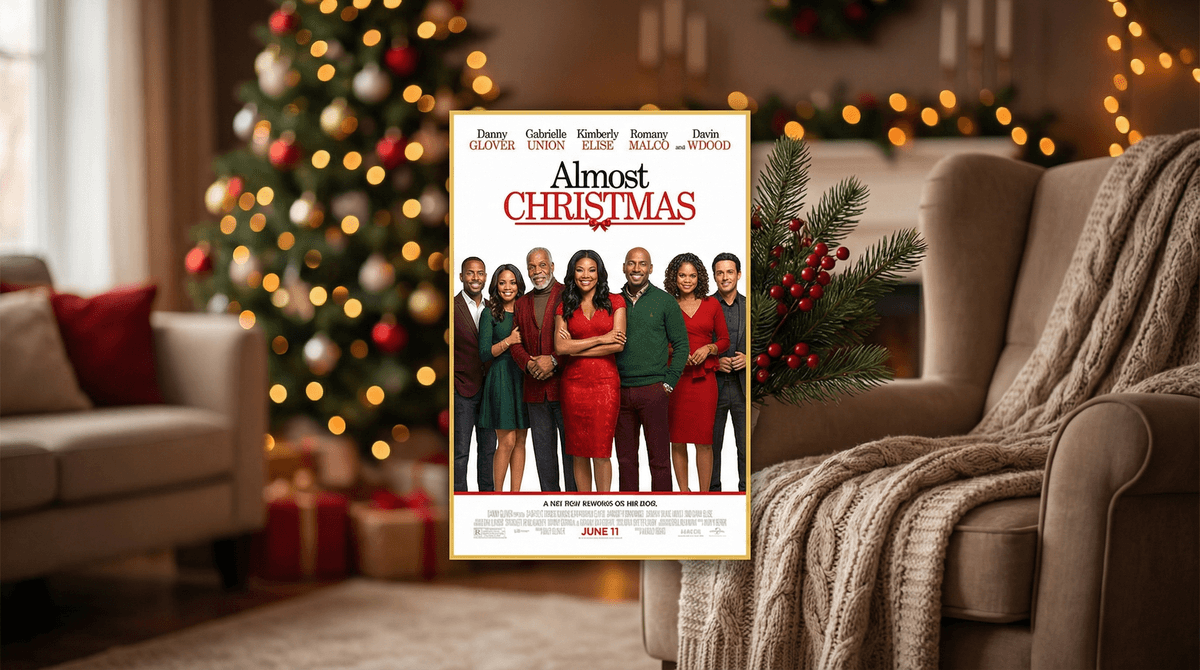
Almost Christmas: What Parents Need to Know About This PG-13 Holiday Film
TL;DR: Almost Christmas is a 2016 family dramedy that's more realistic about grief and family dysfunction than your typical holiday fare. It's rated PG-13 for language (including some casual profanity), drug references, and adult themes about loss. Critics were mixed—some appreciated the authentic portrayal of a Black family navigating their first Christmas after loss, others found it formulaic. Best for ages 13+, though mature 11-12 year olds might handle it with context. If you're looking for something lighter, try The Best Man Holiday or This Christmas instead.
Almost Christmas follows the Meyers family as they gather for their first holiday season after losing their mother. Walter (Danny Glover) is trying to hold everyone together, but his adult children bring their own baggage—marital problems, career stress, sibling rivalry, and unresolved grief. Think of it as a holiday movie that actually acknowledges that family gatherings can be complicated and messy, not just Hallmark-perfect.
The ensemble cast includes Gabrielle Union, Romany Malco, Mo'Nique, Kimberly Elise, Omar Epps, and Nicole Ari Parker. Director David E. Talbert (who also made Jingle Jangle) was going for something more grounded than his later Netflix musical.
The critical response was genuinely all over the map, which is actually helpful for parents trying to gauge fit:
The Positive: Critics who liked it appreciated the authentic representation of a middle-class Black family without stereotypes or trauma porn. Rotten Tomatoes gave it 47% (which sounds bad but is actually pretty standard for holiday movies). Several reviewers noted that the cast elevated material that could have been generic, and that the film treats grief with surprising nuance for a PG-13 comedy.
The Negative: Many critics called it predictable and overstuffed—too many characters, too many subplots, not enough depth. The New York Times said it "plays like a very special episode of a sitcom stretched to feature length." The Hollywood Reporter noted it "cycles through familiar beats" without much originality.
The Parent-Relevant Critique: What matters for your decision is that critics consistently flagged the tonal whiplash. The movie wants to be both a lighthearted comedy AND a serious exploration of grief, and it doesn't always balance those well. One minute there's slapstick humor, the next there's a heavy conversation about loss and regret.
Let's break down what actually earned that PG-13 rating:
Language: There's casual profanity throughout—nothing excessive, but enough "damn," "hell," and "ass" that it's noticeable. A few uses of stronger language (bleeped or cut off). If your family is strict about language, this will be an issue.
Drug References: One character is recovering from addiction, and there are references to past drug use. It's handled seriously, not played for laughs, but it's definitely a plot point. There's also social drinking at family gatherings.
Adult Themes:
- A married couple dealing with infidelity and potential divorce
- Financial stress and career pressure
- Grief and depression (the mother's death is the central plot)
- Sibling rivalry that occasionally gets mean-spirited
- Some mild sexual innuendo and references to adult relationships
What's NOT in it: No violence, no scary scenes, no explicit sexual content. The mature rating comes from emotional complexity, not graphic content.
Ages 13+: This is the sweet spot. Teens can handle the themes and will likely appreciate that it doesn't talk down to them. The family dynamics might actually spark good conversations about grief, forgiveness, and what it means to show up for family even when it's hard.
Ages 11-12: Depends entirely on your kid's maturity and exposure to these topics. If they've experienced loss or family conflict, they might find it relatable. If they're expecting a fun holiday romp, they'll be confused by the heavy moments. Preview it first or watch together.
Ages 10 and under: Nope. The emotional content is too mature, and they'll be bored by the adult relationship drama. Stick with Klaus or Jingle Jangle for this age group.
Family viewing note: This works well as a co-viewing experience with teens because it naturally opens conversations. The movie itself shows family members learning to communicate better, which is pretty meta.
Despite mixed reviews, this movie has found its audience. Here's why it resonates:
Representation matters: For families who rarely see themselves in holiday movies, Almost Christmas offers a refreshing alternative to the endless parade of white families in Connecticut. The Meyers family is aspirational without being unrealistic—they're successful, loving, and flawed.
Grief is real during the holidays: If your family has experienced loss, the "first Christmas without..." storyline might actually be cathartic rather than depressing. Several parent reviewers mentioned watching it after losing a parent and finding it validating.
It's not cynical: Yes, the family fights and messes up, but the movie genuinely believes in reconciliation and love. In an era of dark comedies and ironic detachment, that sincerity lands for some viewers.
It's not a kids' movie: Despite the PG-13 rating and holiday setting, this is fundamentally an adult dramedy that happens to be family-friendly-ish. Don't put it on expecting something that will entertain your 8-year-old.
The grief element is real: Multiple parents have reported their kids asking hard questions after watching—about death, about what happens to families when someone dies, about whether their own family would fall apart. Be ready for that conversation.
It's a conversation starter: If you're looking for a way to talk to teens about family expectations, grief, forgiveness, or what healthy relationships look like, this movie actually does provide some good entry points. The characters make mistakes and learn from them, which is more useful than perfect people being perfect.
Cultural context helps: Some of the family dynamics and communication styles are culturally specific. If your family background is different, you might want to frame it as "this is how this particular family works" rather than universal truths about all families.
If Almost Christmas doesn't feel like the right fit, here are some other options:
For similar themes but lighter tone: The Best Man Holiday (also PG-13, also deals with serious themes, but more ensemble comedy)
For family-friendly Black holiday films: This Christmas (PG-13, similar vibe but less heavy on grief)
For younger kids who want diverse holiday movies: Jingle Jangle (PG, pure joy, no grief)
For teens ready for more mature content: The Family Stone (PG-13, similar "complicated family gathering" energy)
You can also check out our guide to holiday movies that aren't just white families in Connecticut for more options.
Almost Christmas is a perfectly fine PG-13 holiday movie that tries to do something a bit different with the genre. It's not groundbreaking, and critics weren't wrong about the formulaic elements, but it offers representation and emotional honesty that some families will really appreciate.
The rating is appropriate—there's nothing shocking, but the themes and tone are definitely aimed at teens and adults. If you've got a 13-year-old who's ready for realistic family drama, or if your own family is navigating grief during the holidays, this might actually be exactly what you need.
But if you're looking for something the whole family can enjoy together, from age 6 to 60, this isn't it. The younger kids will be bored, and you'll spend the whole time explaining adult relationship dynamics.
Watch it if: You want a holiday movie that acknowledges grief and family complexity, you're looking for diverse holiday content, or you've got teens ready for more mature themes.
Skip it if: You want lighthearted holiday magic, you've got kids under 11, or you're not in the mood for heavy emotional content mixed with comedy.
Want to dig deeper into what makes holiday movies work (or not work) for different ages? Chat with us about age-appropriate holiday viewing .
.