

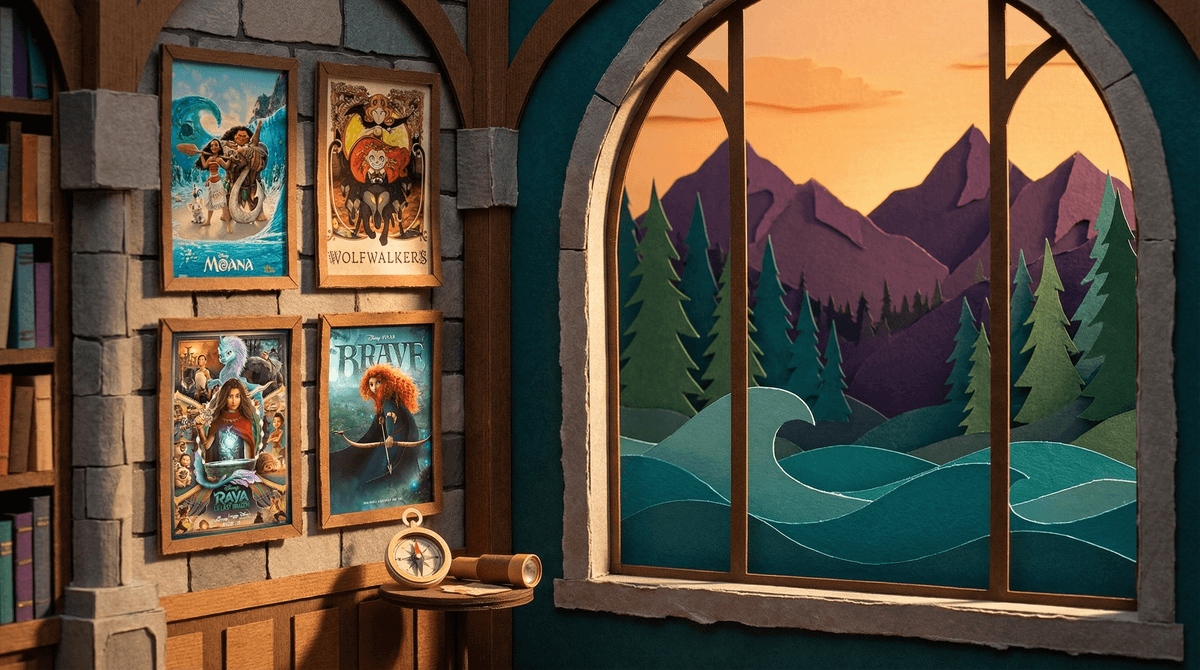
Remember when princess movies meant waiting around in a tower for a prince to show up? Yeah, those days are mostly over. Adventurous princess movies are the modern evolution of the genre—films where the princess (or princess-adjacent character) is the one doing the rescuing, making the tough calls, and generally running the show. Think Moana sailing across the ocean, Merida from Brave literally changing her fate with a bow and arrow, or Raya fighting to save her fractured world.
These aren't just princess movies with a sword thrown in. The best ones fundamentally reimagine what it means to be a princess in a story—they're about agency, problem-solving, courage, and often questioning the very systems that put them in a castle to begin with.
The evolution from passive to active princess characters isn't just about being "woke" or checking boxes (though representation does matter). It's about expanding the emotional and behavioral vocabulary available to kids—especially girls—watching these films.
Classic princess movies taught: Wait to be chosen. Be kind and beautiful. Your problems will be solved by romance.
Adventurous princess movies teach: Make hard choices. Build coalitions. Your problems require your action, not someone else's intervention.
And here's the thing—boys benefit from these movies too. Watching Elsa grapple with power and isolation, or seeing Mulan (the animated version, let's be real) save China through strategy and grit, gives all kids models for emotional complexity and creative problem-solving.
Not all "adventurous princess" movies are created equal. Some genuinely deliver on the promise; others slap a sword on a princess and call it progress.
The legitimately great ones:
-
Moana (Ages 5+) — No love interest, genuine cultural consultation, and a protagonist who saves her people through navigation skills and sheer determination. The music slaps too.
-
Brave (Ages 6+) — A mother-daughter story about changing tradition and fixing your own mistakes. Merida is stubborn and makes bad choices, which is refreshingly realistic.
-
Raya and the Last Dragon (Ages 7+) — About trust, trauma, and rebuilding broken communities. More complex than most Disney fare.
-
The Princess and the Frog (Ages 5+) — Tiana is working two jobs to achieve her dream before any prince shows up. The romance is actually secondary to her ambition.
-
Tangled (Ages 5+) — Rapunzel uses her hair as a weapon, negotiates her own rescue, and the movie explicitly deals with escaping an abusive parent.
The ones that try but miss the mark:
The romance question: Many of these movies still include romantic subplots, but they're no longer the point. In Tangled, Rapunzel and Eugene are partners. In Moana, there's no romance at all. If you're looking for zero romance, also check out Encanto—Mirabel's journey is entirely about family dynamics and self-worth.
Violence levels: These movies have more action than classic princess films, which means more peril and fighting. Raya includes martial arts combat. Brave has a legitimately scary bear. Mulan has war. Know your kid's tolerance for tension.
The "princess" label itself: Some kids reject anything marketed as "princess" content as babyish or too feminine. Fair! Try leading with "adventure movie" or just... not mentioning the princess angle. Raya barely uses the word princess. Moana explicitly has her reject the label.
Beyond Disney: Don't sleep on The Tale of Princess Kaguya (Studio Ghibli, ages 8+, gorgeous and melancholy) or Wolfwalkers (ages 7+, Irish folklore, stunning animation). These are quieter but arguably more emotionally sophisticated than most Disney offerings.
Ages 4-6: Moana, Tangled, The Princess and the Frog. Keep it straightforward with clear good vs. evil and happy endings.
Ages 7-9: Brave, Raya and the Last Dragon, Encanto. These handle more complex emotions like family conflict and moral ambiguity.
Ages 10+: The Tale of Princess Kaguya, Wolfwalkers, and honestly they're probably ready for Princess Mononoke (ages 11+, violent but thoughtful about environmentalism and war).
Adventurous princess movies aren't perfect—they're still mostly thin, conventionally attractive heroines, and Disney's idea of "adventure" sometimes means "girl does thing while looking pretty." But they're a significant improvement over "someday my prince will come" as the pinnacle of female ambition.
The best ones genuinely model courage, resourcefulness, and emotional intelligence. They show kids (all kids) that princesses can be complex, flawed, angry, ambitious, and heroic. They teach that fixing big problems requires action, not just wishing.
Are they going to single-handedly dismantle gender stereotypes? No. But they're part of a larger cultural shift toward more expansive stories for kids. And honestly? Some of them are just really good movies.
- Check out our guide to movies that pass the Bechdel test for more films with strong female characters
- Looking for non-princess adventure content? Try our guide to adventure movies for kids
- Want to explore strong female characters beyond animation? Here's our guide to live-action movies with adventurous girls