

Bratz Fashion Collabs: Navigating Body Image with Designer Dolls
TL;DR: Bratz dolls are back with high-fashion collaborations featuring designers like Mowalola and celebrities like Kylie Jenner, bringing runway aesthetics to the toy aisle. These partnerships amplify the dolls' already exaggerated proportions and hypersexualized styling, creating new body image conversations for parents. Here's how to navigate the discourse around these designer dolls while acknowledging why kids are drawn to them.
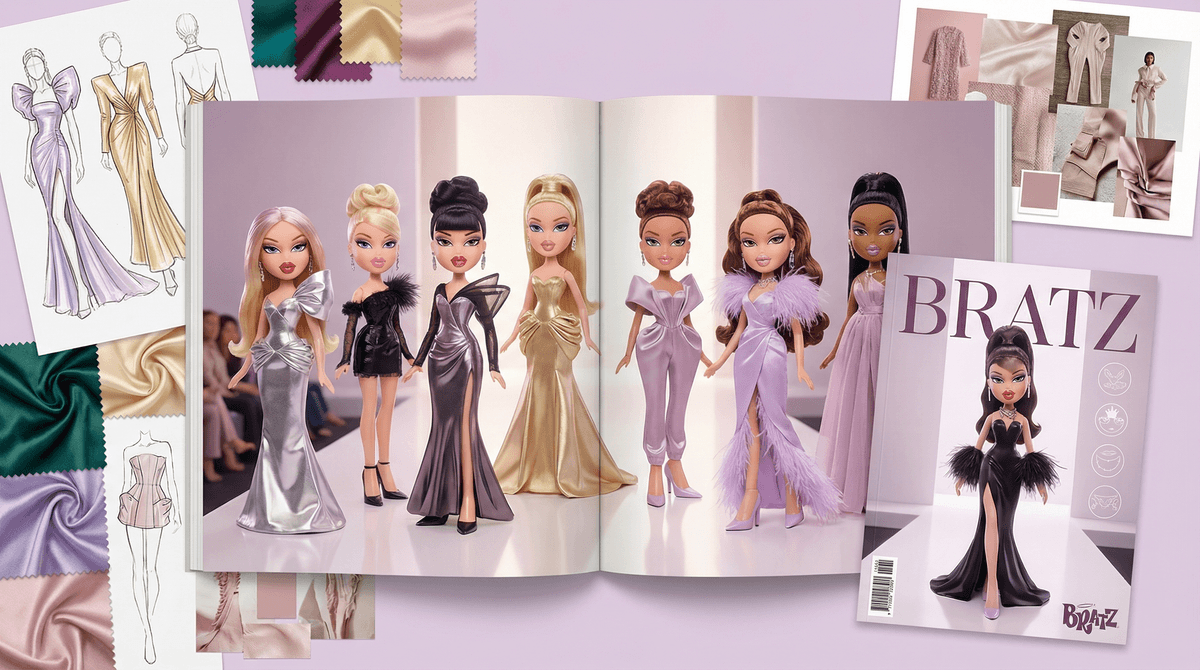
Twenty-three years after their original 2001 launch, Bratz dolls are experiencing a massive cultural resurgence. But this isn't your 2000s comeback—Bratz have gone high fashion. The brand has partnered with London-based designer Mowalola (known for provocative, body-conscious designs), launched a Kylie Jenner collaboration, and created limited-edition dolls that reference actual runway looks.
These aren't just toys anymore. They're collectibles that blur the line between children's play and adult fashion culture. The dolls feature the signature Bratz aesthetic—oversized heads, tiny bodies, exaggerated lips, and heavily made-up faces—but now they're wearing miniature versions of avant-garde fashion that costs thousands of dollars in real life.
For parents, this raises a question that's more complex than the original Bratz controversy: What does it mean when fashion industry body standards get miniaturized into children's toys?
The Bratz resurgence isn't just about kids—it's driven by millennials who grew up with the dolls and Gen Z collectors who appreciate the Y2K aesthetic. On TikTok, unboxing videos of limited-edition Bratz get millions of views. The hashtag #Bratz has over 6 billion views.
For kids ages 6-12, Bratz represent:
- Bold self-expression: The dolls' "passion for fashion" tagline celebrates creativity and individuality
- Diversity: Unlike early Barbie, Bratz launched with multiracial characters (Yasmin, Jade, Sasha, Cloe)
- Confidence: The dolls project an unapologetic attitude that appeals to kids exploring identity
- Collector culture: Limited editions and collaborations make them feel special and exclusive
For teens and young adults, add:
- Nostalgia: These were their dolls growing up
- Fashion credibility: Real designers taking Bratz seriously validates their childhood taste
- Ironic appreciation: The over-the-top aesthetic fits current maximalist trends
The problem? When your 8-year-old wants a doll designed for 28-year-old collectors, the body image implications shift.
Let's not sugarcoat this: Bratz dolls have proportions that would be physically impossible on a human body. We're talking:
- Heads that are roughly 1/3 the size of their total body (human heads are about 1/8)
- Waists so tiny they couldn't contain vital organs
- Legs that make up about 60% of body height
- Feet permanently posed in high-heel position (literally cannot stand flat)
- Lips that are exaggerated beyond any natural human feature
The fashion collaborations amplify these concerns because:
- They legitimize the proportions: When a respected designer like Mowalola creates clothes for these bodies, it sends a message that these proportions are aspirational, not just cartoonish
- They sexualize childhood play: Runway fashion often features adult sexuality—crop tops, cutouts, body-conscious silhouettes—that translate uncomfortably onto children's toys
- They're marketed to younger kids: While collectors drive sales, the dolls are still in the toy aisle marketed to ages 6+
- They conflate fashion with body: The message becomes "to wear cool clothes, you need this body type"
Research on dolls and body image shows that exposure to unrealistic body proportions in toys can affect how young children (especially girls ages 5-8) perceive their own bodies and what they consider "normal." A 2006 study found that girls exposed to Bratz dolls reported lower body esteem than those exposed to more realistic dolls.
Before we completely write off Bratz, some developmental psychologists argue that:
- Kids understand fantasy: Children ages 6+ can distinguish between doll proportions and real human bodies
- Creativity matters more: The focus on fashion, styling, and self-expression may outweigh body concerns
- Diverse representation: Bratz offered racial diversity before most toy lines
- Confidence modeling: The dolls' bold attitudes might build self-assurance
There's also something to be said for not catastrophizing every toy. Kids have played with unrealistic toys forever—from Barbie to Minecraft characters with block heads.
But here's the thing: the fashion collaborations change the equation. They're not just fantasy dolls anymore—they're miniature versions of real fashion worn by real influencers with real bodies that real girls compare themselves to.
Ages 6-8: This is the highest-risk age for body image internalization. At this age, kids are concrete thinkers who might not distinguish between doll proportions and human possibility.
- Consider waiting: More realistic dolls like American Girl or even standard Barbie offer better body proportions
- If they already have Bratz: Focus play on the creative/fashion aspects, not the bodies
- Talk explicitly: "These dolls have pretend bodies that aren't like real people. Real people come in all different shapes and sizes."
Ages 9-11: Kids this age can understand nuance but are also highly influenced by peer culture and media messages about bodies.
- Media literacy conversations: "Why do you think the doll is designed this way? What do you notice about her body compared to real people?"
- Designer collab context: "This doll is wearing clothes from a fashion show. Fashion shows often use clothes and models that are more about art than everyday life."
- Balance with diverse media: Make sure they're also exposed to books, shows, and real-life examples of diverse bodies
Ages 12+: Tweens and teens can engage in critical analysis but are also most vulnerable to comparison and social media influence.
- Critical fashion literacy: Discuss how fashion industry standards affect real people, not just dolls
- Follow diverse creators: Balance Bratz content with body-positive influencers and diverse fashion creators
- Collector vs. play distinction: If they're collecting Bratz as fashion art, that's different from internalizing body standards
The Kylie Jenner collaboration is particularly fraught: Kylie Jenner has been open about cosmetic procedures and represents a specific, achieved-through-intervention body type. A doll that looks like her sends layered messages about beauty, modification, and aspiration that are complex for kids to parse.
Limited editions create FOMO: The scarcity model means kids feel pressure to get dolls before they sell out. This isn't about play—it's about consumer culture.
Social media amplifies everything: Your kid isn't just playing with a doll—they're seeing TikToks of people styling them, Instagram posts of collections, and YouTube videos of unboxings. The exposure is constant and curated.
The nostalgia factor affects your judgment: If you loved Bratz as a kid, you might be more permissive. That's okay, but recognize that the cultural context has shifted. These dolls now exist in an Instagram/TikTok world where body comparison is constant.
Don't shame the interest: "Bratz are stupid" or "Those dolls look like trash" will just make your kid defensive. Instead: "I can see why you like the fashion and attitude. Let's talk about what we notice about how they're designed."
Ask questions:
- "What do you like about these dolls?"
- "Do you think people's bodies look like this in real life?"
- "How do you think the doll's body compares to your body? To mine? To your friends'?"
- "Why do you think the fashion designer wanted to make clothes for these dolls?"
Make it about media literacy, not body shame:
- "Companies design dolls to look a certain way to sell more. Let's think about what they're trying to make us feel."
- "Fashion shows and dolls are about fantasy and art. Real beauty looks like all different kinds of people."
Connect to their other interests: If they love fashion design games or creative apps, emphasize that fashion is about creativity and self-expression, not body type.
Share your own experience: "When I was growing up, I sometimes felt like I was supposed to look like [whatever media you consumed]. Here's what I learned about real bodies..."
If you want to redirect toward less body-problematic options that still offer fashion and creativity:
- Creatable World dolls: Gender-inclusive dolls with customizable features and more realistic proportions
- Rainbow High dolls: Still stylized but with slightly more realistic proportions and a focus on art school/creativity
- Fashion design apps: Fashion Famous on Roblox, or dedicated fashion design apps let kids create without body focus
- Real fashion history books: Books about designers like Coco Chanel, Yves Saint Laurent, or contemporary designers teach fashion without doll bodies
- DIY fashion projects: Sewing, upcycling clothes, or designing outfits for more realistic dolls
Bratz fashion collaborations represent a collision between children's play, adult collector culture, high fashion, and social media—and that collision has body image implications parents need to navigate thoughtfully.
You don't have to ban Bratz. But you do need to be aware that these aren't just dolls anymore—they're cultural artifacts that carry messages about beauty, fashion, bodies, and aspiration. The designer collaborations add a layer of legitimacy that makes those messages more powerful.
The key is active mediation: don't just hand over the doll and walk away. Talk about what you're seeing. Ask questions. Provide context. Balance with diverse body representation in other media. And watch for signs that your kid is internalizing unrealistic standards—negative self-talk about their body, comparison to the dolls, or fixation on appearance over other qualities.
Bratz can be part of a media diet that includes diverse body types, creative expression, and critical thinking. They just can't be the only thing on the menu.
- Audit the media diet: Look at what other body messages your kid is getting from shows, games, YouTube channels, and social media
- Start conversations early: Don't wait until there's a problem—talk about media and bodies proactively
- Model body positivity: Kids learn more from what you say about your own body than from any doll discussion
- Set boundaries on collector culture: Decide as a family how much you're participating in limited-edition FOMO
- Stay curious: Ask your kid to teach you about why they love Bratz—understanding their perspective helps you guide more effectively
Want to explore more about body image and kids' media? or learn about other fashion-forward toys with better body representation?