

Ditch the Scroll: 5 Underrated Movies to Spark Deep Debates with Your 14+ Teen
TL;DR: Skip the algorithm's top picks and try these five conversation-starter films that tackle AI ethics, identity, family legacy, and growing up—without feeling like homework.
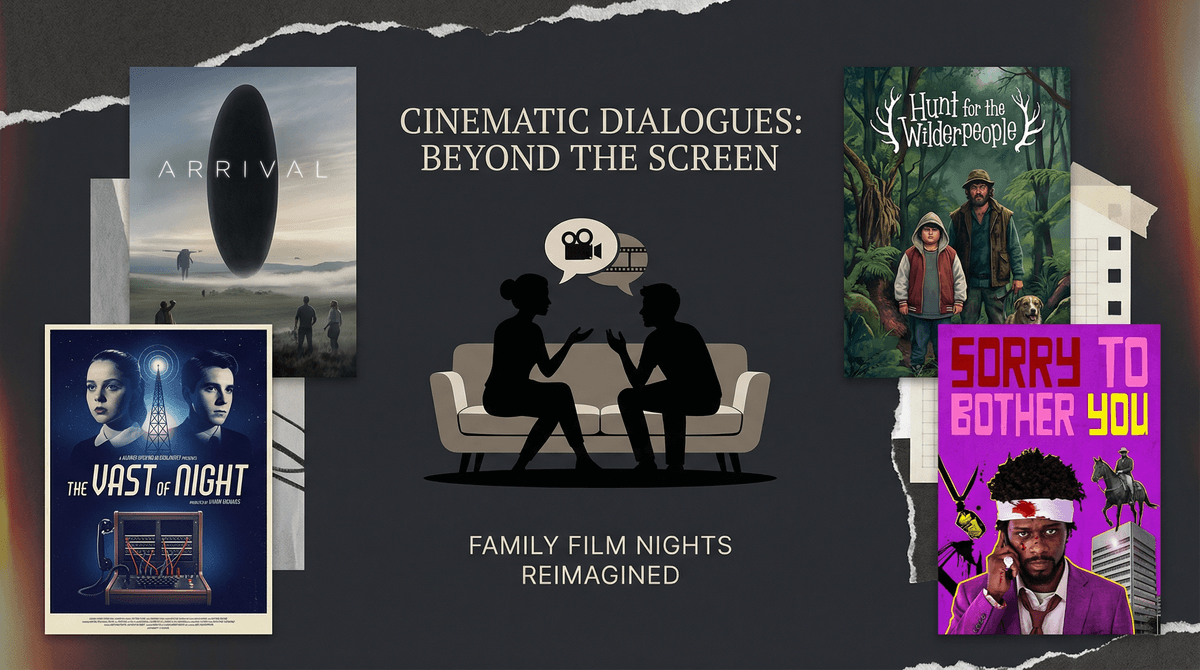
- The Vast of Night (2019) - Sci-fi mystery that feels like a podcast come to life
- Hunt for the Wilderpeople (2016) - New Zealand adventure about found family
- Arrival (2016) - Linguistics meets aliens in the most thoughtful way
- The Way Way Back (2013) - Coming-of-age summer that hits different
- Sorry to Bother You (2018) - Absurdist satire about capitalism and code-switching
Here's what's happening in most homes: 92% of families have streaming services, with 40% using Netflix regularly and another 30% letting kids browse Amazon Prime freely. But here's the problem—we're all drowning in the same algorithm-fed content. Your teen has probably seen Stranger Things, binged Wednesday, and can quote The Hunger Games backwards.
Nothing wrong with any of that. But when was the last time a movie actually made your family argue about something real? Not just "that was good" but "wait, what would YOU do in that situation?"
These five films aren't on every "best teen movies" list, and that's exactly why they work. They're smart without being pretentious, conversation-worthy without feeling like assigned viewing, and genuinely entertaining while making your teen's brain work a little.
Age: 14+ | Runtime: 89 minutes | Where: Amazon Prime
Set in 1950s New Mexico, this indie sci-fi follows a teenage switchboard operator and a radio DJ who pick up a strange audio frequency one night. That's it. That's the whole setup. And it's absolutely mesmerizing.
Why it works: The entire film feels like you're listening to an old-time radio drama—long, unbroken shots, characters talking over each other, minimal special effects. It trusts your teen's attention span in a way most movies don't. Plus it tackles questions about technology, government secrecy, and whether we're actually listening to each other (hello, phone-at-dinner metaphor).
The conversation starter: "If you heard something that could change everything, but no one believed you, what would you do?" In 2026, when AI is everywhere and only 15% of families are actively using it with their kids, this hits different. Who controls information? What makes something true?
Parent note: One character uses the n-word in a historical context (recounting racism he experienced). It's brief but intentional—good opportunity to discuss how language and context matter.
Age: 13+ | Runtime: 101 minutes | Where: Various streaming (check your library too)
A rebellious foster kid and his grumpy foster uncle accidentally become fugitives in the New Zealand bush. From the director who later made Thor: Ragnarok, but this is smaller, weirder, and infinitely more heartfelt.
Why it works: It's genuinely funny (your teen will actually laugh, not just exhale through their nose), but underneath it's about what makes a family real. The kid, Ricky, is "a bad egg"—he's been rejected by everyone. The uncle wants nothing to do with him. And somehow, running from child services through the wilderness, they figure it out.
The conversation starter: "What does family actually mean?" Not the Hallmark version—the real, messy, chosen version. Especially relevant if you've got blended families, adoption stories, or just the universal experience of feeling like you don't quite fit.
Bonus: The New Zealand scenery is stunning, the soundtrack slaps, and there's a running gag about haikus that might actually make your teen try writing one.
Age: 14+ | Runtime: 116 minutes | Where: Various streaming
Aliens land. A linguist is recruited to figure out how to communicate with them. But this isn't Independence Day—there are no explosions, just language, time, and one of the most emotionally devastating twists in recent sci-fi.
Why it works: In a world where your teen is growing up with ChatGPT and translation apps, this movie asks: what happens when language itself changes how you think? The aliens' written language is circular, non-linear—and learning it changes the protagonist's perception of time. It's heady stuff, but the emotional core (about parenthood, loss, and choice) makes it land.
The conversation starter: "If you knew something terrible was going to happen, but also knew it would lead to something beautiful, would you still choose it?" This one goes deep. Perfect for teens who are starting to think about their own futures, consequences, and what makes life meaningful.
Parent note: Some intense themes about grief and loss—a child dies (not shown, but discussed). Not graphic, but emotionally heavy. If your family has experienced loss, this could be cathartic or difficult depending on where you are.
Age: 13+ | Runtime: 103 minutes | Where: Various streaming
Awkward 14-year-old Duncan is dragged to a beach house for the summer with his mom's awful boyfriend. He finds refuge working at a rundown water park with a crew of misfit employees who actually see him.
Why it works: This is the most "traditional" pick on this list—it's a coming-of-age story, pure and simple. But it's done so well, and Steve Carell plays against type as the douchebag boyfriend in a way that's uncomfortably realistic. Your teen will feel Duncan's discomfort at that dinner table.
The conversation starter: "Who are the adults in your life who actually see you?" Not the ones who are supposed to (parents, teachers), but the ones who get it. This movie is about finding your people, finding your voice, and realizing that growing up sometimes means speaking up to the adults who are supposed to have it together but don't.
Parent bonus: The water park manager (Sam Rockwell) is the kind of adult we all wish we'd had as teens—goofy, present, and genuinely invested in this kid's confidence. It's a good reminder of what mentorship can look like.
Age: 16+ | Runtime: 112 minutes | Where: Various streaming
A Black telemarketer discovers that using his "white voice" leads to wild success, which leads to a promotion, which leads to... well, things get weird. Like, really weird. This is social satire that starts grounded and goes completely off the rails (in the best way).
Why it works: Your teen is navigating code-switching, online personas, and the pressure to perform different versions of themselves constantly. This movie takes that concept and runs it through a blender with capitalism, race, labor rights, and body horror. It's absurdist, uncomfortable, hilarious, and will absolutely spark a debate about authenticity vs. success.
The conversation starter: "How much of yourself do you change to fit in or get ahead?" In a world where teens curate their online presence obsessively, this hits. Also: "At what point does success cost too much?"
Parent note: This is rated R for good reason—language, some sexual content, drug use, and a truly bonkers third act involving genetic modification. This is for your older, more mature 16+ teen who can handle satire that doesn't pull punches. Not for sensitive viewers.
These aren't the movies that pop up when your teen searches "best movies" or when Netflix auto-plays the next episode. They require a little effort to find, a little buy-in to start, and a little patience to unfold. And that's exactly why they work.
According to our community data, families are averaging 4.2 hours of screen time per day, with weekends hitting 5 hours. Most of that is passive consumption—scroll, watch, scroll, watch. These movies ask for something different: active engagement.
They're also genuinely good for parent-teen bonding. You're not just sitting next to each other staring at a screen—you're experiencing something together that you'll actually discuss afterward. Maybe at dinner (without phones, radical concept). Maybe on the car ride to school the next day. Maybe in a random text thread three days later when something reminds them of a scene.
13-14 year olds: Start with Hunt for the Wilderpeople or The Way Way Back. Both are accessible, emotionally resonant, and don't require a lot of context.
15-16 year olds: Add The Vast of Night and Arrival. These require more patience and abstract thinking, but they're incredibly rewarding.
17+ or mature 16: Sorry to Bother You is for teens who can handle satire, surrealism, and some genuinely uncomfortable content. Watch it together, not as a "hey, go watch this" solo assignment.
Let's be real: suggesting a movie your teen has never heard of is a tough sell. Here's what works:
1. Lead with the hook, not the lesson. Don't say "this movie will teach you about language and time." Say "this movie has the wildest twist ending and I want to see if you figure it out before I tell you."
2. Make it an event. Popcorn, phones away, commitment to watching without interruptions. If you're treating it like background noise, they will too.
3. Don't force the conversation. After the movie ends, give it space. Say "okay, I need like ten minutes to process that" and let them come to you. The best conversations happen in the car the next day, not in the forced debrief right after.
4. Be willing to bail. If 20 minutes in they're genuinely not into it, pivot. You can always try again later. Forcing it kills any chance of them trusting your next recommendation.
Your teen is growing up in a world where the average screen time is over 4 hours a day, where 85% of families aren't even touching AI tools together, and where most media consumption is algorithm-driven and passive. These five movies offer something different: a shared experience that makes you both think, feel, and talk.
They're not going to solve your family's screen time battles or magically make your teen more communicative. But they might give you a common language, a shared reference point, and proof that sometimes the best content isn't what's trending—it's what makes you pause and actually think.
Want more movie recommendations tailored to your family? Or check out our guides on best coming-of-age movies and movies that teach critical thinking.
Now go start an argument about whether knowing the future changes free will. You're welcome.