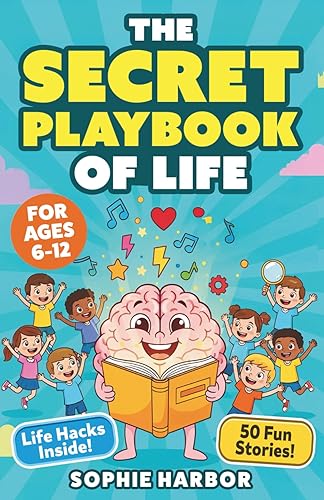
The "Anti-Lecture" approach to SEL
Most social-emotional learning (SEL) books feel like they were written by a committee of therapists for a committee of other therapists. They’re heavy on theory and light on the actual reality of being a third-grader who just got snubbed at the lunch table. This collection works because it prioritizes the story over the sermon.
The 2026 edition feels particularly tuned into the specific brand of social anxiety kids are carrying right now. It doesn't just talk about "being brave" in a vacuum; it deals with the friction of modern friendships and the pressure to perform in a world that feels increasingly public. If you’ve struggled to get your kid to engage with "feelings books" before, this is the one that might actually stick because it frames emotional intelligence as a competitive advantage rather than a chore.
Why the "Life Hack" framework works
The standout feature here isn't the stories themselves—though they are solid—it’s the "Life Hack" and "Tools to Try" sections at the end of each chapter. This shifts the book from a passive reading experience to an actionable toolkit.
Instead of vague advice like "be a good friend," the book offers specific scripts and mental frameworks. It’s the difference between telling a kid to "be confident" and giving them a literal step-by-step for how to handle a disagreement. If you’re looking for a deeper dive into how to roll these lessons out at home without sounding like a school counselor, check out our guide to The Secret Playbook of Life: Social Skills for Kids Who Hate Lectures.
How to use it without the "Homework" vibe
There are 50 stories in here, and the temptation is to treat it like a traditional book and read it cover-to-cover. Don't. That’s the fastest way to make a kid tune out.
The better move is to treat this as a reference library. When your kid comes home venting about a specific social hurdle—someone being bossy, feeling left out, or being afraid to try a new sport—that’s when you pull this off the shelf. Find the story that fits the moment. It makes the "Life Hack" feel like a solution to a current problem rather than a random lesson.
For kids who are more interested in technical systems than social ones, this book can be a tough sell. If your kid is the type who would rather understand how an algorithm works than how a friendship does, you might have better luck with something like Can an 8-Year-Old Learn Neural Networks?. But for most kids in the 6-12 range, the "Secret Playbook" offers a rare bridge between "this is how I feel" and "this is what I can actually do about it."