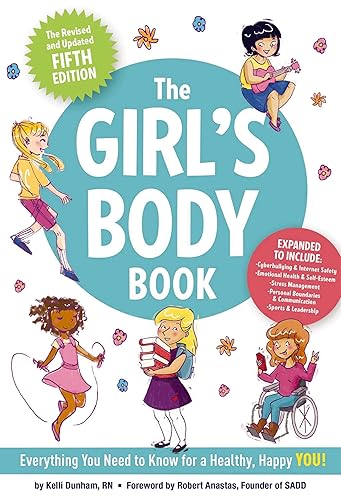
If you’re browsing books about puberty, you’ll quickly realize there are two titans in this space. There is the American Girl classic (The Care and Keeping of You), and there is this book. While the former feels like a gentle, beautifully illustrated magazine, The Girls Body Book feels like a field manual. It’s dense, practical, and written by someone who has clearly spent a lot of time answering the "gross" questions without blinking.
The "Cool Nurse" energy
Kelli Dunham’s background as a registered nurse and a stand-up comic is the secret sauce here. Puberty books often fail because they either lean too hard into clinical coldness or get cringey by trying too hard to be a "bestie." Dunham hits the middle ground. She talks to readers like a smart older cousin who happens to have a medical degree.
The tone is matter-of-fact. When the book covers things like vaginal discharge or body odor, it doesn't use flowery metaphors. It explains the biology, tells the reader how to handle it, and moves on. This lack of drama is exactly what a panicked ten-year-old needs. It lowers the temperature on topics that kids usually find humiliating.
Why the 2019 update matters
If you’re buying a physical copy, make sure it’s this fifth edition. Puberty hasn't changed since the 90s, but the social context around it has shifted radically. This version includes sections on #MeToo, consent, and cyberbullying that are mandatory for the current middle school experience.
The inclusion of "emotional health" and "stress management" is also a major upgrade. Most older guides treat puberty as a series of physical hurdles—get a bra, buy some pads, you’re done. Dunham recognizes that the mental game is often harder than the physical one. She treats boundaries and communication as skills that need to be practiced, just like personal hygiene.
The "Care and Keeping" comparison
If your kid is a visual learner who wants soft watercolors and a "spa day" vibe, they might prefer the American Girl series. But if your kid is the type who wants the details, The Girls Body Book is the better pick.
- It’s more portable and less "precious" than the larger coffee-table-style guides.
- It covers a broader range of social issues, including school safety and leadership.
- It’s part of a set; if you have a son as well, The Boy's Body Book provides a consistent "voice" for the household.
This isn't a book most kids will read cover-to-cover in one sitting. It’s a reference tool. You’ll likely find it face-down on a nightstand opened to a specific page, or tucked under a pillow. That’s the win. It’s there to answer the questions they aren't quite ready to ask you out loud yet, providing a bridge until they are.