The hook of the "Anti-Logic"
Most children's literature tries to teach a lesson or follow a hero’s journey. Wayside School doesn't care about your journey. It operates on a wavelength of pure, unadulterated absurdity. This is the literary equivalent of a fever dream, and that’s exactly why it works for a seven-year-old who is starting to realize that the adult world is often just as nonsensical.
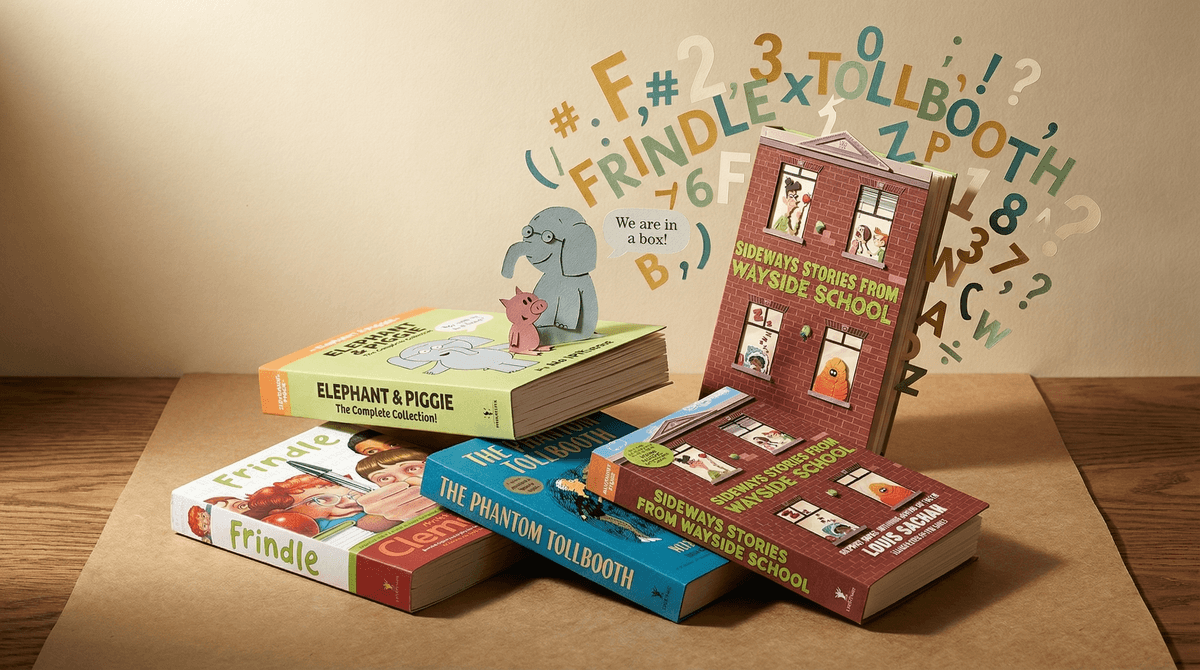
When a teacher turns her entire class into apples in the very first chapter, Louis Sachar isn't setting up a grand metaphor for the education system. He’s just being weird. That weirdness is a magnet. If you’re trying to find funny books for kids that don't rely on the same three tropes, this is the gold standard. It respects a child’s intelligence by assuming they can handle a story that doesn't always make sense.
The secret weapon for short attention spans
If you have a kid who treats a 200-page book like a chore, the 30-chapter structure is your best friend. Each chapter is a self-contained vignette about a specific student on the thirtieth floor. You can read one in five minutes. This makes it the perfect "bridge" book for kids who are moving away from graphic novels but aren't quite ready for the dense prose of a middle-grade epic.
Because the chapters are so lean, there’s no room for filler. You get the setup, the joke, and the resolution (or lack thereof) at a breakneck pace. It creates a "just one more" feedback loop that builds reading stamina without the kid even realizing they’re doing the work. If you’re looking for classic chapter books that still work, this one feels significantly more modern than its 1985 timestamp suggests.
Why it’s the ultimate "Screen-Free" pivot
We talk a lot about finding a 30-story antidote to brain rot, and this series is the literal blueprint. The humor here is surrealist and dry—it feels like a precursor to the kind of "random" humor kids find on YouTube or TikTok, but it requires them to use their own imagination to picture a kid like Sammy, who is actually just a dead rat in a bunch of raincoats.
There is a specific kind of satisfaction in seeing a kid laugh at a printed page. It’s a different kind of dopamine hit than an algorithm provides. Sachar’s writing is punchy and relies on wordplay and logic puzzles (like the floor that doesn't exist), which keeps a kid’s brain engaged rather than just passive.
Specific friction to keep in mind
The only thing that might trip up a modern reader is the lack of a traditional protagonist. There is no Harry Potter or Greg Heffley to follow through the whole book. The "hero" is the school itself. If your child is the type who needs a deep emotional connection to a single character to stay interested, the constant jumping from Bebe to John to Myron might feel disjointed.
However, for most kids, the variety is the point. If they don't like one kid’s story, they only have to wait three pages for a completely different vibe. It’s an ensemble comedy where the jokes land fast and the stakes are delightfully low. You aren't reading this to find out if the world is saved; you're reading it to see if the substitute teacher is actually three kids in a trench coat.