The Digital Pivot
The biggest reason to grab the 2025 edition instead of scouring a used bookstore for a dusty 2022 copy is the College Board’s shift to digital testing. AP U.S. History (APUSH) isn't just about knowing what happened at the Constitutional Convention anymore; it’s about navigating a screen-based interface without losing your mind. This edition is specifically tuned for that transition.
The Princeton Review has built its reputation on being the "test hacker’s" bible. While textbooks try to teach you history, this book tries to teach you the exam. It breaks down the source-based multiple-choice questions—those tricky passages where you have to interpret a 19th-century diary entry—in a way that feels like solving a logic puzzle rather than reciting facts. If your student is a strong history buff but a weak test-taker, this is the specific bridge they need.
The "Premium" Reality Check
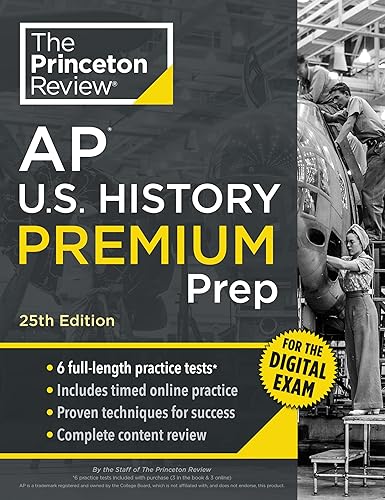
You’re paying a markup for the "Premium" label, which mostly translates to more practice tests. You get six total: three in the physical book and three online. Be realistic about your teen’s schedule. Most students barely find the time to finish two full-length practice exams, let alone six.
However, the value here isn't just the quantity. The online platform includes a timer option that simulates the actual exam pressure. If you're wondering is the Princeton Review AP U.S. History Premium Edition actually worth it, consider how your kid handles anxiety. For a student who freezes up during timed high-stakes tests, having six "rehearsals" is a massive confidence builder. If they’re already a standardized testing pro, the standard edition is probably fine.
Managing the Friction
The "Digital Practice Online" component is where the best utility and the biggest distractions live. The official Penguin Random House page notes the inclusion of interactive elements that mimic the exam interface. This is great for muscle memory, but it requires the student to be on a browser.
We know how that goes. One minute they’re analyzing a DBQ about the New Deal, and the next they’re three levels deep into a Discord thread. If your kid struggles with focus, have them do the content review chapters in the physical book first. Save the digital tools for Saturday morning "mock exams" where you can keep an eye on the tab-switching.
The Strategy Over the Story
Don't expect this to be a narrative history. It’s a series of drills. The end-of-chapter summaries are basically "cheat sheets" of the most likely topics to appear on the test. It won't give them a deep, nuanced appreciation for the complexities of the Reconstruction era, but it will tell them exactly which three keywords they need to drop in an essay to snag a point from the grader.
With an Amazon rating of 4.6, the consensus is clear: it’s the most reliable "5" generator on the market. It’s the academic equivalent of a HIIT workout. It’s painful while you’re doing it, but the results are hard to argue with when July scores roll around.