The Pokedex of the playground
If your kid is obsessed with stats, categories, and "who would win" debates, you already know that a traditional narrative isn't always the fastest way to their heart. For a certain type of young reader, a story is just a delivery mechanism for lore. This notebook leans entirely into that impulse. It’s not a story; it’s a database.
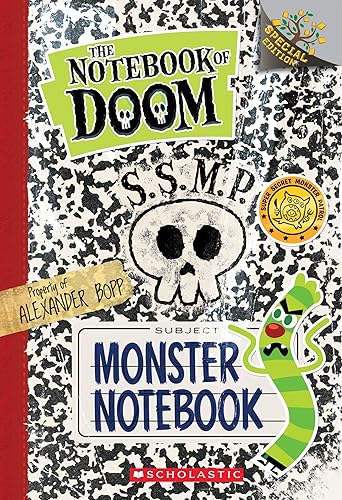
It’s modeled after the actual notebook used by the series protagonist, Alexander Bopp, which gives it an immediate "in-universe" feel. In the world of early chapter books, that sense of immersion is a massive hook. It turns the act of reading into an act of research. If they’ve spent any time with Pokemon or even the more list-heavy Minecraft guides, the layout here will feel like a comfortable home base.
Wacky, not spooky
The genius of the Notebook of Doom series—and this manual specifically—is how it handles the concept of "monsters." We aren't talking about the stuff of nightmares. We are talking about absurdity. Troy Cummings has a talent for taking mundane, everyday objects and turning them into "threats" that are more hilarious than haunting. Think balloon animals, shadow puppets, or rogue vegetables.
Because this book focuses on the "habitat" and "diet" of these creatures, it strips away the tension of a ticking-clock plot and replaces it with curiosity. For a kid who might be a bit "scaredy-cat" when it comes to traditional ghost stories, this is a safe way to play with the tropes of the supernatural without actually needing to leave the lights on at night. It frames the monsters as puzzles to be solved rather than things to be feared.
The "Gateway Drug" strategy
If you are looking at this book, you are likely in one of two camps: either your kid is already deep into the 13+ books in the main series, or you’re looking for a way to trick them into starting.
If they’re already a fan, this is a victory lap. It’s the kind of book they’ll keep in their backpack to show friends at recess. But if they haven't started the series yet, this is actually a brilliant entry point. Because it’s a "Special Edition" that compiles information from the whole run, it acts as a highlight reel. They can flip through, find a monster that looks particularly ridiculous—like a giant snow-beast or a swarm of killer vines—and then seek out the specific book where that monster appears.
Beyond the page
The most useful thing about the Monster Notebook isn't the 144 pages of content; it's the white space it creates in a kid's head. The format is so easy to mimic that it almost always leads to "The [Your Kid's Name] Notebook of Doom."
It’s one of those rare media tie-ins that actually encourages offline creativity. Once they see the template—Name, Habitat, Diet, Weakness—they start looking at the world through that lens. The toaster isn't just a toaster; it’s a potential crumb-spitting behemoth. If you want to lean into this, grab a cheap composition notebook and a pack of markers when you buy this. You aren't just giving them a book; you’re giving them a hobby.
For more on how to manage the transition from "read-alouds" to independent reading, you can check out official resources from Scholastic's Branches line, which is specifically engineered to build "reading stamina" in this age group.