The verse isn't a gimmick
Most people see a book written in poetry and assume it’s going to be flowery or difficult. With Ellen Hopkins, it’s the exact opposite. The free verse is actually a hack for reluctant readers. Because there is so much white space on the page, the story moves at a breakneck pace. It feels like a thriller.
The layout of the words often mirrors Kristina’s mental state. When she’s high, the text might spiral; when she’s crashing, it feels jagged. This visual shorthand makes the experience visceral in a way a standard prose novel can't quite capture. If your teen usually complains that books are "too slow," the format here might be the thing that actually keeps them turning pages until 2:00 AM.
The "Bree" of it all
The most effective part of the story is the introduction of Bree, the alter ego Kristina creates to handle the drug use. It’s a brilliant, terrifying way to show how addiction works without sounding like a health class textbook. Kristina is the "good girl," but Bree is the one who takes risks, seeks out the "monster," and ignores every red flag.
This duality is a great entry point for a conversation. It moves the discussion away from "drugs are bad" and toward how substance use can fracture a person's identity. If you’re looking for books about addiction for teens that prioritize psychological depth over easy answers, this is the gold standard. It doesn't treat the reader like they're stupid. It assumes they can handle the complexity of a protagonist who is both a victim and, at times, a very willing participant in her own destruction.
If they want more
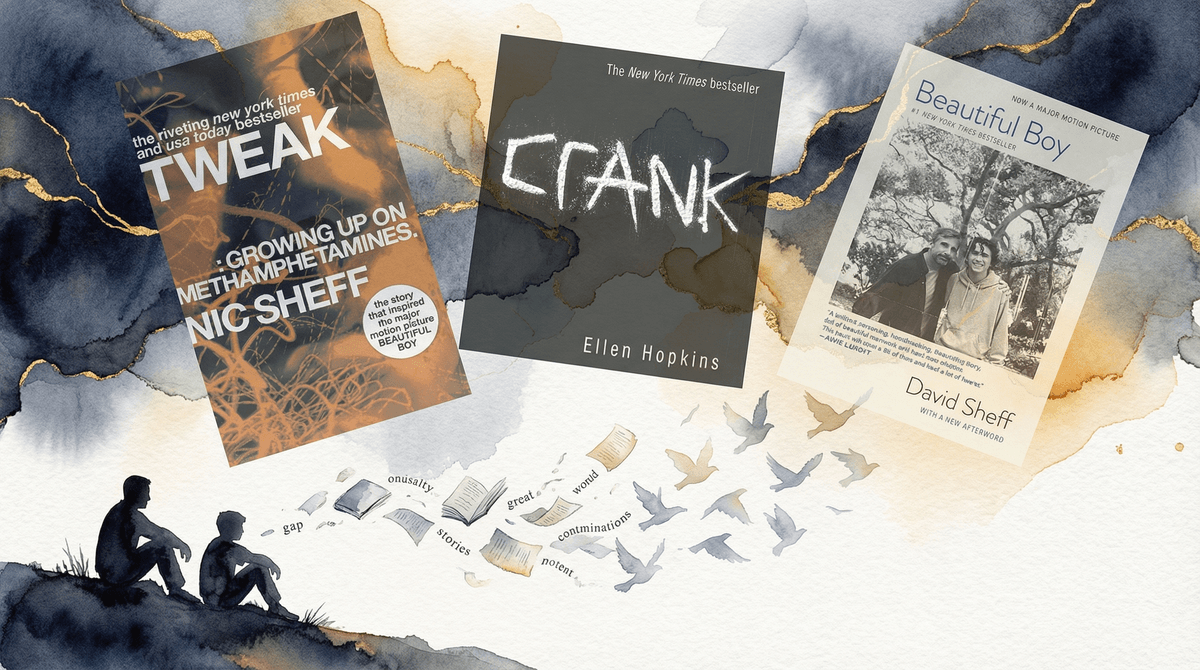
If your kid finishes this and is vibrating with questions, know that this is just the start of a trilogy. The story continues, and it doesn't necessarily get easier to read. The fact that this is based on the life of the author's daughter adds a layer of heaviness that kids pick up on immediately. They can tell when a writer is faking it, and Hopkins clearly isn't.
For parents who grew up with Go Ask Alice, this is the modern, more honest successor. While that older book felt like a staged cautionary tale, Crank feels like a confession. It’s the difference between a "Keep Off Grass" sign and a first-hand account of a wipeout.
The "Banned Book" appeal
Don't be surprised if your teen found out about this book because it was on a challenged book list. It has been a lightning rod for controversy since 2001 because it doesn't look away from the ugliness of meth. In a weird way, the controversy is a gift. It gives the book street cred with teens who are naturally skeptical of anything "educational." They read it because it feels like they’re getting away with something, but they stay because the emotional stakes are real. If they’ve already watched shows like Euphoria, the content here won't shock them, but the intimacy of the verse might hit them harder.