The 30-minute vibe check
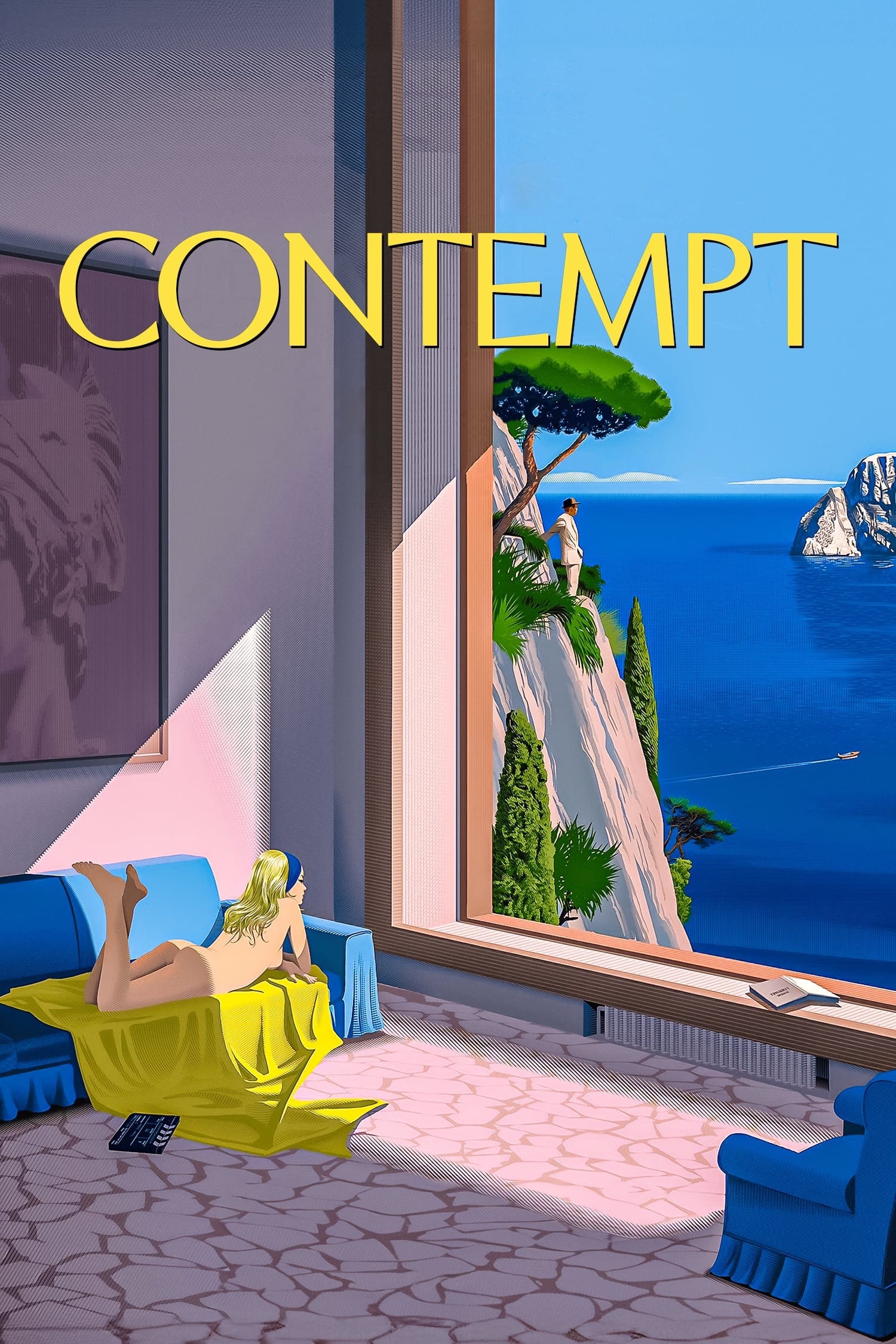
If you want to know if you’ll actually finish Contempt, look at the middle of the movie. There is a sequence set in an unfinished apartment that lasts roughly half an hour. It is just a husband and wife—Paul and Camille—walking from room to room, arguing, making up, putting on a robe, taking it off, and slowly realizing they don't respect each other anymore.
In a modern movie, this would be a three-minute montage. Godard makes you sit in the room until the air feels thin. It’s brilliant if you’re interested in the "geometry" of a breakup, but it’s the exact moment where casual viewers usually check their phones and never look back. If your teen is a theater kid or an aspiring cinematographer, they’ll find the blocking and the primary-color palette (reds, blues, and yellows everywhere) fascinating. For anyone else, it’s a test of endurance.
The Bardot factor
You can’t talk about this movie without talking about Brigitte Bardot. At the time, she was the biggest star in the world, and the producers essentially forced Godard to include nudity because they wanted a "Bardot movie" they could sell to the masses.
Godard’s response was to film her in a way that feels cold and analytical rather than purely titillating. He was essentially trolling his own financiers. If you’re considering this for a high schooler who’s expressed interest in film history, it’s worth reading our guide on Brigitte Bardot's Classic Films: What Parents Should Know About Her Iconic (But Mature) Cinema to understand how her image was used—and weaponized—in the 1960s. In Contempt, she isn't playing a bombshell; she’s playing a woman who is bored to death by her husband’s lack of a backbone.
The "Odyssey" of it all
The plot is a meta-loop. You have a producer (Prokosch) who wants a commercial hit, a legendary director (Fritz Lang, playing himself) who wants to make art, and a screenwriter (Paul) who is selling his soul to pay for his wife’s apartment. They are trying to adapt Homer’s The Odyssey, and the parallels aren't subtle.
As Martin Scorsese noted, it’s one of the greatest films ever made about the actual process of filmmaking. It captures that specific friction when art meets money. If you’ve ever worked in a corporate creative environment, the scenes where the producer throws a tantrum because the director is being too "philosophical" will feel painfully familiar.
Is it actually "fun"?
No. It’s 92% on Rotten Tomatoes because it is a compositional masterpiece. Every frame looks like a painting you’d see in a modern art museum. But "fun" isn't the goal here. It’s a tragedy about the moment love turns into indifference.
If your kid liked the stylized tension of something like Marriage Story or the slow-burn atmosphere of Tár, they might find this rewarding. If they need a plot that moves at a clip, keep scrolling. This is a movie meant to be argued about over coffee afterward, not one to put on for a Friday night popcorn session. It’s beautiful, it’s arrogant, and it’s deeply cynical. If that’s your brand, you’ll see why it’s a 7.4 on IMDb despite being over sixty years old.