

YouTube Tutorials for Young Timothée Chalamet Fans
TL;DR: Your tween just discovered Timothée Chalamet and now wants to recreate his curly hair routine, copy his fashion sense, or learn how to do "his" makeup look. YouTube is flooded with tutorials targeting young fans, and while most are harmless fun, there's a lot parents should understand about the fandom economy, beauty standards, and the difference between age-appropriate content and tutorials designed for adults.
Timothée Chalamet has become a cultural phenomenon for Gen Z and Gen Alpha, particularly among tweens and teens aged 10-16. He's not just an actor—he's become an aesthetic, a vibe, a whole Pinterest board come to life. And where there's a celebrity crush, there's a cottage industry of YouTube content teaching kids how to look, dress, and style themselves "like Timothée."
The content breaks down into a few main categories:
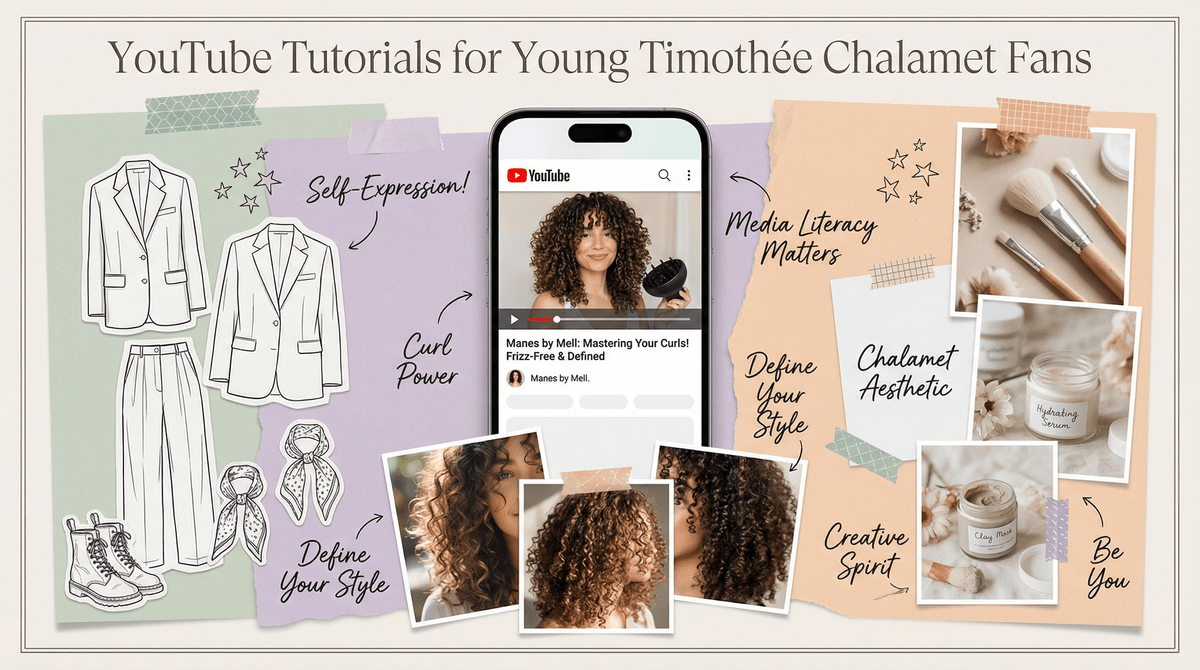
Hair tutorials: "How to get Timothée Chalamet's curly hair" is a massive search term, with countless videos teaching curly hair care routines, styling techniques, and product recommendations. Some of this is genuinely educational about hair texture and care.
Fashion breakdowns: Videos analyzing his red carpet looks, street style, and "how to dress like Timothée on a budget." These range from thoughtful fashion education to straight-up shopping hauls.
Makeup tutorials: This is where it gets interesting. There are two types: tutorials on how to do makeup "like Timothée" (meaning natural, barely-there makeup), and tutorials teaching people how to look like Timothée using makeup (contouring, shading, the whole transformation thing).
Fan edits and compilations: Not tutorials per se, but heavily consumed content that keeps kids in the algorithm's grip—compilation videos of his interviews, red carpet moments, and scenes from movies.
Celebrity crushes are developmentally normal, and Timothée Chalamet represents something specific: he's non-threatening, artistic, emotionally expressive, and doesn't fit the traditional hyper-masculine mold. For a lot of tweens exploring identity and aesthetics, he's an accessible entry point into fashion, grooming, and self-expression.
The tutorial format is also inherently appealing—it promises transformation and gives kids a sense of control over their appearance. "I can learn this skill and become more like someone I admire" is a powerful draw, especially during the middle school years when identity formation is in overdrive.
The Content Is Often Age-Inappropriate
Many of these tutorials are created by and for adults or older teens. A 23-year-old beauty influencer doing a "Timothée Chalamet makeup transformation" isn't thinking about the 11-year-olds watching. The products recommended are often expensive, adult-targeted, and sometimes include affiliate links that benefit the creator when kids (or their parents) make purchases.
The Beauty Standard Trap
While Timothée himself has a relatively natural, low-maintenance aesthetic, the tutorials can create impossible standards. Kids watching these videos might not understand that:
- Professional lighting, editing, and filters are at play
- The creator likely has different hair texture, face shape, or features
- Achieving "the look" requires products, time, and techniques that aren't realistic for everyday life
This can be especially fraught for kids who don't fit the narrow beauty standards being promoted (thin, white, specific hair textures, etc.).
The Fandom Economy Is Real
YouTube's algorithm loves fandom content because it keeps viewers watching. Once your kid clicks on one Timothée video, they'll be served dozens more. This creates a feedback loop where kids can spend hours watching content that's essentially advertising—for products, for other videos, for a lifestyle they can't access.
Gender and Identity Exploration
Some kids watching these tutorials are exploring gender expression, and that's completely normal and healthy. Boys watching makeup tutorials or fashion content, girls learning about "masculine" styling—this is all part of figuring out who they are. But it's worth noting that some tutorial creators are more thoughtful about gender inclusivity than others, and some comment sections can be toxic.
The Movie Content Problem
Many fan compilations and edits include clips from Timothée's movies, some of which are not age-appropriate. Call Me By Your Name, Bones and All, and Dune all have mature themes, and kids might be exposed to content they're not ready for through these compilation videos.
Ages 8-10: Most of this content isn't really designed for this age group. If your kid is interested in Timothée because they saw him in Wonka or Dune, you can watch some of the gentler fashion or interview compilations together, but skip the beauty tutorials entirely. Focus on age-appropriate fashion content for kids instead.
Ages 11-13: This is peak Timothée fandom age. Hair care tutorials can be genuinely useful, especially for kids with curly or textured hair who are learning to care for it. Fashion breakdowns can be fun and educational. Makeup tutorials are where you need to pay attention—natural makeup tutorials are generally fine, but transformation content or anything focused on contouring/heavy makeup isn't developmentally appropriate yet. Watch some videos together and talk about what's realistic versus what's for entertainment.
Ages 14+: Teens can generally navigate this content with less supervision, but it's still worth having conversations about beauty standards, the economics of influencer culture, and how to think critically about what they're watching. If they're spending money on products, that's a good opportunity to talk about marketing to teens and budgeting.
If your kid is interested in the skills being taught (hair care, fashion, self-expression) but you want more age-appropriate content, here are some better options:
For hair care: Look for channels specifically focused on curly hair education like Manes by Mell or channels that focus on hair science and technique rather than celebrity imitation.
For fashion: YouTube channels about sustainable fashion for teens or channels that teach basic styling principles rather than "copy this celebrity" content.
For self-expression: Channels that focus on finding your own style rather than copying someone else's. Look for content creators who emphasize individuality and experimentation.
- Excessive product placement: If every video is pushing specific products with affiliate links, your kid is watching advertising, not education
- Before/after content that emphasizes "flaws": Tutorials that spend a lot of time talking about what's "wrong" with someone's appearance before the transformation
- Comment sections full of appearance-based criticism: If the comments are toxic, your kid is absorbing those messages even if they're not commenting themselves
- Videos that include movie clips from R-rated films: Your 12-year-old doesn't need to see scenes from Call Me By Your Name, even if they're in a "cute moments" compilation
Instead of shutting down your kid's interest (which will just make them watch in secret), try these conversation starters:
"What do you like about this person's style?" This opens up a conversation about aesthetics and self-expression without judgment.
"Do you think this tutorial is showing you something realistic?" Help them develop critical thinking about what they're watching.
"What would your version of this look like?" Encourage them to adapt ideas to their own style rather than trying to copy exactly.
"How much time and money would this actually take?" Talk about the economics and practicality of what's being shown.
"What are they trying to sell you?" Media literacy about influencer marketing is crucial.
YouTube tutorials for young celebrity fans aren't inherently bad—they can teach real skills, spark interest in fashion or grooming, and provide a fun way for kids to explore identity and self-expression. But like all YouTube content, it requires parental awareness and ongoing conversation.
The goal isn't to ban Timothée Chalamet content (good luck with that anyway). It's to help your kid engage with it thoughtfully, understand what's realistic versus what's performance, and develop their own sense of style rather than trying to become someone else.
If your kid is spending hours watching this content, it might be worth checking in about what need it's filling. Are they feeling insecure about their appearance? Are they exploring gender expression? Are they just bored? The answer will help you figure out the right response.
And hey, at least they're not trying to look like the Skibidi Toilet.
- Watch a few videos together and talk about what you notice
- Set up YouTube parental controls to filter out inappropriate content
- Talk about the difference between inspiration and imitation—it's healthy to admire someone's style, less healthy to try to become them
- If they want to try new hair or fashion things, support experimentation within age-appropriate boundaries
- Check in regularly about their media consumption—not in a controlling way, but in a "what are you into lately?" way
Remember: a celebrity crush and some YouTube tutorials are normal parts of growing up in 2026. Your job isn't to eliminate the interest, it's to help them navigate it with critical thinking and self-awareness intact.