

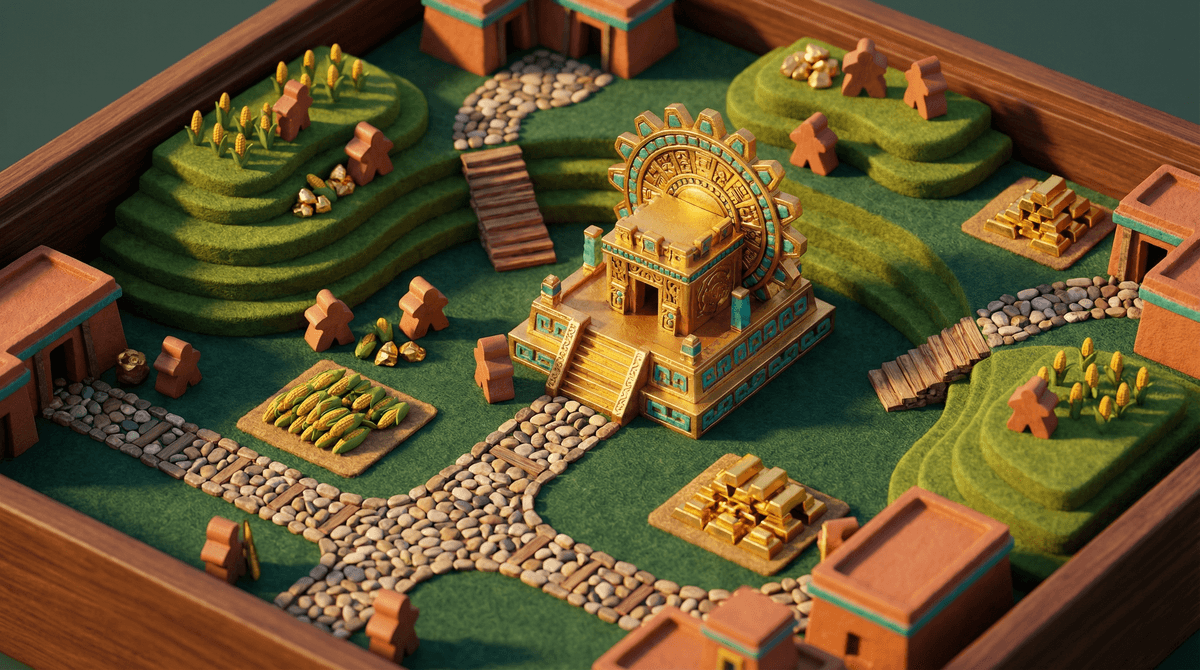
Okay, real talk: I know what you're thinking. "Tawan-tin-what-now?" Fair. The name alone sounds like something you'd need to Google how to pronounce (it's tah-wahn-teen-SOO-yoo, btw). But hear me out, because Tawantinsuyu might be exactly what your family needs right now.
Tawantinsuyu is a strategic board game where players build and expand the Inca Empire. You're placing workers, constructing buildings, managing resources, and trying to gain favor with the Incan gods. It's a medium-to-heavy strategy game that takes about 90-120 minutes to play, designed for 1-4 players ages 14+.
And yes, it's teaching your kids actual history while they're plotting their next move. The Inca Empire (which is what Tawantinsuyu means in Quechua) is something most kids barely touch in school, so this is one of those rare games that scratches the "educational" itch without feeling like homework.
Here's the thing about board games in 2026: we're drowning in options. There are literally thousands of new games released every year. But Tawantinsuyu stands out because it does something really hard—it's complex enough to keep adults engaged while being accessible enough that a motivated 12-13 year old can grasp it.
The strategy is genuinely satisfying. You're not just rolling dice and hoping. Every turn requires real decision-making: Do you focus on building temples? Do you expand your territory? Do you invest in your priesthood? There's this beautiful tension between wanting to do everything and only being able to do a few things well.
It's gorgeous. The artwork by Jakub Fajtanowski is stunning—vibrant, historically inspired, and the kind of thing that makes the game feel special when it's on your table. This matters more than you'd think. When a game looks this good, kids (and adults) want to play it.
Face-to-face connection. In a world where your kids are constantly asking for more Robux or begging for "just five more minutes" on Roblox, getting them to sit at a table for 90 minutes feels like a minor miracle. But that's exactly what happens with a game this engaging.
Let's be clear: this isn't Candy Land. Your 6-year-old isn't going to sit through this. But for tweens and teens who are ready for something meatier than Ticket to Ride, this is gold.
It respects their intelligence. Kids who are old enough for this game are tired of being talked down to. Tawantinsuyu treats them like capable strategic thinkers, which they are.
There's real player interaction. You're not just playing solitaire on the same board. You're competing for spaces, blocking each other's moves, racing to complete objectives first. It creates natural conversation and friendly competition.
The theme is cool. Ancient civilizations, building empires, managing resources—it's the same stuff that makes Civilization VI appealing, but without the screen time.
It teaches actual skills. Resource management, long-term planning, risk assessment, adapting to changing circumstances. These are executive function skills wrapped in a fun package.
The box says 14+, and I'd stick pretty close to that. Here's my breakdown:
Ages 10-11: Probably too young unless they're already into heavier strategy games. The rules aren't impossibly complex, but there's a lot to track.
Ages 12-13: This is your sweet spot for introducing it. They might need some hand-holding for the first game or two, but motivated kids in this range can absolutely handle it.
Ages 14+: Perfect. They'll be able to grasp the strategy and start developing their own play styles.
Adults: You're going to enjoy this. This isn't you suffering through another kids' game—this is a legitimate strategy game that happens to be family-friendly.
Time commitment is real. Your first game will probably take 2+ hours. Once everyone knows the rules, you can get it down to 90 minutes, but this isn't a quick filler game. Plan accordingly—maybe a Sunday afternoon or a Friday game night.
There's a learning curve. The first game, someone (probably you) needs to read the rulebook thoroughly. There are some fiddly rules about worker placement and scoring. But once you've played once, it clicks.
It's not cheap. Quality board games rarely are. Tawantinsuyu typically runs $50-70, which is a lot upfront but breaks down to pennies per play if your family gets into it. Compare that to the cost of taking everyone to a movie.
Replayability is high. The variable setup and different strategic paths mean this doesn't get stale after a few plays. Some families have logged 50+ games and still find new strategies.
It's not screen-free magic. Let's be realistic—your kids aren't going to suddenly abandon Fortnite forever because you bought a board game. But it can become a regular part of your family rhythm, a designated screen-free time that everyone actually enjoys.
In a year full of great board game releases, Tawantinsuyu stands out because it threads an incredibly difficult needle: it's strategic enough for serious gamers, accessible enough for families, educational without being preachy, and beautiful enough to make you want to play it.
More importantly, it creates the kind of screen-free family time that doesn't feel forced. Nobody's checking their phone mid-game because they're too busy plotting their next move or groaning because someone just blocked their perfect play.
Is it the best board game of the year? That's subjective, obviously. But for families looking for something that respects everyone's intelligence, teaches real skills, and creates genuine connection time, it's pretty damn close.
Ready to try it? Check out Tawantinsuyu on Screenwise for our full breakdown, WISE scores, and parent reviews.
Want more family board game recommendations? Explore our guide to the best strategy board games for families.
Looking for alternatives if this feels too complex? Check out Catan or Splendor as excellent stepping stones to heavier strategy games.