

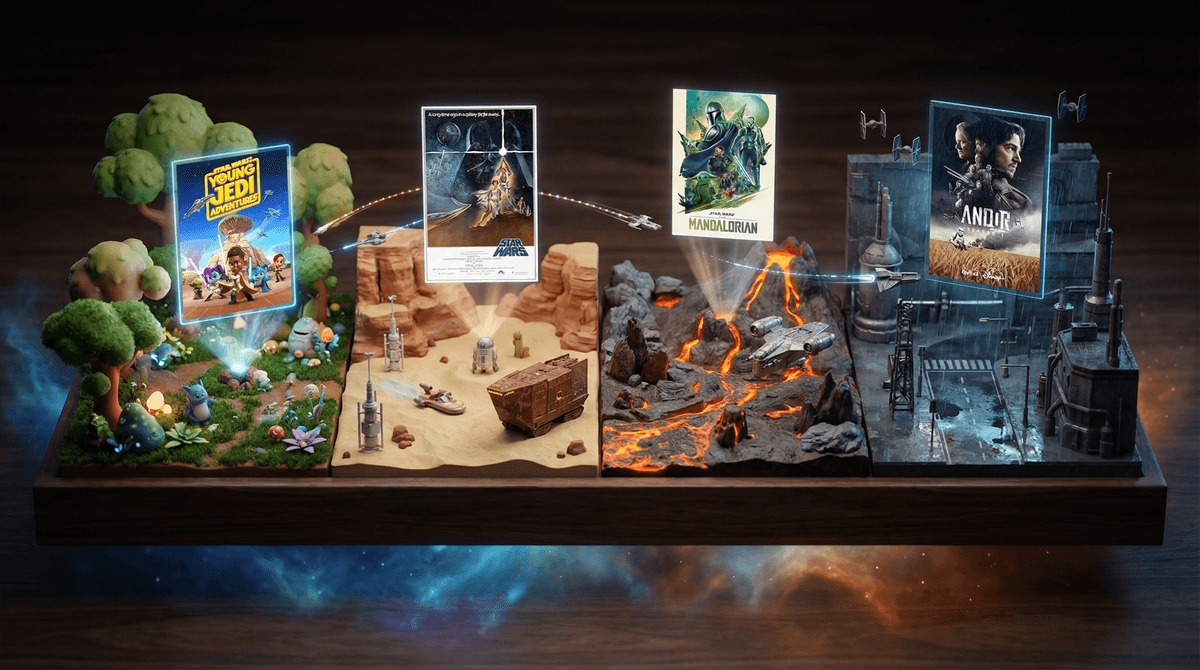
Unless you've been living under a rock on Tatooine, you know Star Wars is one of the most influential entertainment franchises of all time. But here's the thing: "Star Wars" isn't just one thing anymore. It's a sprawling universe that includes the original trilogy from the '70s and '80s, prequels from the '90s and 2000s, sequels from the 2010s, plus dozens of TV shows, animated series, games, and books.
The question "what age is Star Wars appropriate for?" is kind of like asking "what age is appropriate for books?" It really depends on which Star Wars content we're talking about.
Star Wars has become a cultural touchstone that kids encounter everywhere—from Lego sets to Fortnite crossovers to playground conversations. About 92% of families in our community report having TV streaming access, and 50% watch Disney Plus content together as a family—which means Star Wars is probably already on your radar or in your queue.
But the franchise has some genuinely intense moments: dismemberment, death, complex political themes, and increasingly mature storytelling as the universe expands. Getting this right matters because you want your kid to enjoy their first Star Wars experience, not have nightmares about Darth Vader for weeks.
Ages 4-6: The Gentlest Entry Points
For the youngest fans, start with Star Wars: Young Jedi Adventures on Disney Plus. It's specifically designed for preschoolers with no scary content and positive messages about teamwork.
Star Wars Resistance is also pretty mild, though it skews slightly older (ages 6+). The animation style is bright and the stakes are lower than other series.
Skip for this age: The movies. Even A New Hope, the most family-friendly film, has Storm Troopers getting shot, Aunt Beru and Uncle Owen's charred bodies (implied), and the destruction of an entire planet. Most kids under 6 won't have the context to process this.
Ages 7-9: The Classic Gateway
This is prime Star Wars age for most kids. The original trilogy (A New Hope, The Empire Strikes Back, Return of the Jedi) works beautifully here. Yes, there's violence, but it's mostly bloodless blaster fire and lightsaber duels. The scariest moment is probably Darth Vader's reveal in Empire—but most kids this age can handle it with some context.
Star Wars: The Clone Wars (the animated series) is also excellent for this age range, though it gets progressively darker in later seasons. The early seasons are perfect for 7-9 year olds who want more Star Wars after the movies.
The Mandalorian is generally fine for ages 8+, especially if they've seen the original trilogy. It has some intense moments (the first episode features a guy getting cut in half by a door), but it's not gratuitous. Plus, Baby Yoda (sorry, Grogu) is an instant kid favorite.
Watch out for: Revenge of the Sith. It's PG-13 for a reason—Anakin's transformation is genuinely disturbing, and the immolation scene is rough even for adults.
Ages 10-12: Opening Up the Galaxy
By this age, most kids can handle the full Skywalker saga, including the prequels and sequels. They'll also appreciate the more complex storytelling in shows like Star Wars Rebels and The Bad Batch.
Ahsoka and Obi-Wan Kenobi are great for this age group, especially if they've already watched The Clone Wars and Rebels for context.
Ages 13+: The Mature Stuff
Andor is hands-down the best Star Wars show ever made—and it's decidedly for teens and adults. It's a slow-burn political thriller with mature themes about fascism, surveillance, and resistance. There's minimal action compared to other Star Wars content, but when violence happens, it's realistic and consequential. This is not for younger kids, even if they've seen everything else.
The violence question: Star Wars violence is mostly fantasy violence—laser guns, lightsabers, space battles. But some entries (particularly Revenge of the Sith and Andor) cross into more realistic territory. Know your kid's sensitivity level.
The death question: Major characters die throughout the franchise. If your child struggles with loss or has experienced recent grief, you might want to preview or have conversations ready.
The watch order debate: There are approximately 47 different opinions on the "correct" watch order. For first-timers, release order (original trilogy, then prequels, then sequels) usually works best because it preserves the big reveals and builds complexity gradually. Learn more about different viewing orders .
.
Screen time context: With average family screen time at 4.2 hours per day in our community (4 hours on weekdays, 5 on weekends), a Star Wars movie or two episodes of a series fits reasonably into most families' media diet. The bigger question is whether you're watching together (which 50% of families do with Disney Plus content) or whether kids are watching independently (30%).
Ages 4-6: Stick with Young Jedi Adventures and other preschool-targeted content.
Ages 7-9: Original trilogy plus The Clone Wars and The Mandalorian are your sweet spot.
Ages 10-12: Most Star Wars content is fair game except Andor.
Ages 13+: Everything, including the sophisticated storytelling of Andor.
But honestly? You know your kid best. Some sensitive 10-year-olds aren't ready for Darth Vader, while some mature 8-year-olds can handle the entire saga. The beauty of Star Wars being on Disney Plus is you can preview anything before watching together.
Start with a watch party. Make the first viewing special—original trilogy, popcorn, the works. This is one of those rare cultural experiences that genuinely spans generations.
Check the ratings. Every Star Wars movie and show has a rating and content description on Disney Plus. Actually read them.
Talk about it. Star Wars opens up great conversations about good vs. evil, redemption, family, and making hard choices. Don't just consume—discuss.
Set expectations. If you're worried about your kid becoming obsessed and wanting every Lego Star Wars set ever made... yeah, that's probably going to happen. Budget accordingly.
May the Force be with you—you're going to need it when they ask for the $850 Lego Millennium Falcon.