

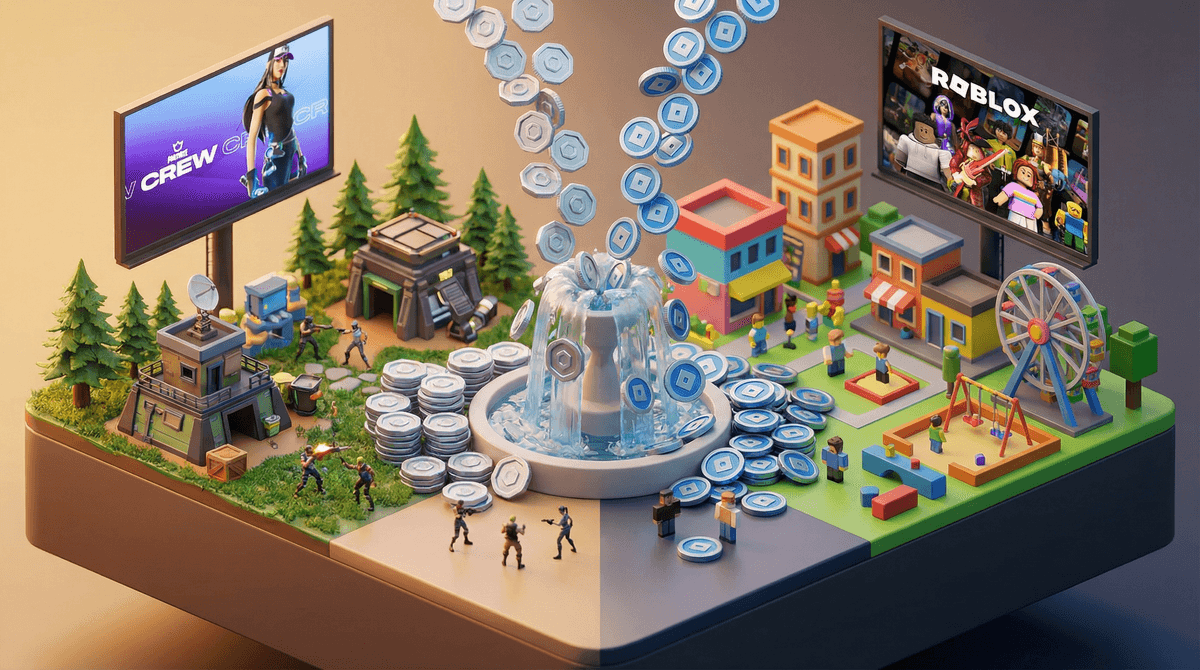
Let's start with the basics: both V-Bucks and Robux are virtual currencies that kids use to buy stuff in their favorite games. V-Bucks are the currency for Fortnite, while Robux powers everything in Roblox.
Here's what makes them different from just buying a game: these aren't one-time purchases. They're ongoing currencies in games your kids will likely play for months or years. And yes, that means ongoing requests for "just one more" purchase.
The real question isn't which currency is "better" — it's understanding what you're actually buying into with each one, and which aligns better with your family's values and budget.
Let's break down the real costs, because the conversion rates are deliberately confusing (spoiler: that's intentional).
V-Bucks in Fortnite:
- 1,000 V-Bucks = $7.99
- 2,800 V-Bucks = $19.99
- 5,000 V-Bucks = $31.99
- 13,500 V-Bucks = $79.99
Robux in Roblox:
- 400 Robux = $4.99
- 800 Robux = $9.99
- 1,700 Robux = $19.99
- 4,500 Robux = $49.99
Most Fortnite skins (character outfits) cost between 800-2,000 V-Bucks ($6-16), while the Battle Pass costs 950 V-Bucks ($7.99) and lasts about 10 weeks. In Roblox, prices vary wildly by game — some accessories cost 25 Robux (about 20 cents), while premium items can run 1,000+ Robux ($10+).
Here's the kicker: Roblox has a subscription option. Roblox Premium costs $4.99-$19.99/month and gives kids a monthly Robux allowance plus trading privileges and a percentage of sales if they create content. Fortnite doesn't have a subscription model.
This is where the platforms diverge significantly.
Fortnite's approach is simpler: V-Bucks buy cosmetic items only — skins, emotes (dances), pickaxe designs, gliders. Nothing you buy makes you better at the game. It's purely about self-expression and status. The Battle Pass is honestly the best value — for $7.99, kids get 10 weeks of unlockable content and can even earn enough V-Bucks back to buy next season's pass.
Roblox is more complex: Because Roblox isn't just one game but a platform with millions of user-created games, Robux can buy:
- Avatar clothing and accessories
- Game passes (special abilities or access within specific games)
- In-game items and power-ups
- Private servers
- The ability to create and sell items (with Premium)
Some Roblox purchases do affect gameplay — a game pass might let your kid skip levels or get special powers. This creates a different dynamic than Fortnite's purely cosmetic system.
Let's be real: both platforms are masterclasses in creating desire. But they do it differently.
Fortnite operates on scarcity and seasons. That cool skin your kid wants? It might never come back to the shop. The Battle Pass? Time-limited. Everything is designed around "limited time only" and FOMO (fear of missing out). The upside? There's a natural end to each season's requests.
Roblox is more about ongoing social identity. Kids build persistent avatars they use across all games. There's less artificial scarcity but more continuous peer comparison. "Everyone has this item" becomes a constant refrain because they're seeing these avatars every day across multiple games.
According to research on gaming habits, about 67% of kids ages 9-12 who play Fortnite have made at least one purchase, while Roblox sees even higher conversion rates — around 75% of regular players have spent money on the platform.
Both platforms offer parental controls, but with different strengths:
Fortnite lets you:
- Disable voice chat and text chat
- Hide mature language
- Require a PIN for purchases
- Set spending limits through your platform (PlayStation, Xbox, Switch, PC)
Roblox offers:
- Account restrictions (curated content for under-13)
- Communication controls (who can message, chat)
- PIN-protected parental controls
- Spending notifications
- Monthly spending limits
Roblox's controls are more granular because the platform is more complex. You can learn more about Roblox safety settings if you're setting up an account.
Here's something crucial: both platforms let kids convert their time into currency, but only Roblox lets them cash out (kind of).
In Fortnite, skilled players can earn V-Bucks through Save the World mode (if they bought it) or by completing Battle Pass tiers. But you can't convert V-Bucks back to real money.
In Roblox, creators can actually make real money. Kids who create popular games, clothing, or accessories can earn Robux, then convert them to real dollars through the Developer Exchange program (minimum 30,000 Robux to cash out). Some teens have literally paid for college this way.
This makes Roblox potentially educational about entrepreneurship and game design — or potentially exploitative, depending on your perspective. The economics of Roblox are genuinely complicated.
For younger kids (ages 7-10): Both platforms work, but Roblox's variety might hold attention longer. Consider gift cards for special occasions only, not ongoing spending. Many families in this age range report spending $10-20/month if they allow regular purchases.
For tweens (ages 11-13): This is peak engagement age for both. Consider a monthly entertainment budget (maybe $15-25) that covers all digital spending — games, in-game purchases, apps. Let them choose how to allocate it. This teaches budgeting while acknowledging that these social spaces matter to them.
For teens (ages 14+): Some families tie purchases to chores or grades. Others encourage teens to use gift cards from birthdays/holidays. If your teen is creating content in Roblox, this might be the age to discuss the creator economy seriously.
There's no universally "right" answer here. The better choice depends on:
- Your kid's gaming habits: One game (Fortnite) or variety (Roblox)?
- Your budget philosophy: Seasonal spending or ongoing allowance?
- Your values: Pure entertainment or potential entrepreneurship?
- Your kid's age and maturity: Can they handle the social complexity of Roblox?
Most families I talk to land on one of these approaches:
- Gift cards only — for birthdays, good report cards, special occasions
- Monthly budget — $10-25/month, kid chooses how to spend it
- Earn and match — kid does extra chores, you match their earnings
- Battle Pass/Premium only — subscribe to the best-value option, nothing else
Whatever you decide, have the conversation before the next purchase request. Sit down together and:
- Set clear expectations about how much and how often
- Explain your reasoning (budget, values, whatever matters to your family)
- Let them have input on how to spend within those boundaries
- Review together after a month or two
Want to dig deeper into either platform? Check out our comprehensive guides on Roblox and Fortnite, or explore how these platforms compare to other gaming options.
The goal isn't to eliminate all spending or shield kids from these economies — it's to help them learn to navigate them thoughtfully. Because honestly? Understanding digital currencies and resisting FOMO marketing are life skills they'll need long after they've moved on from these games.