

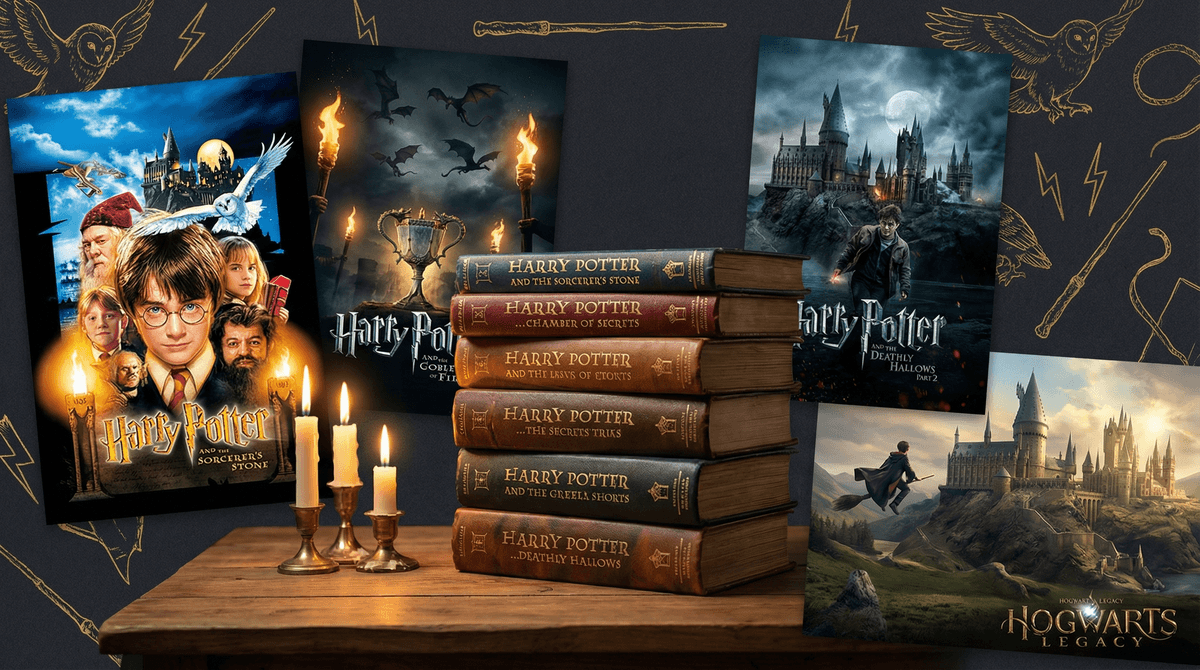
The Ultimate Parent Guide to Harry Potter Film Age Ratings
The Harry Potter movies get progressively darker as they go, and the official ratings don't tell the whole story. Here's what actually matters:
Safe for most kids:
- Harry Potter and the Sorcerer's Stone (PG) — Ages 7+
- Harry Potter and the Chamber of Secrets (PG) — Ages 8+
Screenwise Parents
See allGetting intense:
- Harry Potter and the Prisoner of Azkaban (PG) — Ages 9+
- Harry Potter and the Goblet of Fire (PG-13) — Ages 10+
Legitimately dark:
- Harry Potter and the Order of the Phoenix (PG-13) — Ages 11+
- Harry Potter and the Half-Blood Prince (PG) — Ages 11+
- Harry Potter and the Deathly Hallows Part 1 (PG-13) — Ages 12+
- Harry Potter and the Deathly Hallows Part 2 (PG-13) — Ages 12+
The jump happens around Goblet of Fire when someone literally dies on screen, Voldemort gets his body back in a legitimately creepy ritual, and the whole vibe shifts from "magical boarding school" to "actual war is coming."
The official MPAA ratings are honestly kind of useless here. Half-Blood Prince is rated PG despite featuring a major character death, attempted murder of teenagers, and some genuinely disturbing memory sequences. Meanwhile, the early films got PG ratings when PG actually meant something.
The real issue is that these films were made for an audience that was growing up with them. Kids who were 11 when Sorcerer's Stone came out in 2001 were 20 by the time Deathly Hallows Part 2 hit theaters in 2011. The movies matured with that original audience, which is beautiful for them but creates a minefield for parents trying to figure out when to start their own kids.
Also, your kid has definitely already seen clips on YouTube, their friends are talking about it at school, and the Hogwarts Legacy game is everywhere. The question isn't usually "should my kid experience Harry Potter?" but rather "when and how?"
Harry Potter and the Sorcerer's Stone (2001, PG)
Recommended age: 7+
This one is genuinely kid-friendly. The scariest parts are the three-headed dog (who's honestly kind of cute), some spiders in the Forbidden Forest, and Voldemort's creepy face on the back of Quirrell's head. It's got that classic "kids' adventure movie" energy where you know everything will be okay.
What to watch for: Some kids get freaked out by the troll in the bathroom scene, and the final confrontation with Quirrell/Voldemort can be intense for very sensitive viewers. But honestly, if your kid can handle The Wizard of Oz, they can handle this.
Harry Potter and the Chamber of Secrets (2002, PG)
Recommended age: 8+
This is where things get a bit more intense. The basilisk is genuinely scary (it's a giant snake that kills you if you look at it), the spiders in Aragog's lair are nightmare fuel for arachnophobes, and the whole "students are being petrified" plotline is darker than anything in the first film.
What to watch for: The spider scene is the big one. If your kid has any spider fears, maybe fast-forward through the Aragog sequence or at least give them a heads-up. The final battle in the Chamber is also more intense than anything in Sorcerer's Stone, with actual blood and a pretty graphic stabbing (of the basilisk, but still).
Harry Potter and the Prisoner of Azkaban (2004, PG)
Recommended age: 9+
Alfonso Cuarón took over as director and immediately made everything moodier and more atmospheric. The Dementors are legitimately terrifying—they're basically depression monsters that suck out your soul. The werewolf transformation scene is intense, and the overall tone is much darker despite the PG rating.
What to watch for: The Dementors are the main concern. They're not jump-scare scary; they're existentially scary. Kids who struggle with anxiety might find them particularly disturbing. The time-travel plot can also be confusing for younger viewers, which adds to the stress.
Harry Potter and the Goblet of Fire (2005, PG-13)
Recommended age: 10+
This is where we cross the Rubicon. Cedric Diggory dies on screen. Voldemort returns in a ritual that involves cutting off Peter Pettigrew's hand and drawing Harry's blood. There's torture (the Cruciatus Curse is used multiple times), and the whole graveyard sequence is genuinely horrifying.
This is also where the romantic subplots kick in, the stakes become real, and you can't pretend this is just a fun magical adventure anymore.
What to watch for: The graveyard scene is intense. Cedric's death is sudden and shocking. Voldemort's rebirth is body horror. The underwater task in the Triwizard Tournament is claustrophobic and scary. This is the film where you need to know your kid's tolerance for actual peril.
Harry Potter and the Order of the Phoenix (2007, PG-13)
Recommended age: 11+
This one is dark in a different way—it's psychologically dark. Harry is angry and isolated, Umbridge is a legitimately upsetting villain (in some ways worse than Voldemort because she's so realistic), and the film deals with themes of authoritarianism, propaganda, and institutional corruption.
What to watch for: Umbridge's blood quill torture is disturbing. The Ministry of Magic battle at the end is intense and features a major character death (Sirius). The whole film has a oppressive, claustrophobic feeling that can be tough for kids who are already dealing with school stress or authority issues.
Harry Potter and the Half-Blood Prince (2009, PG)
Recommended age: 11+
Wait, this one is rated PG? Yeah, the MPAA was asleep at the wheel. This film features Dumbledore's death (spoiler alert, but come on, the book came out in 2005), attempted murder of students, Death Eaters attacking Hogwarts, and some truly disturbing memory sequences showing Voldemort's backstory.
What to watch for: Dumbledore's death is a huge emotional moment. The memory sequences showing young Tom Riddle are creepy in a "future serial killer" way. The overall tone is melancholy and foreboding—this is basically a two-and-a-half-hour setup for the finale.
Harry Potter and the Deathly Hallows Part 1 (2010, PG-13)
Recommended age: 12+
This is a war film disguised as a fantasy movie. There's torture, murder, people being eaten by snakes, and a scene where Harry and Hermione are basically on the run as fugitives. The tone is bleak, the pacing is slow (because they split one book into two movies), and there's very little of the Hogwarts magic that made the early films fun.
What to watch for: Charity Burbage's death at the beginning is brutal. Bathilda Bagshot turning into Nagini is nightmare fuel. The torture scene at Malfoy Manor is genuinely upsetting. This film assumes you're invested in these characters and ready to see them suffer.
Harry Potter and the Deathly Hallows Part 2 (2011, PG-13)
Recommended age: 12+
The final battle. Hogwarts under siege. Multiple character deaths (Fred, Tonks, Lupin, Snape). Voldemort's final death is actually pretty graphic (he disintegrates into flakes). This is the culmination of everything, and it's intense from start to finish.
What to watch for: The body count is high. Snape's death scene (killed by Nagini) is brutal. The final confrontation is epic but also emotionally exhausting. Kids need to be ready for a real war movie with real casualties.
For sensitive/anxious kids: Start at 8-9 with Sorcerer's Stone, and don't rush. It's totally fine to stop after Prisoner of Azkaban and wait a year or two before continuing. These movies will still be there.
For kids who've read the books: They can probably handle the movies 1-2 years earlier than kids going in blind, because they know what's coming and have already processed the scary parts in their imagination.
For kids with nightmares/sleep issues: Be extra cautious with Chamber of Secrets (spiders), Prisoner of Azkaban (Dementors), and anything from Goblet of Fire onward. Maybe watch the scary parts during daytime.
For kids who love fantasy/adventure: They'll probably be ready earlier than average, but don't skip the emotional preparation for the later films. Being okay with Lord of the Rings doesn't automatically mean being ready for watching characters you've grown to love die on screen.
The Harry Potter books are generally less intense than the movies because reading allows kids to control the pacing and their imagination naturally filters things to their comfort level. Most kids can start reading the series around age 8-9, though the later books (Order of the Phoenix onward) are better for ages 11+.
That said, some kids find the movies less scary because they're shorter and more visually controlled. Every kid is different. Check out our full guide to the Harry Potter books for more on the reading side.
Yeah, we need to address this. J.K. Rowling's public statements about transgender people have been controversial and hurtful to many families. Some parents have decided to step away from Harry Potter entirely, while others have chosen to separate the art from the artist, especially since the films involve hundreds of other creators.
This is a family decision, and there's no wrong answer. If you're navigating this with your kids, here's a guide to talking about separating art from artists. If you're looking for magical alternatives to Harry Potter, there are tons of great options.
The marathon trap: Don't try to watch all eight films in a weekend. These movies are LONG (the shortest is 2.5 hours), and the emotional intensity compounds. Space them out.
The pause button is your friend: There's no rule that says you have to watch a whole movie in one sitting. If your kid is getting overwhelmed, pause it, talk about what's happening, and come back to it later or the next day.
Pre-watch the scary parts: If you're unsure about a particular film, watch it yourself first and note the timestamps of the intense scenes. Then you can decide whether to skip them, watch together with discussion, or let your kid watch independently.
Watch with them: At least through Goblet of Fire, it's worth watching together so you can gauge their reactions and answer questions. The later films especially benefit from having an adult there to process the heavier themes.
Use the books as a guide: If your kid has read ahead, ask them what parts they're nervous about seeing on screen. Their self-awareness is usually pretty accurate.
The Harry Potter films are a genuinely wonderful piece of cinema that grows up with its audience—which is both their greatest strength and biggest challenge for parents. The first two films are solid family viewing for elementary schoolers. Films 3-4 are the transition zone where you need to know your kid. Films 5-8 are legitimately for tweens and teens who can handle real darkness, death, and moral complexity.
Start around age 7-8 with Sorcerer's Stone, and let your kid's reactions guide you. If they're loving it and asking for more, great. If they're having nightmares or seem stressed, pump the brakes. The movies aren't going anywhere.
And remember: there's no prize for finishing the series by a certain age. Some kids are ready at 10, some at 14, and some never get into it at all (and that's fine too—there are plenty of other great fantasy series out there).
The magic of Harry Potter is that it's about growing up, facing darkness, and choosing courage even when you're scared. Let your kids experience that journey when they're actually ready for it, not when the algorithm or their friends' parents decide they should be.