

The Ultimate Guide to Screen Time Limits: Finding Balance in a Digital World
Look, I'm just going to say it: screen time limits are both more important and less important than you think.
More important because yes, boundaries matter and unlimited access to dopamine-engineered content isn't great for developing brains. Less important because obsessing over whether your kid got 2 hours and 7 minutes today instead of exactly 2 hours is not the hill to die on.
The real question isn't "how much screen time is okay?" It's "what kind of screen time, for what purpose, and is it crowding out the other stuff that matters?"
Let's actually figure this out.
Screen time limits are boundaries you set around how much time your kids spend on devices—phones, tablets, computers, TVs, gaming consoles, the whole digital ecosystem.
But here's where it gets messy: not all screen time is created equal.
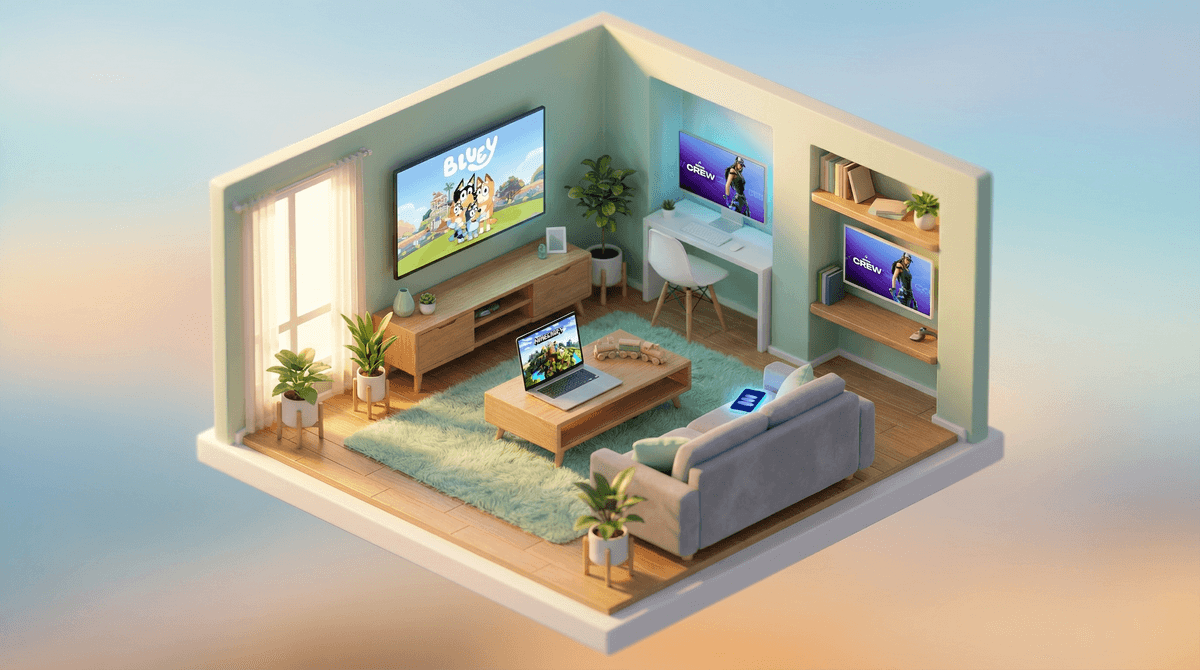
Watching Bluey with your family is fundamentally different from doomscrolling YouTube Shorts at 11pm. Playing Minecraft with friends on a Saturday afternoon hits different than solo-grinding Fortnite Battle Pass challenges for four hours after school.
The American Academy of Pediatrics used to have super specific recommendations (no screens under 2, max 1 hour for ages 2-5, etc.). They've since backed off the rigid numbers and moved toward a more nuanced "media use plan" approach. Because—surprise—context matters.
Here's what we know from research:
Excessive screen time is linked to:
- Sleep disruption (especially before bed—that blue light is real)
- Reduced physical activity
- Attention difficulties
- Increased anxiety and depression (particularly with social media)
- Displacement of other important activities (reading, outdoor play, face-to-face social time)
But also: Some screen time supports learning, creativity, social connection, and skill development. Kids are building actual things in Roblox, learning coding concepts, collaborating with friends across distances.
The issue isn't screens themselves. It's what happens when screens become the default activity, the boredom solution, the emotional regulation tool, and the primary social space all at once.
Let's be honest about what's actually happening out there:
- Ages 5-8: Most families aim for 1-2 hours on school days, more on weekends
- Ages 9-12: Reality is closer to 4-6 hours total daily screen time (including school devices)
- Teens: We're looking at 7-9 hours on average, and that's not even counting school-required screen time
Yes, those numbers are higher than the old recommendations. No, that doesn't mean they're ideal. It means we're all trying to figure this out in real time.
Ages 5-8: Building the Foundation
The approach: Co-viewing and clear boundaries
- Weekday limit: 1-2 hours of recreational screen time
- What works: Kitchen timer, visual timers, "when this episode ends" clarity
- Key rule: Screens are a privilege that comes after responsibilities (homework, chores, outdoor time)
At this age, you have maximum leverage. Use it. Establish that screens don't happen automatically—they're one activity option among many.
Ages 9-12: The Negotiation Years
The approach: Involve them in the plan
- Weekday limit: 2-3 hours recreational (outside school devices)
- What works: Earning screen time, device-free zones (dinner table, bedrooms), weekend flexibility
- Key conversation: "What else do you want time for?" (sports, reading, hanging with friends IRL)
This is when kids start pushing back with "but EVERYONE has unlimited" (they don't) and "you don't understand" (sometimes true). Learn how to have these conversations without it becoming a daily battle .
.
Ages 13+: Shifting to Self-Regulation
The approach: Move from limits to guardrails
- Focus on: When and where, not just how much
- Non-negotiables: No phones in bedrooms overnight, no screens during family meals, schoolwork comes first
- What works: Natural consequences, checking in on how they feel after heavy use
Teens need to learn self-regulation because you won't be there to enforce limits in college. Better they practice now with your support than figure it out alone later.
Forget trying to track every minute. Instead, ask yourself:
1. Is screen time displacing critical activities?
- Sleep (non-negotiable—if screens are affecting sleep, that's your answer)
- Physical activity
- In-person social time
- Homework/reading
- Family connection
2. What type of screen time is it?
Create a mental hierarchy:
- Active/creative: Building in Minecraft, making videos, coding, video calls with grandparents
- Passive/quality: Watching a good movie together, educational content
- Passive/low-value: Infinite scroll content, random YouTube rabbit holes
- Potentially harmful: Age-inappropriate content, toxic social comparison, late-night social media
3. How do they act after?
If your kid comes off screens irritable, wound up, or immediately begging for more—that's data. If they're energized and want to tell you about what they built or learned—different story.
Tech solutions that work:
- Built-in Screen Time (iOS) or Digital Wellbeing (Android)
- Circle, Bark, or Qustodio for more comprehensive management
- Router-level controls for whole-home limits
Non-tech solutions that work better:
- Device charging station in parent's room overnight
- "Tech Shabbat" or screen-free Sundays
- Automatic limits: "Screens turn off at 8pm on school nights"
- Earning system: Chores/reading/outdoor time = screen time credits
The secret weapon: Boredom. Seriously. Don't rush to fill every moment. Kids who are allowed to be bored eventually find something to do that isn't a screen.
Here's the thing: school-required screen time counts. If your kid is on a Chromebook for 4 hours at school, that's 4 hours of screen exposure affecting their eyes, posture, and attention span.
You can't just ignore that and then add 2 more hours of "allowed" recreational time and act surprised when they're fried.
For families with heavy school screen time, consider alternatives to traditional screen-based entertainment in the after-school hours.
Perfect screen time limits don't exist. What works for one kid won't work for their sibling. What works in summer won't work during the school year.
Here's what matters:
- Have intentional limits (even if they're imperfect)
- Be consistent (or kids will just wait you out)
- Model what you preach (they're watching your phone use too)
- Adjust as needed (this isn't set in stone)
- Prioritize sleep and in-person connection (these are your non-negotiables)
The goal isn't raising kids who never use screens. It's raising kids who can self-regulate, who don't reach for a device every time they're bored or uncomfortable, and who have a rich life that includes but isn't dominated by screens.
This week:
- Track your family's actual screen time (you might be surprised)
- Have a family meeting about what's working and what's not
- Pick ONE boundary to implement or improve
- Set up parental controls if you haven't already
This month:
- Experiment with screen-free times or zones
- Notice what activities naturally replace screen time
- Check in with your kids about how they feel
Remember: You're not trying to win a award for strictest parent or most permissive parent. You're trying to raise humans who can navigate a digital world without being consumed by it.
That's hard work. You're doing better than you think.