

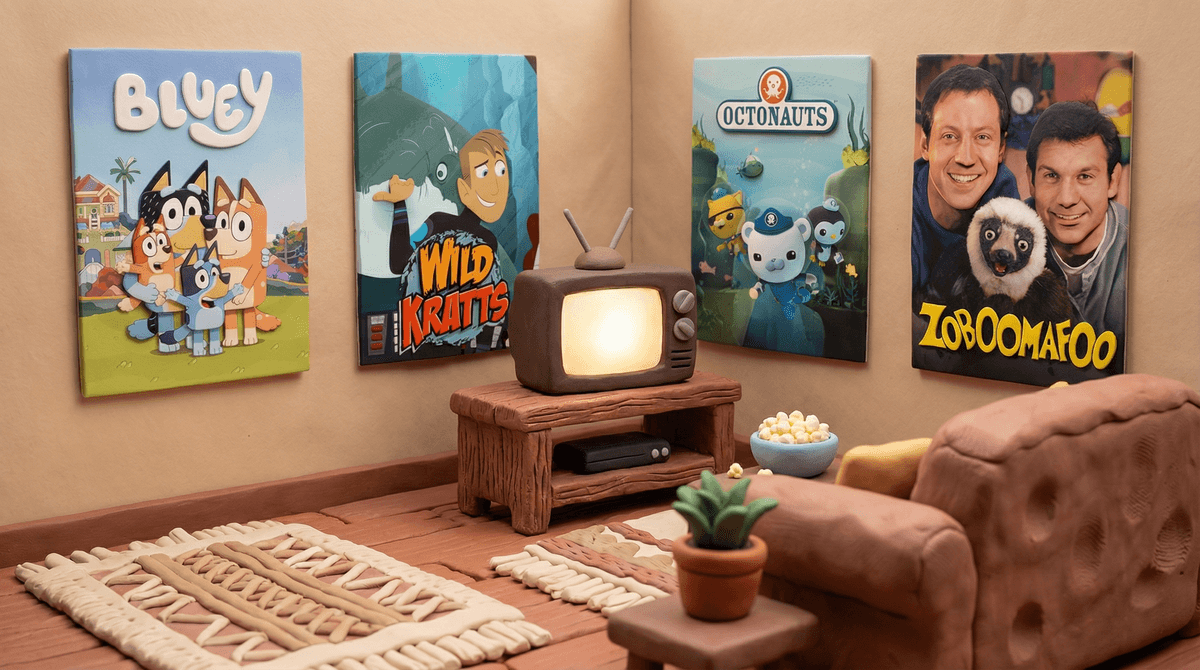
Look, we need to talk about why your kid has watched the same episode of Bluey seventeen times this week and can quote entire scenes from Wild Kratts. There's something about shows featuring animals that just works for kids in a way that other content doesn't.
Animal shows span everything from realistic nature documentaries to fully anthropomorphized cartoon families. They include educational science shows where real animals are the stars, animated series where animals act like humans, and everything in between. And here's the thing: the best ones are doing way more heavy lifting than you might think.
They're emotionally safer. When a blue heeler puppy navigates disappointment or a wild animal faces danger, it creates just enough distance for kids to process big feelings without it hitting too close to home. It's why Bluey can tackle divorce, mortality, and social rejection in ways that feel manageable for a 5-year-old.
They're naturally educational. Even the silliest animal shows tend to sneak in actual facts. Octonauts teaches legitimate marine biology. Wild Kratts covers animal adaptations and ecosystems. Your kid is learning taxonomy while they think they're just watching a fun adventure.
They model behavior without preaching. Shows like Daniel Tiger's Neighborhood use animal characters to teach emotional regulation and social skills in ways that don't feel like a lecture. When Daniel Tiger sings "when you feel so mad that you want to roar, take a deep breath and count to four," kids actually remember it.
They're genuinely well-made. The cream of the crop in animal shows—Bluey, Hilda, Avatar: The Last Airbender (yes, Appa and Momo count)—feature sophisticated storytelling, beautiful animation, and humor that works for adults too. You're not suffering through these.
The Preschool Powerhouses (Ages 2-5)
Daniel Tiger's Neighborhood is the gold standard for social-emotional learning. Those earworm songs? They're evidence-based strategies from child development research, just set to music. Your kid will literally sing themselves through potty training.
Bluey is the show that makes other parents text you at 10pm saying "are you watching the episode about Bandit's dad?" It's about an Australian cattle dog family, but it's really about play, imagination, and parenting with intention. Also, you will cry. Multiple times.
Octonauts takes the "rescue mission" format and applies it to ocean creatures. It's surprisingly educational about marine biology, and the 11-minute episodes are perfectly paced for short attention spans.
The Elementary Sweet Spot (Ages 5-10)
Wild Kratts combines animation with live-action nature footage. The Kratt brothers have been doing this for decades (shoutout to the Zoboomafoo parents out there), and the show genuinely teaches kids about animal adaptations, habitats, and conservation. Yes, the "creature power suits" are silly. Your kid will still learn what a proboscis monkey is.
The Magic School Bus Rides Again isn't exclusively about animals, but when it is, it's excellent. The reboot maintains the original's commitment to actual science while updating the animation and cultural references.
Hilda features a fearless blue-haired girl and her deer-fox companion navigating a world of Scandinavian folklore creatures. It's gorgeous, funny, occasionally spooky, and deals with themes like moving, making friends, and environmental responsibility. Ages 7+ will be obsessed.
The Tween-and-Up Territory (Ages 10+)
Avatar: The Last Airbender is the show that adults without kids watch and then text their friends about. While it's not about animals, the animal companions (Appa, Momo) and hybrid creatures (platypus bears, turtle ducks) are integral to the world-building. It's also just exceptional storytelling about war, colonialism, trauma, and growing up. Ages 8+ can handle it, though some intense episodes might need discussion.
Our Planet and other David Attenborough nature documentaries are absolutely worth your time. Yes, there are predator-prey scenes that might be intense for sensitive kids, but they're also breathtakingly beautiful and educational. Watch with your kids and be ready to pause and discuss.
Not all animal content is created equal. Shows like Caillou (okay, he's not an animal, but the point stands) model terrible behavior. Some animal shows are just... not good. Low-quality animation, annoying voice acting, zero educational value. If you're wondering whether something is worth your time, check our media pages for parent reviews and WISE scores.
Nature documentaries can get real. If you're watching something like Our Planet with younger kids, preview it first. Predation, death, and climate change impacts are part of nature, but you want to be prepared to discuss them.
YouTube is a minefield. For every legitimate nature channel, there are fifty weird AI-generated animal videos or those bizarre "Elsa and Spider-Man with animals" videos that make no sense. Stick to known channels or use YouTube Kids with tight restrictions. Here's how to navigate that mess.
Ages 2-4: Stick with shows designed for this age group. Daniel Tiger, early Bluey episodes, and Octonauts are your friends. Keep episodes short (under 15 minutes ideally) and watch together when possible.
Ages 5-7: This is the Wild Kratts and full Bluey catalog sweet spot. Kids can handle slightly longer episodes and more complex storylines. They're also old enough to start asking "is that real?" about animal facts—lean into that curiosity.
Ages 8-10: Time for Hilda, Avatar, and nature documentaries with parental co-viewing. These kids can handle more intense themes and are ready for shows that don't talk down to them.
Ages 11+: Pretty much anything is fair game with appropriate context. This is when you can watch Our Planet and have real conversations about conservation, climate change, and environmental responsibility.
Animal shows are often the screen time you can feel genuinely good about. The best ones combine education, emotional development, and entertainment in ways that benefit kids across ages. Bluey isn't just keeping your kid occupied—it's teaching them about emotional regulation, creative play, and family dynamics. Wild Kratts isn't just colorful chaos—it's building genuine interest in science and nature.
The key is being selective. Not every show with an animal character is worth your time. Prioritize well-made content from reputable sources, watch together when you can, and use these shows as conversation starters. When your kid asks why the octopus can change colors or wants to talk about the "Baby Race" episode of Bluey, lean in. That's the good stuff.
And if you find yourself getting emotional during a kids' show about cartoon dogs? Welcome to the club. We meet in the comments section of Bluey episodes at midnight.
Start with one new show this week. If you haven't watched Bluey, start there. If your kid is ready for something more educational, try Wild Kratts.
Create a "yes list" of approved animal shows for your family. This gives kids autonomy within boundaries and saves you from constant "can I watch this?" negotiations.
Use animal shows as springboards for real-world activities. Watched an episode about penguins? Check out books about Antarctica from the library. Kid obsessed with Wild Kratts? Plan a nature walk to spot local wildlife.
Want help figuring out what's age-appropriate for your specific kid? That's literally what we're here for.