

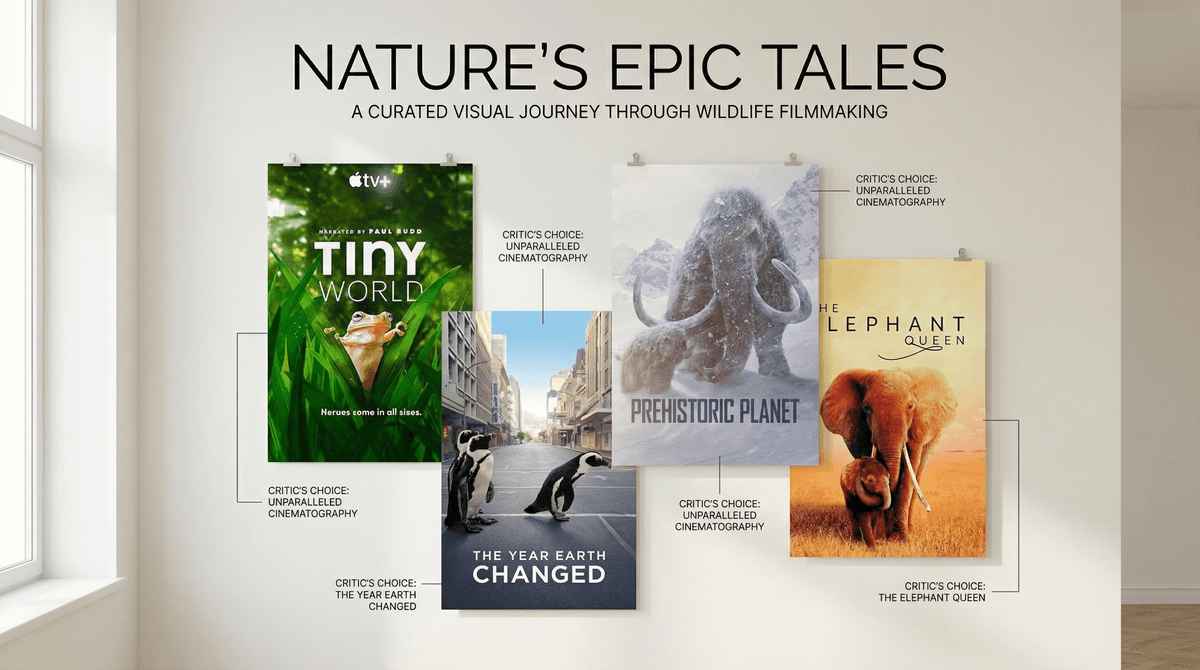
Apple TV+ has quietly become one of the best streaming platforms for documentaries—especially if you're looking for content that's actually worth watching with your kids. Unlike the endless scroll of true crime and conspiracy theories on other platforms, Apple's documentary library leans heavily into nature, science, sports, and human interest stories that are beautifully shot and genuinely educational.
The platform launched in 2019, and while it doesn't have the massive catalog of Netflix or Disney+, what it lacks in quantity it makes up for in quality. Apple clearly invested in high-production-value content, which means even if a documentary doesn't land perfectly for your family, it's at least going to look stunning on your TV.
Here's the thing: not all screen time is created equal, and documentaries sit in this interesting sweet spot. They're still "TV time" (so yes, they count toward whatever screen limits you've set), but they also offer genuine learning opportunities and conversation starters that Bluey or Minecraft just don't provide.
Apple TV+ documentaries are particularly good for:
- Family movie nights when you want something everyone can watch together
- Educational screen time that doesn't feel like homework
- Conversation starters about nature, science, sports, or social issues
- Visual learners who struggle with traditional reading assignments
The production quality also matters more than you might think. Kids who are used to YouTube's frenetic editing and TikTok's rapid cuts can actually get absorbed in these slower-paced, beautifully filmed stories. It's almost like a palette cleanser for their brains.
Prehistoric Planet (Ages 6+)
This is basically Planet Earth but with dinosaurs, narrated by David Attenborough. It's stunning, scientifically accurate (as much as dinosaur content can be), and absolutely captivating for kids who are in that dinosaur phase—or honestly, any phase. Each episode is about 40 minutes, perfect for a family viewing session.
Why it works: The CGI is so good that younger kids might think these are real creatures. Great opportunity to talk about extinction, evolution, and how scientists use fossils to understand the past.
Tiny World (Ages 5+)
Paul Rudd narrates this series about small creatures in big environments. Think: chipmunks, frogs, beetles, all filmed with incredible macro photography. Episodes are short (around 30 minutes), which is perfect for younger attention spans.
Why it works: It makes kids look at their own backyards differently. After watching, expect requests to go outside and look for bugs. This is the good kind of screen time spillover.
The Elephant Queen (Ages 7+)
A feature-length documentary following an elephant matriarch and her herd across the African savanna. It's emotional (there are deaths, which is real nature), beautifully filmed, and tells a complete story rather than just showing pretty animal footage.
Why it works: This is a great introduction to more serious nature documentaries. It's got narrative tension, character development, and real stakes. Good for kids ready to move beyond the sanitized animal content of younger years.
They Call Me Magic (Ages 10+)
A four-part series about Magic Johnson's life and career. It covers basketball, obviously, but also his HIV diagnosis, activism, and business empire. This one's for older kids and teens.
Why it works: Sports documentaries are an underrated way to teach history and social issues. This one tackles HIV stigma, race in America, and what it means to be a public figure during a crisis. Heavy topics, but presented accessibly.
The Year Earth Changed (Ages 8+)
This one documents how nature responded during the 2020 pandemic lockdowns when humans stayed inside. Narrated by David Attenborough (again—Apple really loves him), it's both hopeful and thought-provoking.
Why it works: Your kids lived through the pandemic, even if they don't fully remember or understand it. This gives context to that weird time and shows the environmental impact of human activity in a way that's not preachy.
Frog and Toad (Ages 4-8)
Wait, this is technically an animated series based on the books, but it's so beautifully done and educational that it deserves mention. Apple Originals blur the line between entertainment and documentary-style storytelling for younger kids.
Not everything in Apple's documentary library is family-friendly:
- The Me You Can't See (mental health series with Oprah and Prince Harry) - Important topics, but heavy and better suited for mature teens with parental co-viewing
- Billie Eilish: The World's a Little Blurry - Great documentary, but long (2.5 hours) and deals with teen fame, mental health, and some language
- The Velvet Underground - Music history for adults, not kids
Apple doesn't always nail the age ratings, so check Common Sense Media or See if an Apple documentary is appropriate for your kids before hitting play if you're unsure.
Just pressing play isn't enough to turn screen time into learning time. Here's how to maximize the experience:
Before watching:
- Read the description together and ask what they think it'll be about
- Look up where the location is on a map (especially for nature docs)
- Set an intention: "Let's see if we can learn three new facts"
During watching:
- Pause occasionally to ask questions or point things out
- Let them ask questions, even if it means pausing (yes, it's annoying, but it means they're engaged)
- Snacks help. Documentary night can be special.
After watching:
- "What was your favorite part?" is a better question than "What did you learn?"
- Look up related content: books, websites, other documentaries
- Connect it to their life: "Remember when we saw that bird at the park?"
Ages 4-6: Stick with Tiny World and nature-focused content with shorter episodes. At this age, they're mostly here for the pretty animals, and that's fine.
Ages 7-10: Prehistoric Planet, The Elephant Queen, and The Year Earth Changed hit the sweet spot. They can follow narratives and understand cause-and-effect in nature.
Ages 11-14: Sports documentaries like They Call Me Magic start working here. They can handle more complex social issues and historical context. This is also when they can appreciate the cinematography and storytelling craft.
Ages 15+: Most of the Apple TV+ documentary library is fair game, though you'll still want to preview anything dealing with heavy topics like mental health, violence, or mature themes.
Apple TV+ documentaries are legitimately good content for families trying to be intentional about screen time. They're not going to replace reading or outdoor play, but they're a solid option when screens are happening anyway.
The key is co-viewing when possible, especially for younger kids. Your presence turns passive watching into active learning. Ask questions, pause to discuss, and follow up after the credits roll.
If you're trying to balance "no more YouTube" with "but I need 40 minutes to make dinner," documentaries are a reasonable compromise. They're structured, finite, and actually teach something.
- Browse the nature and science sections first - These are the most universally family-friendly
- Start with one episode - Don't commit to a whole series until you know it works for your family
- Check the runtime - Some documentaries are feature-length (90+ minutes), others are episodic (30-40 minutes)
- Use it as a springboard - If they love dinosaurs after Prehistoric Planet, check out these dinosaur books and games
And remember: if your kid would rather watch Roblox YouTubers than David Attenborough, that's normal. Documentaries are an option in your toolkit, not a requirement for good parenting. Some kids will love them, others won't, and that's completely fine.