

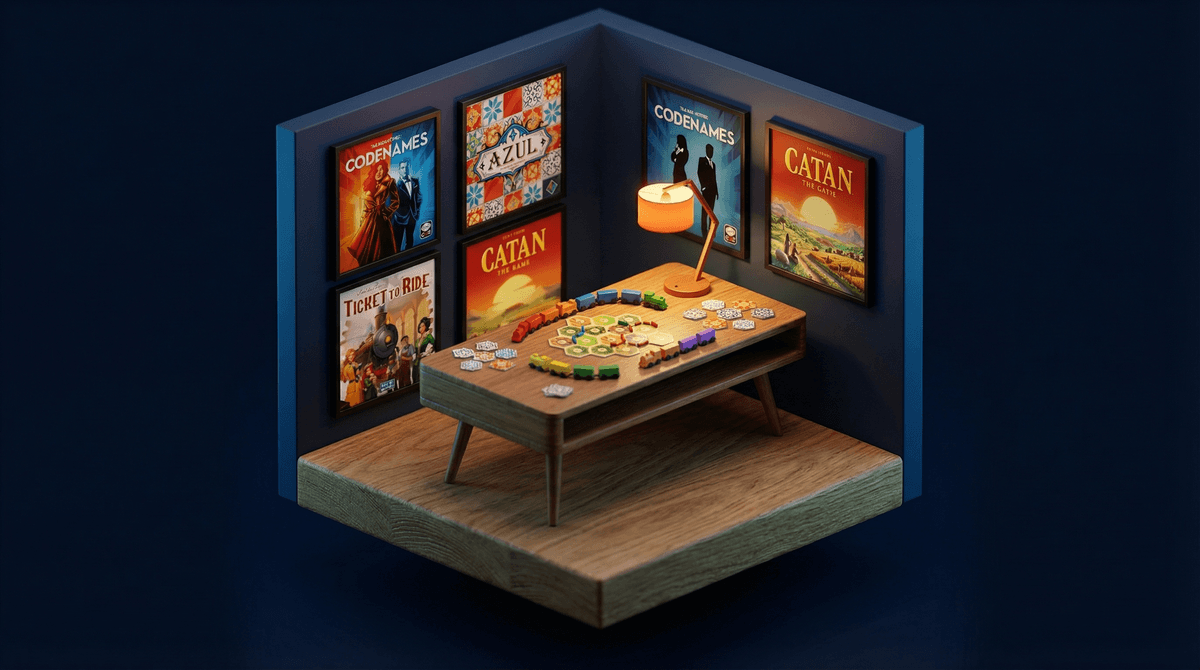
Eleven is kind of a magical age for board games. Your kid is old enough to handle legitimate strategy, can actually remember complex rules without asking you seventeen times, and—here's the real win—can finally play games that don't make you want to fake a work emergency to escape family game night.
At this age, kids are developing abstract thinking, can plan multiple moves ahead, and are starting to understand social dynamics in more nuanced ways. Which means the games they play can actually be good. Like, games you'd choose to play even without kids in the room.
The sweet spot for 11-year-olds? Games that challenge them without frustrating them, take 30-60 minutes (their attention span is better but not infinite), and ideally involve some combination of strategy, social interaction, and just enough luck that losing doesn't feel devastating.
Look, I get it. You're reading a digital wellness site about analog games. But here's the thing: board games are basically the gateway drug to getting your tween off screens without it feeling like a punishment.
At 11, kids are starting to retreat into their devices more. Middle school social dynamics are getting complicated. And frankly, getting them to engage with the family is harder than it used to be. Board games create a structured excuse to be together that doesn't feel forced or babyish.
Plus—and this is the part that makes board games genuinely valuable—they teach skills that translate everywhere:
- Strategic thinking (planning ahead, considering consequences)
- Social awareness (reading people, negotiating, handling winning/losing gracefully)
- Math and logic (without it feeling like homework)
- Focus and patience (rare commodities in 2026)
And unlike video games, board games force face-to-face interaction. You can see when your kid is getting frustrated, practice good sportsmanship in real-time, and actually talk to each other between turns.
For the Strategic Thinker: Catan
If your kid hasn't played Catan yet, 11 is the perfect age to start. It's got resource management, trading, strategy, and just enough randomness (those dice rolls) to keep things interesting. Games take about 60-90 minutes, and kids this age can actually grasp the "build settlements to get resources to build more settlements" loop without getting overwhelmed.
The social element is huge here—you have to negotiate trades with other players, which means practicing persuasion, compromise, and dealing with people who absolutely will not give you any wheat no matter how nicely you ask.
For Fast-Paced Fun: Splendor
Splendor is deceptively simple—collect gems, buy cards, get points—but has enough depth to stay interesting for years. Games are quick (30 minutes), the rules take about 2 minutes to explain, and it teaches resource management and planning ahead without feeling educational.
This is a great "gateway" strategy game if your kid is used to simpler stuff. It looks beautiful, feels sophisticated, and doesn't have the learning curve of something like Catan.
For the Social Butterfly: Codenames
Codenames is brilliant for 11-year-olds because it's all about word association and lateral thinking. You're giving one-word clues to help your team guess words on the board, which means you're constantly thinking about how other people think.
It works great with families, scales up for parties, and there's a junior version if you have younger siblings in the mix. Games are fast (15-20 minutes), so even if one round goes badly, you can immediately play again.
For Creative Problem-Solving: Ticket to Ride
This is the game that convinced a lot of parents that modern board games are actually good. You're building train routes across a map, trying to complete destination cards while blocking your opponents. It's strategic but not cutthroat, competitive but not rage-inducing.
The rules are straightforward, games last about 45 minutes, and there are a million different versions (Europe, Nordic Countries, New York) so you can pick the theme that appeals to your kid.
For the Competitive Spirit: Azul
Azul is gorgeous—you're drafting colorful tiles to complete patterns—and has that perfect mix of strategy and "oh no, you took the tile I needed!" It's abstract enough that it doesn't feel like a kid's game, but accessible enough that 11-year-olds can master it quickly.
Games are relatively short (30-45 minutes), and the tactile element of handling those tiles is genuinely satisfying. Plus it looks impressive on the shelf, which matters to tweens who are suddenly aware of aesthetics.
For Chaos Lovers: Exploding Kittens
Sometimes you just need a game that's ridiculous. Exploding Kittens is Russian roulette with cards—you're drawing cards until someone draws an exploding kitten and loses. It's fast, silly, and has just enough strategy to stay interesting.
This is great for kids who claim they "don't like board games" because it feels more like a party game than a serious strategy game. Plus the humor is right in their wheelhouse—absurd but not babyish.
For Fantasy Fans: King of Tokyo
You're giant monsters fighting for control of Tokyo. You roll dice, gain powers, attack other players, and try to be the last monster standing. It's Yahtzee meets kaiju movies, and 11-year-olds love it.
The theme is engaging without being too childish, games move quickly (30-40 minutes), and there's enough luck involved that younger siblings can sometimes win, which keeps everyone at the table.
For the Dungeon Crawler: Horrified
If your kid loves Minecraft or adventure games, Horrified is a cooperative game where you're working together to defeat classic movie monsters (Dracula, the Mummy, the Creature from the Black Lagoon). It's challenging without being scary, and the cooperative element means you're problem-solving together instead of competing.
This is great for families where competition gets heated, or for kids who get genuinely upset about losing. You win or lose together, which changes the whole dynamic.
Skip the baby games. If the box says "Ages 6+," your 11-year-old is going to roll their eyes so hard they'll see their own brain. They want games that feel sophisticated, even if they're still learning.
Avoid games that take 3+ hours. Their attention span is better than it used to be, but not that much better. Save the epic campaign games for a few years from now.
Be careful with highly social/party games if your kid is shy. Games like Telestrations or Apples to Apples are great for some kids and excruciating for others. Know your audience.
Here's the thing about 11-year-olds: they want to feel like they have agency. So instead of announcing "We're having family game night!", try:
Let them pick the game. Give them 2-3 options and let them choose. Suddenly it's their idea instead of yours.
Make it low-key. "Hey, want to play a quick game before dinner?" is less intimidating than a formal game night announcement.
Invite their friends. Most of these games work great with 4-5 players, and kids are way more enthusiastic when friends are involved.
Don't force it. If they're genuinely not into it one night, let it go. The goal is to make board games feel fun, not like another chore.
The best board game for your 11-year-old is the one they'll actually play. Start with something that matches their interests—if they love fantasy, try King of Tokyo or Horrified. If they're competitive and strategic, go with Catan or Azul. If they just want to laugh, Exploding Kittens is your friend.
The real win here isn't just getting them off screens (though that's nice). It's creating a regular excuse to sit together, talk, strategize, and occasionally argue about whether that move was legal. These are the moments that stick—not because they're perfect, but because they're real.
And honestly? These games are good enough that you might find yourself suggesting game night even when the kids aren't around.
Start with one game. Don't buy six games at once. Pick one that matches your kid's interests and see how it goes.
Watch a tutorial video together. Learning rules from a box is painful. YouTube has great tutorials for basically every game, and watching together means you're learning at the same pace.
Plan for the first game to be rough. Everyone's learning, someone will misunderstand a rule, and it might take twice as long as the box says. That's normal. The second game will be better.
Check out your local game store. Many have demo copies you can try before buying, or run family game nights where you can test different games. Learn more about finding board game communities near you .
.
Want more screen-free activity ideas? Screenwise can help you find alternatives that actually work for your family's specific situation and interests.