

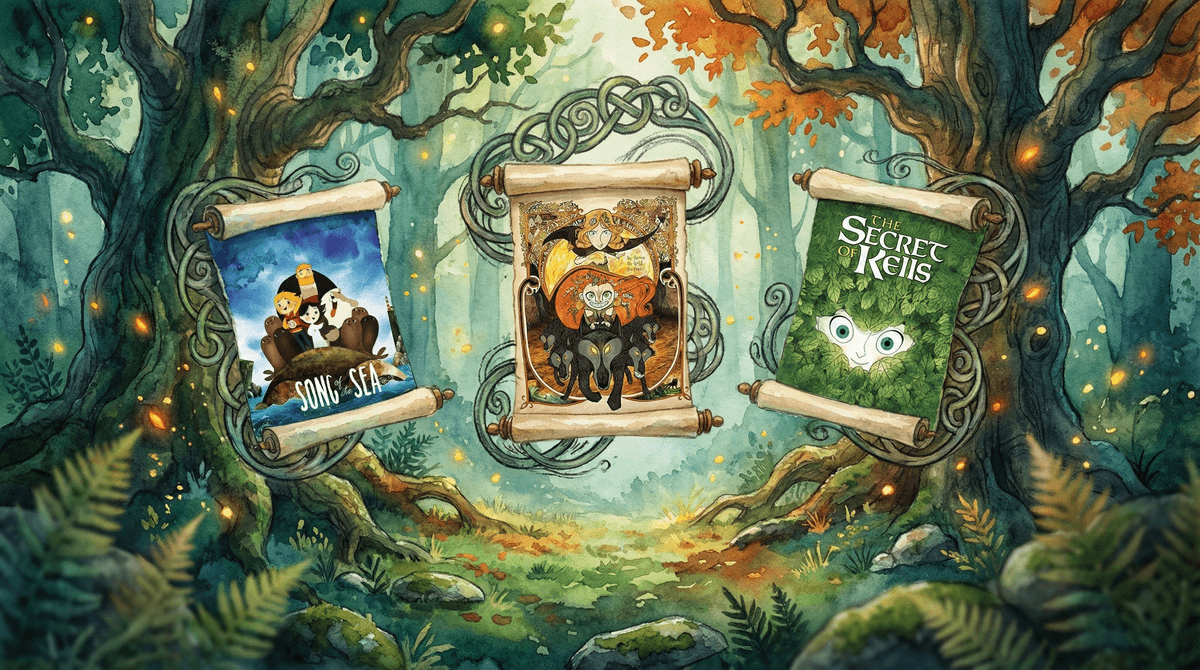
Wolfwalkers is a 2020 animated film from Irish studio Cartoon Saloon (the same team behind The Secret of Kells and Song of the Sea). Set in 1650s Ireland during English colonial rule, it tells the story of Robyn, an English girl whose father is tasked with clearing wolves from the forest, and Mebh, a wild Irish girl who can transform into a wolf.
The animation style is absolutely stunning—hand-drawn with a painterly quality that makes every frame look like a storybook illustration. But beyond the visuals, this film packs in some serious historical and cultural themes that might fly over younger kids' heads while resonating deeply with older viewers.
If you're part of the 80% of families using streaming services like Netflix, Disney Plus, or Amazon Prime (where Wolfwalkers is available), this is one of those films worth adding to your watch list—especially if you're looking for something with more substance than the usual kids' fare.
Here's what the movie doesn't explicitly spell out but is woven throughout: Wolfwalkers takes place during Oliver Cromwell's brutal campaign in Ireland. The Lord Protector character is directly based on Cromwell, whose policies led to massive displacement of Irish people, destruction of forests, and attempted cultural erasure.
The film shows this through:
- Deforestation as colonization - Clearing the wolves and forest represents destroying Irish culture and connection to the land
- Religious tension - The English characters view the forest as "ungodly" while Irish folklore sees nature as sacred
- Class and power dynamics - The walled town vs. the free forest, the controlled vs. the wild
Your 7-year-old probably won't pick up on "this is about English colonialism," but they'll absolutely understand the core conflict: powerful people destroying a beautiful place and the creatures who live there.
The wolf transformation sequences are genuinely magical. When the characters shift into wolf form, the animation style changes—everything becomes more fluid, sensory, and wild. Kids respond to this visceral representation of freedom and power.
Mebh is also just a fantastic character—she's loud, fearless, fiercely loyal to her mother, and completely unapologetic about who she is. She's the opposite of the "proper" behavior Robyn has been taught, and their friendship gives both girls permission to be more fully themselves.
Plus, there's real stakes and tension here. The wolves are in danger, Mebh's mother is missing, and the Lord Protector is genuinely threatening. This isn't a film where everything feels safe and sanitized.
Wolfwalkers draws from genuine Irish mythology, specifically the legend of people who could transform into wolves while sleeping. In Irish folklore, wolves weren't seen as evil—they were part of the natural order, and the ability to become one was a form of magic connected to the land itself.
The film beautifully captures this animistic spirituality—the idea that nature has its own wisdom and power. The forest in Wolfwalkers isn't just a setting; it's almost a character, with healing magic flowing through it.
This is a great conversation starter about how different cultures view nature and animals , especially if your family's background includes different spiritual or cultural traditions around the natural world.
Ages 6-8: The visuals and friendship story will captivate them, but some scenes are genuinely intense. There's a wolf hunt with crossbows, characters in real danger, and the Lord Protector is a scary authoritarian figure. The film earns its PG rating. This works well as a family co-viewing experience (which 50% of families in our community do with Disney Plus content), so you can talk through the scarier moments.
Ages 9-12: This is the sweet spot. Kids this age can appreciate both the adventure story and start grasping the deeper themes about protecting nature, questioning authority, and cultural conflict. They'll likely have questions about the historical setting, which creates natural teaching moments.
Teens: They'll catch all the colonial subtext and might want to dig deeper into Irish history. This could pair well with discussions about indigenous rights, environmental activism, or how stories can be forms of cultural resistance.
Based on conversations with families who've watched it, kids tend to focus on:
The power of wildness - Many kids come away wanting to be more like Mebh, less constrained by rules that don't make sense
Friendship across differences - Robyn and Mebh come from completely different worlds but choose each other
Standing up to authority - Both girls ultimately defy their parental figures to do what they believe is right
Protecting nature - The environmental message lands clearly without feeling preachy
One parent told me her 10-year-old started asking questions about "why people destroy forests" and "what happened to wolves in Ireland," which led to some really rich conversations about environmental history and conservation.
Wolfwalkers is that rare kids' film that doesn't talk down to its audience. It trusts children to handle complex themes, real danger, and moral ambiguity. The English aren't cartoon villains—even Robyn's father genuinely believes he's protecting people from dangerous wolves. But the film clearly shows whose perspective we should value: the Indigenous people being displaced, not the colonizers doing the displacing.
If your family values media that sparks conversation, celebrates cultural heritage, and treats nature as sacred rather than something to be conquered, this is absolutely worth the 103-minute runtime. Just be prepared for questions, and maybe have some follow-up resources ready about Irish history, wolves, or other films that tackle environmental themes.
Before watching: Let kids know this is set in historical Ireland and involves some intense scenes with wolves and danger
During: Watch together, especially with younger kids—the 40% of families who let kids watch streaming content independently might want to make an exception here
After: Ask what they noticed about how the English characters vs. Irish characters viewed the forest differently, or which character they related to more and why
And if your kids love it, the other Cartoon Saloon films explore Irish and other cultural mythologies with the same gorgeous animation style and thematic depth.