

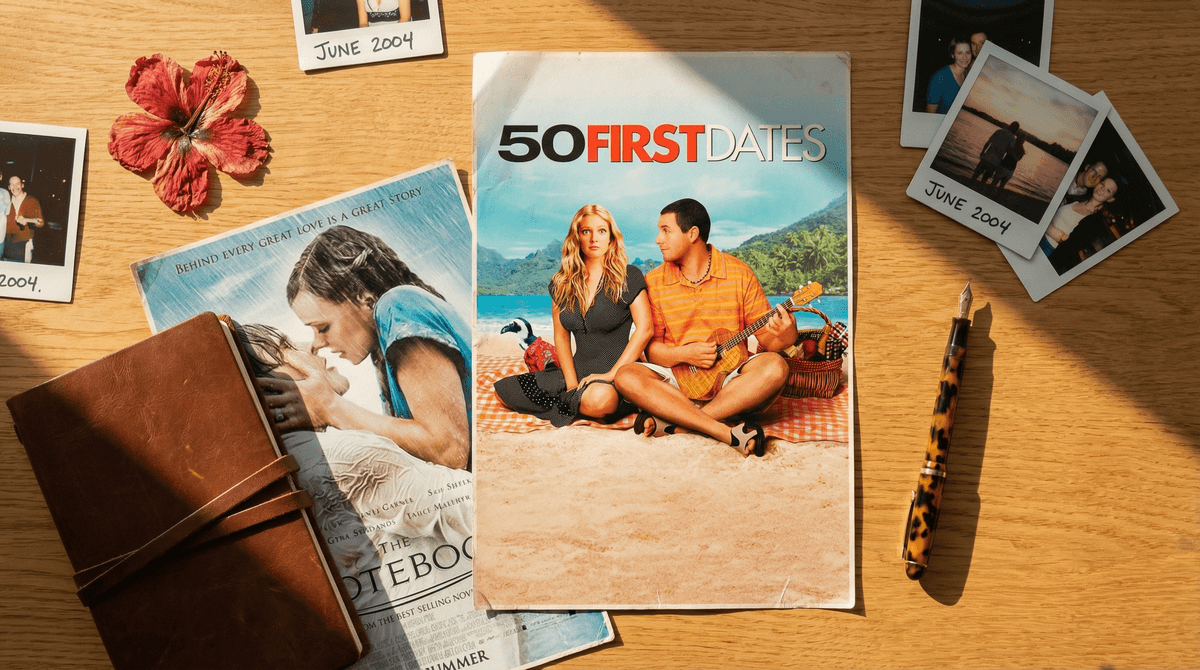
50 First Dates is a 2004 romantic comedy starring Adam Sandler and Drew Barrymore about a veterinarian in Hawaii who falls for a woman with short-term memory loss. Due to a car accident, Lucy (Barrymore) wakes up every morning thinking it's the same day in October 2002, with no memory of the previous day. Henry (Sandler) has to win her heart over and over again, every single day.
It's got that early-2000s rom-com energy—tropical setting, quirky supporting characters, a walrus named Jocko, and The Beach Boys on the soundtrack. It's also surprisingly sweet for an Adam Sandler movie from that era, which is saying something if you remember his filmography from the mid-2000s.
Twenty years later, 50 First Dates keeps popping up in Netflix queues and family streaming sessions. It's rated PG-13, it's got recognizable stars, and the premise sounds wholesome enough: guy falls in love with girl, guy does sweet things to make girl happy. Aww.
But here's the thing: this movie exists in that weird space where it's kind of appropriate for teens but also has some genuinely problematic moments that deserve a conversation. It's not The Notebook-level romance, and it's definitely not a kids' movie—but it might seem harmless enough at first glance.
The reality? It's a mixed bag that can actually be a pretty great jumping-off point for conversations about relationships, consent, disability, and what healthy love actually looks like.
The Good Stuff:
The core premise is genuinely touching. Henry's commitment to Lucy—making her fall in love with him every single day without any guarantee she'll remember—is objectively romantic. The movie explores what it means to love someone unconditionally, and there are moments that are legitimately heartwarming.
Drew Barrymore's character isn't defined solely by her disability. She's funny, artistic, and has her own personality. The movie shows her family protecting her with love (even if their methods are questionable), and ultimately respects her agency in choosing her own path.
The Uncomfortable Stuff:
Let's not sugarcoat it: there are some cringey early-2000s comedy bits that haven't aged well. There's a running gag about a steroid-using, violent brother that plays domestic violence for laughs. There's a character with ambiguous gender presentation who's the butt of jokes. There are crude sexual references and innuendo throughout—this is an Adam Sandler movie, after all.
The consent questions are real. Henry initially lies to Lucy repeatedly, creating elaborate scenarios to spend time with her without her knowing the truth about her condition. Yes, he eventually comes clean, and yes, the movie addresses this—but younger viewers might not catch the ethical complexity without guidance.
There's also the question: Can someone with short-term memory loss truly consent to a relationship? The movie handles this better than you might expect—Lucy's family is involved, she makes video recordings for herself explaining her choice, and she actively participates in the decision. But it's still worth discussing.
Ages 13-15: This is really the sweet spot, and even then, watch it with them. The PG-13 rating is accurate—there's no graphic content, but the sexual innuendo and relationship dynamics need context. Use it as a conversation starter about what healthy relationships look like, how we treat people with disabilities, and why consent matters even in romantic situations.
Ages 16+: Older teens can probably handle the content and think more critically about the ethical questions the movie raises. It's actually a decent case study in "problematic fave" territory—you can enjoy something while also recognizing its flaws.
Under 13: Nope. The humor will go over their heads or land wrong, and the relationship dynamics are too complex. Stick with The Princess Bride or Enchanted for younger rom-com fans.
If you do watch 50 First Dates with your teen, here are some conversation starters:
On consent and honesty:
"What do you think about Henry lying to Lucy at first? When he started telling the truth, did that change things?" Talk about how consent works in relationships and why honesty matters even when you think you're protecting someone.
On disability representation: "How do you think the movie portrayed Lucy's memory loss? Was it realistic? Respectful?" This can open up conversations about how we treat people with disabilities—not as problems to solve or objects of pity, but as full humans with agency.
On what love actually means: "Henry had to make Lucy fall in love with him every single day. What does that say about what love is?" This gets at the difference between infatuation (which is about feelings) and commitment (which is about choice and action).
On the comedy that didn't age well: "Some of these jokes are pretty uncomfortable. Why do you think comedy from 20 years ago sometimes feels different now?" This is actually a great media literacy conversation about how cultural values shift.
50 First Dates isn't a perfect movie—it's got Adam Sandler's fingerprints all over it, for better and worse. But it's also not the disaster you might expect. The central love story is genuinely sweet, and it raises questions about memory, identity, and commitment that are worth exploring.
Watch it with your teens, not just for them. The movie works best as a jumping-off point for conversations about relationships, consent, and how we treat people who are different from us. And honestly? In an era where teen romance often means Euphoria or whatever's trending on BookTok, a mostly-wholesome rom-com about a guy who literally makes video recordings to help his girlfriend remember their life together isn't the worst thing they could watch.
Just maybe skip the scenes with Rob Schneider. Trust me on this one.
Looking for better rom-com options? Check out 10 Things I Hate About You or To All the Boys I've Loved Before for teen-appropriate romance with less baggage.
Want to dig deeper into consent conversations? Learn how to talk to teens about healthy relationships.
Curious about disability representation in media? Explore how movies and shows portray disability and what that teaches kids.