

The Dragon Prince: A Parent's Guide to Netflix's Fantasy Epic
TL;DR: The Dragon Prince is a Netflix animated fantasy series that's genuinely good—think Avatar: The Last Airbender vibes but with its own identity. It tackles war, prejudice, disability representation, and LGBTQ+ relationships with surprising depth. Best for ages 8+, though some battle violence and mature themes mean you'll want to watch alongside younger kids. About 40% of Screenwise families use Netflix regularly for their kids, and this is one of the shows actually worth that screen time.
The Dragon Prince is an animated fantasy series that premiered on Netflix in 2018, created by Aaron Ehasz (head writer of Avatar: The Last Airbender) and Justin Richmond. The show follows two human princes—Callum and Ezran—and a Moonshadow Elf assassin named Rayla as they attempt to end a centuries-long war between humans and magical creatures by returning a dragon egg to its mother.
The series currently has six seasons (with a seventh and final season confirmed), and it's evolved significantly from its early episodes. The first season had some janky animation that turned people off, but the show found its footing technically and narratively as it progressed.
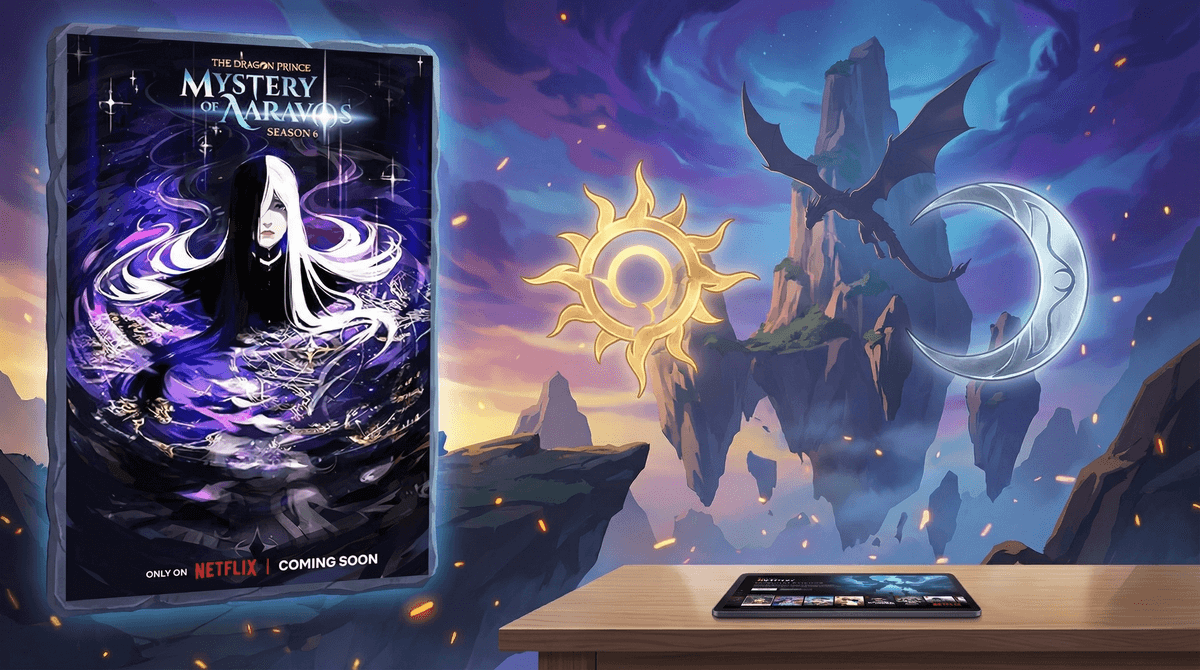
The world-building is legitimately engaging. There are six types of primal magic (Sun, Moon, Stars, Earth, Sky, and Ocean), different elf cultures, dragons with distinct personalities, and a magic system that feels internally consistent. Kids who love Avatar: The Last Airbender or The Legend of Korra will find similar appeal here—complex characters, moral ambiguity, and a fantasy world that respects their intelligence.
The humor lands without being annoying. There's a glow toad named Bait who's basically a mood ring, a sarcastic crow familiar, and plenty of sibling banter that feels real. The show doesn't talk down to kids, but it also doesn't forget to be fun.
The Good Stuff
Representation that matters: One of the main characters, General Amaya, is deaf and communicates through sign language (ASL). Her interpreter, Gren, serves as her voice, but the show never treats her disability as a limitation—she's one of the most capable warriors in the series. The show also features LGBTQ+ characters and relationships as completely normalized parts of the world, including Amaya's own romantic relationship in later seasons.
Moral complexity: Unlike a lot of kids' content, this show doesn't have simple good guys and bad guys. Characters make mistakes, hold prejudices, and have to grapple with the consequences of their choices. The central conflict—a cycle of revenge between humans and magical creatures—explores themes of generational trauma and whether peace is possible after atrocities on both sides.
Disability and accessibility: Beyond Amaya, the show features King Harrow in a wheelchair and other characters with various disabilities who are portrayed as complete people, not inspiration porn.
The Challenging Stuff
Battle violence: There are on-screen deaths, including some that hit emotionally hard. Characters die in battle, get turned to stone, or make sacrificial choices. It's not gratuitously violent, but it's also not sanitized. A major character death in Season 3 is particularly heavy.
Dark magic: The show's "dark magic" involves killing magical creatures to harvest their power. We see this happen on screen—creatures being drained of life force, turned to ash, or harvested for spell components. It's presented as morally wrong but necessary in the eyes of those who use it, which creates interesting ethical discussions but might disturb sensitive kids.
War and prejudice: The show deals with racism, xenophobia, and the dehumanization that happens during war. Characters use slurs against each other's species, and the show doesn't shy away from showing how hatred gets passed down through generations.
Romantic relationships: As the series progresses, there are age-appropriate romantic relationships, including same-sex couples. If your family has issues with LGBTQ+ representation, this show won't be for you—but honestly, it's 2025, and the show handles it beautifully.
Ages 8-10: Watch together. The themes of war, death, and moral complexity are sophisticated, and younger kids will benefit from processing these with you. The violence isn't graphic by adult standards, but it's present and consequential. Use the pause button for conversations about why characters make certain choices.
Ages 11-13: Most kids in this range can handle it independently, but it's still worth watching together or at least debriefing episodes. The show raises genuine ethical questions about revenge, prejudice, and whether the ends justify the means. These are exactly the kinds of discussions you want to have with middle schoolers.
Ages 14+: They're good to go solo, though honestly, you might want to watch anyway because it's genuinely engaging television. Teens will appreciate the moral nuance and character development.
The Dragon Prince is one of those rare kids' shows that's actually good television, period. It's not perfect—the early animation is rough, some plotlines drag, and there are moments of typical fantasy cheese—but it respects its audience and tackles meaningful themes without being preachy.
With Screenwise families averaging 4.2 hours of screen time daily, the question isn't whether your kids will watch something, but whether what they're watching is worth their time and yours. The Dragon Prince makes the cut. It's the kind of show that can spark conversations about prejudice, disability, war, and morality while still being entertaining enough that kids actually want to watch it.
If you're looking for alternatives to mindless content, this is a solid choice. Just be ready for your kids to start asking for a pet glow toad and debating the ethics of dark magic at the dinner table.
- Start with Season 1 but give it through episode 3 before judging—the animation improves and the story finds its rhythm
- Watch the first few episodes together to gauge your specific child's reaction to the violence and themes
- Check out the official Dragon Prince website for supplementary material like short stories that expand the world
- If your kids love it, explore other fantasy shows with depth or shows that tackle complex themes
The show is rated TV-Y7-FV (Fantasy Violence), but honestly, that feels light for some of the content. Trust your knowledge of your own kid's sensitivity levels and your family's values around media consumption.