

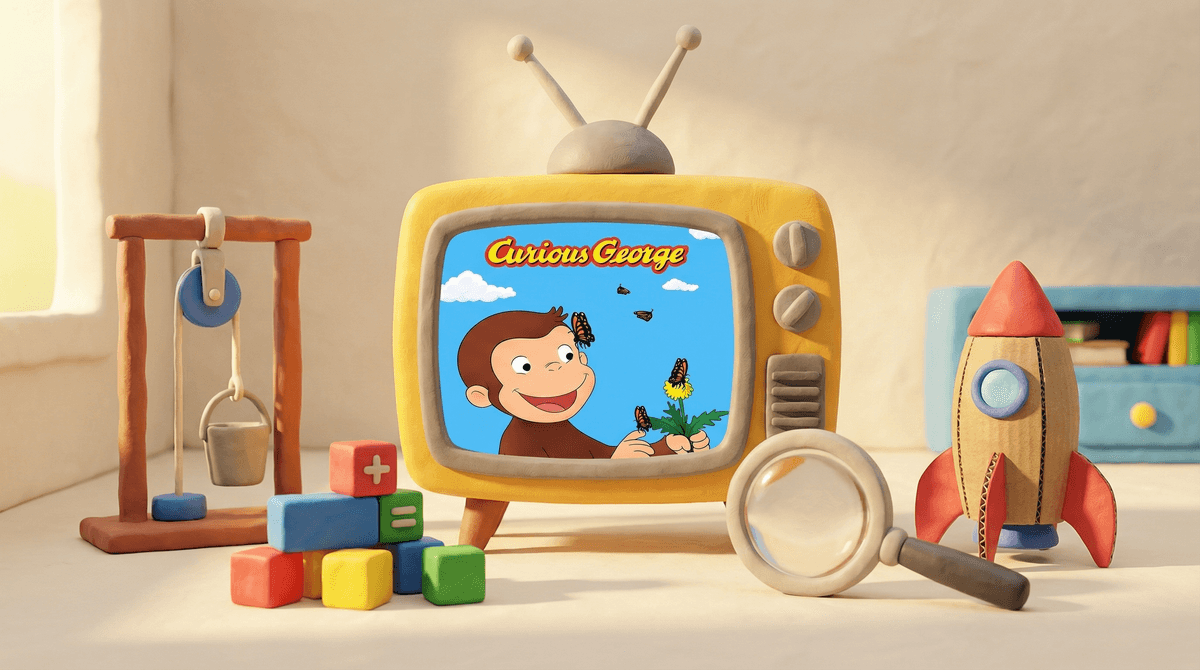
The Curious Case of Curious George on Netflix: What Parents Should Know
Curious George on Netflix is one of those rare preschool shows that actually delivers on its educational promise without making parents want to claw their eyes out. With 389 episodes available (yes, you read that right), this PBS Kids classic teaches genuine problem-solving, scientific thinking, and curiosity-driven learning. Perfect for ages 2-6, though many kids stay engaged through early elementary. Zero safety concerns, zero annoying characters, zero regrets.
So Netflix has basically the entire Curious George library—we're talking 13 seasons and 389 episodes of that little monkey getting into situations that would give any pet owner a heart attack. And here's the thing parents need to know: this isn't filler content. This is actually one of the best educational shows for preschoolers, full stop.
Most preschool shows follow a pretty predictable formula: identify problem, sing song about feelings, solve problem, everyone learns a lesson about sharing. Curious George takes a completely different approach. George doesn't talk (he's a monkey), so kids have to actually watch and think about what's happening. The show is built around the scientific method without ever mentioning the scientific method.
Here's how a typical episode works: George notices something interesting (Why do ducks float? How does a pulley work? What makes bread rise?). He experiments. Things go hilariously wrong. He adjusts his approach. He figures it out. The Man with the Yellow Hat shows up and somehow isn't furious that George has turned the entire apartment into a makeshift physics lab.
The educational content is sneaky good. We're talking:
- Real math concepts: measuring, counting, patterns, spatial reasoning
- Scientific thinking: hypothesis testing, cause and effect, observation
- Engineering basics: simple machines, building, problem-solving
- Life skills: following multi-step directions, learning from mistakes
And it's all wrapped in stories that are genuinely entertaining. George accidentally orders 100 pizzas. George tries to wash a skunk. George builds a rocket ship out of household items. It's chaos, but it's purposeful chaos.
Let's address the elephant (or monkey) in the room: 389 episodes is a LOT of content. Should you be concerned about your kid watching that much of one show?
Honestly? Curious George is one of the few shows where heavy rotation isn't a red flag. Each episode introduces different concepts, and because George doesn't talk, kids are actively engaged in figuring out what's happening rather than passively absorbing dialogue. The show also has incredible variety—episodes set in the city, the country, at the beach, in museums, on farms. Your kid isn't just watching the same setting and characters over and over.
That said, no show should be the only thing a kid watches. Even good screen time benefits from variety. But if your preschooler is in a Curious George phase and wants to watch it daily? This is not the hill to die on. There are far worse viewing habits.
Ages 2-4: This is the sweet spot. The episodes are the perfect length (two 11-minute stories per episode), the pacing is gentle, and the concepts are accessible. George's wordless problem-solving actually helps this age group develop observation skills.
Ages 5-7: Still highly engaging, especially for kids interested in how things work. The math and science concepts scale up in later seasons, so older preschoolers and kindergarteners get more out of episodes featuring measurement, engineering challenges, and cause-and-effect experiments.
Ages 8+: Most kids will naturally age out, but don't be surprised if your elementary schooler still enjoys it occasionally, especially the episodes with more complex building or science projects. It's wholesome background viewing when they're sick or need something low-key.
The Good Stuff:
- Zero commercialization: No toy tie-ins, no annoying catchphrases, no pressure to buy George merchandise (though it exists if you want it)
- Diverse settings and characters: The show does a solid job showing different types of families, communities, and ways of living
- Actually teaches patience: George fails constantly. He tries again. This is modeling resilience in a way that's way more effective than a song about "trying your best"
- The Man with the Yellow Hat is weirdly competent: He's patient, he explains things, he lets George learn from mistakes. He's basically the anti-Caillou's-dad
The Mild Concerns:
- George does break rules: He gets into things he shouldn't, makes messes, occasionally "borrows" items without asking. The show frames these as learning opportunities, but very young kids might not always get that nuance. If your 3-year-old suddenly thinks it's fine to "experiment" with your kitchen mixer unsupervised, you'll know why
- Lack of consequences: George rarely faces real consequences for his chaos. The Man with the Yellow Hat is remarkably chill about George flooding the apartment or accidentally releasing animals at the zoo. This is fine for a TV show, but worth a conversation about real-world expectations
The Format: Each 30-minute episode contains two separate 11-minute stories. This is actually perfect for parental sanity—you can easily do "one story" as a compromise, and the shorter format keeps younger attention spans engaged.
If you're trying to figure out where Curious George fits in your rotation, here's the honest comparison:
Better than: Caillou (obviously), Paw Patrol (less merchandising pressure, more actual learning), Blippi (way less chaotic energy)
On par with: Daniel Tiger's Neighborhood (different focus—Daniel is more social-emotional, George is more cognitive/problem-solving), Bluey (though Bluey edges ahead for parent entertainment value)
Different category than: Octonauts (more adventure-focused), Wild Kratts (more specific animal science content)
If you're looking for a preschool show that's actually educational, won't drive you insane, and keeps kids engaged without being overstimulating, Curious George is a winner. The 389 episodes on Netflix mean you won't be watching the same content on repeat for months (looking at you, parents who can recite every Bluey episode), and the quality stays consistent across seasons.
This is a show you can feel good about. It teaches real skills, models curiosity and problem-solving, and does it all without talking down to kids or annoying parents. Plus, George is genuinely funny. You'll find yourself actually watching instead of just supervising.
Is it perfect? No. Will your kid try to conduct "experiments" that result in messes? Probably. But they'll also start noticing patterns, asking "why" questions, and thinking through problems instead of immediately asking for help. That's worth a few extra loads of laundry.
- Start with a few episodes to see if your kid connects with the format—the wordless storytelling isn't for everyone
- Use it as a springboard: When George builds something or explores a concept, follow up with hands-on activities. "George made a pulley—should we try making one?"
- Set clear boundaries: If you're worried about the "George gets into everything" modeling, talk about it. "George is a monkey and doesn't know the rules. What are our family rules about touching things in the kitchen?"
- Mix it up: Even great shows benefit from variety. Rotate with other quality options like Daniel Tiger, Bluey, or educational podcasts for kids
And if you need more preschool show recommendations, or want to explore alternatives to screen time that build the same problem-solving skills, Screenwise has you covered.