

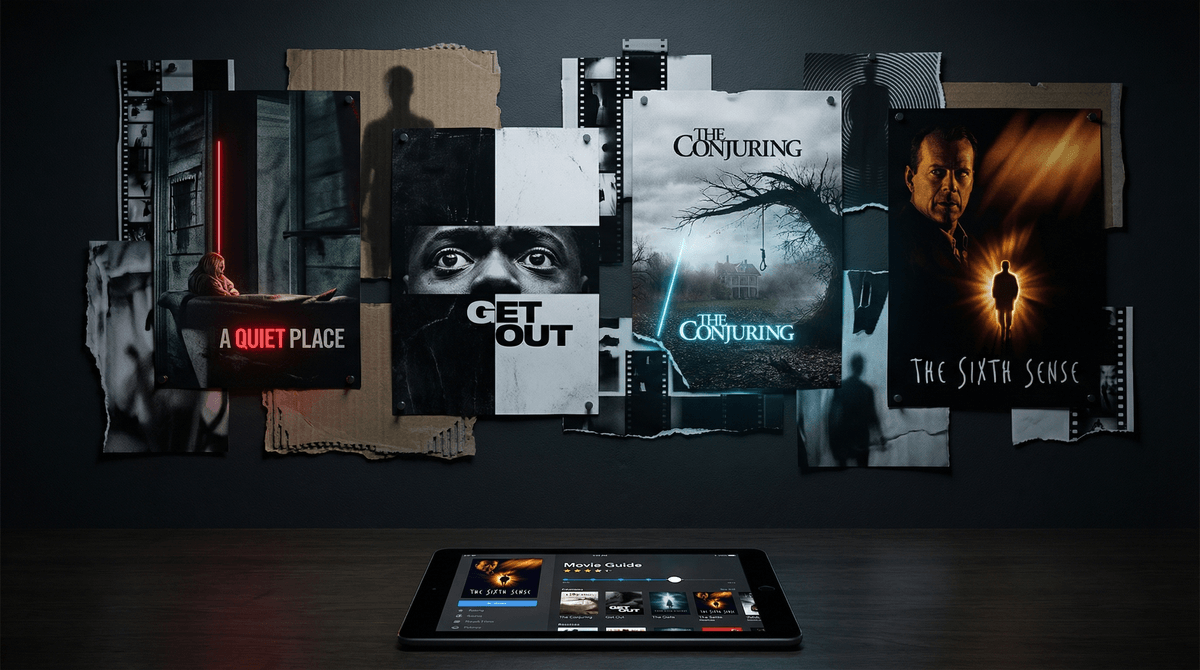
The Best Scary Movies for 15-Year-Olds: A Teen Guide to Horror
Fifteen is the sweet spot for horror—old enough to handle genuine psychological tension, but not necessarily ready for extreme gore or trauma porn. Here are the top picks that deliver real scares without crossing into gratuitous territory:
- A Quiet Place - Masterclass in tension without gore
- Get Out - Smart social commentary with genuine horror
- The Sixth Sense - Classic psychological thriller that still holds up
- Happy Death Day - Groundhog Day meets slasher, surprisingly fun
- The Conjuring - Well-crafted scares, skip the sequels
- Ready or Not - Dark comedy horror that's actually clever
Your 15-year-old wants to watch horror movies. Maybe they're going to a friend's house for a scary movie marathon, or they're scrolling through streaming services looking for something that'll actually scare them (not the watered-down PG-13 stuff they've been watching since middle school).
Here's the thing about horror at fifteen: they're developmentally ready for more sophisticated scares—psychological tension, existential dread, social commentary wrapped in terror. What they're probably not ready for is the extreme violence, sexual assault, and torture sequences that populate a lot of modern horror. The good news? Some of the best horror films ever made rely on atmosphere and tension rather than shock value.
Before we dive into recommendations, let's talk about why horror can actually be valuable viewing for teens. Horror films teach emotional regulation—how to experience fear in a controlled environment and come out the other side. They're often allegories for real anxieties (social rejection, loss of control, body autonomy). And frankly, watching scary movies together can be a bonding experience that opens up conversations about what genuinely frightens your teen.
That said, not all horror is created equal. The difference between a well-crafted thriller and trauma porn matters.
This is where I'd start. John Krasinski's 2018 thriller is a masterclass in building tension without relying on gore. A family must live in complete silence to avoid alien creatures that hunt by sound. The scares are earned, the family dynamics are compelling, and the violence, while present, isn't gratuitous.
What makes it work: The concept is simple enough that teens can follow it, but the execution is sophisticated. It's also genuinely scary without being traumatizing. Plus, Emily Blunt gives birth in a bathtub while trying not to make noise, which is objectively terrifying regardless of your age.
Content note: Some creature violence and intense sequences, but nothing exploitative. PG-13 rating is accurate.
Jordan Peele's directorial debut is brilliant horror that works on multiple levels. On the surface, it's a tense thriller about a Black man visiting his white girlfriend's family for the weekend. Underneath, it's razor-sharp social commentary about racism, microaggressions, and the commodification of Black bodies.
Why it's perfect for 15-year-olds: They're old enough to catch the social commentary and discuss it afterward. The horror elements are psychological rather than gory (though there are a few intense moments). It's also just incredibly well-made cinema.
Content note: Rated R for violence and disturbing themes. Some blood, but the real horror is psychological. Skip if your teen isn't ready for racial themes that might hit close to home.
M. Night Shyamalan's 1999 classic still works beautifully. A child psychologist tries to help a young boy who claims to see dead people. Even if your teen knows the twist (and let's be real, they probably do), the journey is worth it.
What makes it age-appropriate: The ghosts are disturbing but not gratuitously violent. The emotional core is about grief and acceptance. It's genuinely moving alongside being scary.
Content note: PG-13. Some disturbing images of dead people, but nothing extreme. The hanging ghost scene is the most intense moment.
Groundhog Day meets slasher film. A college student relives the day of her murder over and over, trying to figure out who's killing her. This is horror-lite with a sense of humor, perfect for teens who want scares without nightmares.
Why teens love it: It's clever without being pretentious, scary without being traumatizing, and has a protagonist who actually learns and grows. The kills are creative but not graphic.
Content note: PG-13. Violence is mostly off-screen or quick cuts. Some language and college party scenes, but nothing extreme.
These are solid horror films with some caveats:
James Wan's 2013 film about paranormal investigators Ed and Lorraine Warren is genuinely scary and well-crafted. The jump scares are earned, the atmosphere is thick, and it's based (loosely) on real events.
The caveat: This is proper scary. If your teen has nightmares easily, maybe start with something lighter. Also, the sequels get progressively worse and more violent—stick with the original.
Content note: R rating for terror and violence. No gore, but intense supernatural horror throughout.
A bride must survive her new in-laws' deadly game of hide-and-seek on her wedding night. This is dark comedy horror done right—satirizing wealth and privilege while delivering genuine scares.
The caveat: More violent than others on this list, though it's cartoonish rather than realistic. The gore is over-the-top enough to be almost funny, but it's still there.
Content note: R for violence, bloody images, and language. Know your teen's tolerance for blood.
Nicole Kidman in a Gothic ghost story set in a dark mansion after World War II. Atmospheric and creepy without being gory.
Why it works: Old-school horror that relies on mood and mystery. The twist is satisfying, and the scares are psychological.
Content note: PG-13. Some intense sequences but no gore or violence. Might be too slow for teens used to modern pacing.
Let's be real about what not to watch:
The Saw franchise - Torture porn masquerading as psychological horror. Just no.
Hostel series - Same deal. Gore for gore's sake isn't the same as good horror.
The Human Centipede - If your teen is asking about this, they're trying to shock you. The answer is absolutely not.
Most zombie films - The Walking Dead desensitized a generation to zombie violence, but most zombie movies are just gore delivery systems. Exception: Shaun of the Dead if they're ready for R-rated comedy.
Recent Terrifier films - These have gone viral on TikTok for their extreme violence. They're not clever, just gross. Hard pass.
Not all 15-year-olds are ready for the same content. Here's how to think about it:
For teens new to horror or easily scared: Start with A Quiet Place, Happy Death Day, or The Sixth Sense. These deliver scares without overwhelming.
For teens who've seen some horror but you want to level up: Get Out, The Conjuring, or Ready or Not are good next steps.
For mature 15-year-olds who can handle psychological intensity: Consider Hereditary (with serious caveats—this is DARK), The Witch (slow burn folk horror), or It Follows (STD as horror metaphor).
Horror affects teens differently than adults. Their brains are still developing, particularly the prefrontal cortex that helps with emotional regulation. What seems like campy fun to you might genuinely disturb them (or vice versa—they might find your "scary" movies hilarious).
Watch together when possible. This gives you a chance to gauge their reactions in real-time and pause for discussions. It also signals that you're a safe person to process scary or disturbing content with.
Talk about the craft. Discussing how filmmakers create tension—camera angles, sound design, pacing—can help demystify the scares and make it a learning experience. This guide to how horror movies work can help you break down the techniques.
Check Common Sense Media. Seriously, their reviews break down every potentially concerning element. When in doubt, read the parent reviews from people who've actually watched with teens.
Trust your teen (mostly). If they're saying something is too much, believe them. If they're rolling their eyes at your concerns, maybe let them try something slightly scarier than you're comfortable with—growing up means pushing boundaries.
Here's where to find these films:
- Netflix has A Quiet Place, though it rotates
- Paramount+ has A Quiet Place and its sequel consistently
- Peacock often has Get Out and other Universal horror
- HBO Max has a solid horror collection including The Conjuring
- Most are available to rent on Amazon Prime, Apple TV, or Vudu for $3-5
Horror films can actually open up important conversations:
After Get Out: Talk about microaggressions, performative allyship, and how racism operates in liberal spaces. This is uncomfortable but valuable.
After A Quiet Place: Discuss how families protect each other, the sacrifices parents make, and how we communicate when words aren't available.
After Happy Death Day: Talk about second chances, how we treat others, and whether people can genuinely change.
After The Conjuring: Maybe discuss belief systems, what we fear in the dark, and how horror reflects cultural anxieties about faith and family.
Horror at fifteen is about finding that sweet spot between genuine scares and psychological readiness. The films on this list deliver tension, atmosphere, and real fear without crossing into gratuitous violence or exploitation. They're also just good movies—well-crafted stories that happen to be scary.
Your teen is going to watch horror movies. The question is whether they'll watch thoughtful, well-made horror that respects their intelligence, or whether they'll end up watching whatever their friends pull up on someone's phone at a sleepover. By engaging with this interest rather than shutting it down, you're helping them develop media literacy and critical thinking skills.
Plus, honestly? Some of these films are genuinely great. You might actually enjoy watching them together.
-
Ask your teen what appeals to them about horror. Are they looking for jump scares? Psychological tension? Social commentary? This helps you pick the right film.
-
Start with something lighter like Happy Death Day and work your way up based on their reactions.
-
Check out alternatives to mainstream horror if these don't feel quite right for your family.
-
Consider psychological thrillers if horror feels like too much but your teen wants suspense.
-
Have a post-movie ritual—lights on, something funny to watch, or a discussion about what worked and what didn't. This helps process the experience and signals that you're done being scared for the night.
Horror isn't going anywhere, and your teen's interest in it is developmentally normal. The goal isn't to shield them from all scary content—it's to help them engage with it thoughtfully and age-appropriately. These films are a solid starting point for doing exactly that.