

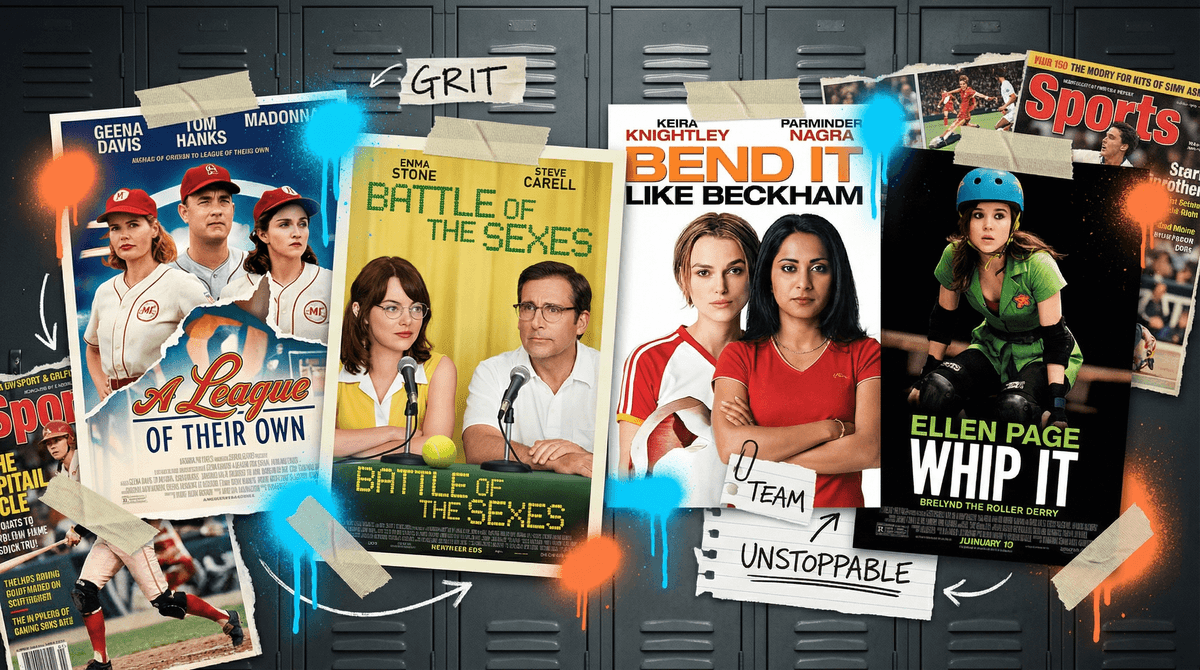
Look, we're not just talking about Remember the Titans here (though that's a solid choice). Sports movies are this whole genre that uses the structure of a game, a season, or a championship to tell stories about grit, failure, teamwork, and comebacks. They're basically life lessons wrapped in montages and underdog victories.
And here's the thing: girls need these stories just as much as boys do. Maybe more.
Because while boys have been watching themselves represented in sports narratives forever, girls often get relegated to the sidelines—literally and figuratively. They're the cheerleaders, the supportive girlfriends, the worried moms. But when girls get to be the athletes, the competitors, the ones fighting for their spot on the team? That's when something shifts.
Here's what I've noticed: the social dynamics girls face in middle school are basically a full-contact sport. The unwritten rules, the shifting alliances, the way you can be "in" one day and completely frozen out the next—it's exhausting. And sports movies? They're secretly teaching navigation skills for exactly this terrain.
Sports movies teach girls that:
- Failure is data, not identity. You miss the shot, you learn, you try again. This is HUGE for girls who often internalize mistakes as proof they're "not good at" something.
- Conflict can be productive. Team dynamics aren't always sunshine—sometimes you clash with your coach or a teammate, and you work through it. This is way healthier than the "nice girl" conditioning that says conflict = bad person.
- Your body is a tool, not an ornament. In a world where girls are constantly getting messages about how they look, sports movies show bodies doing incredible things—sweating, falling, getting back up, winning.
- Wanting to win isn't "mean." Girls get so many mixed messages about ambition and competition. Sports movies normalize wanting something badly and working your ass off to get it.
Think about it: when was the last time your daughter watched a story where the main character's goal was to be the best at something—not the kindest, not the most likable, but the actual best? Sports movies give girls permission to be hungry for achievement.
Ages 6-9: The Foundation
- A League of Their Own (1992) - Yes, the classic. Women's baseball during WWII, and "there's no crying in baseball" becomes a whole conversation about emotion vs. toughness.
- Ice Princess - Physics nerd becomes figure skater. STEM + sports + the cost of pursuing dreams.
- The Mighty Ducks - Technically not about girls, but the team dynamics and underdog story work for everyone.
Ages 10-13: Getting Real
- Bend It Like Beckham - Soccer, cultural expectations, and choosing your own path. The family dynamics here are chef's kiss.
- Million Dollar Baby - Wait, hear me out. This is PG-13 and intense, but for mature 12-13 year olds, it's a masterclass in mentorship and sacrifice. Preview it first.
- McFarland, USA - Cross country team from a small farming town. Less about girls specifically, but the themes of class, opportunity, and finding your strength are universal.
Ages 13+: The Deep End
- Whip It - Roller derby as rebellion and self-discovery. Some language and themes, but SO good for conversations about finding your people.
- Battle of the Sexes - Billie Jean King vs. Bobby Riggs. The sports stuff is great, but the real story is about systemic inequality and what it costs to fight it.
- Creed - Boxing, legacy, and proving yourself. Not about a girl, but Tessa Thompson's character is no sideline decoration, and the mentorship themes are gold.
Recent Additions:
- Hustle (2022, Netflix) - Basketball scouting. Adam Sandler is shockingly good, and it's about second chances and believing in someone.
- Next Goal Wins (2023) - Soccer team from American Samoa, includes a transgender player. Taika Waititi directs, so it's got heart and humor.
The Good Stuff:
- Characters who fail and keep going
- Coaches or mentors who push AND support
- Team dynamics that show conflict resolution
- Physical competence being celebrated
- Girls being allowed to be ambitious without being villainized
The Potentially Tricky Stuff:
- Some sports movies glorify playing through injury (not great messaging)
- Occasionally there's a "mean girl" rival who's cartoonishly evil (real life is more nuanced)
- The "inspiring coach" can sometimes veer into "abusive adult who gets results" territory—worth discussing
Don't just hit play and walk away. The magic happens in the conversations after.
Try asking:
- "What would you have done in that situation?"
- "Do you think the coach was fair when they [specific scene]?"
- "Have you ever felt like that character—like you wanted something but weren't sure you could do it?"
And here's a pro move: if your daughter plays a sport, watch movies about DIFFERENT sports. The lessons translate, but there's less pressure to compare herself to the on-screen athlete.
Sports movies aren't just for kids who play sports. They're for any kid who needs to see someone fall down and get back up. Who needs to learn that teams are messy and worth it. Who needs permission to want something fiercely and work for it unapologetically.
In a digital world where girls are constantly curating their image and avoiding anything that might make them look "bad," sports movies are a reminder that trying hard and failing publicly is actually the point.
The field, the court, the rink—these are just the settings. The real story is about becoming someone who doesn't quit when things get hard. And honestly? That's the kind of content I want my kids consuming way more than another algorithm-fed TikTok compilation.
Start with one movie this weekend. Make popcorn. Watch together. Then talk about it—not in a heavy-handed "what did we learn" way, but genuinely. Ask what they noticed. Share what surprised you.
And if you want more recommendations tailored to your kid's specific interests and age, check out our guide to empowering movies for girls or explore sports-themed content across different media .
.
Because every girl deserves a montage moment where she realizes she's capable of way more than she thought.