

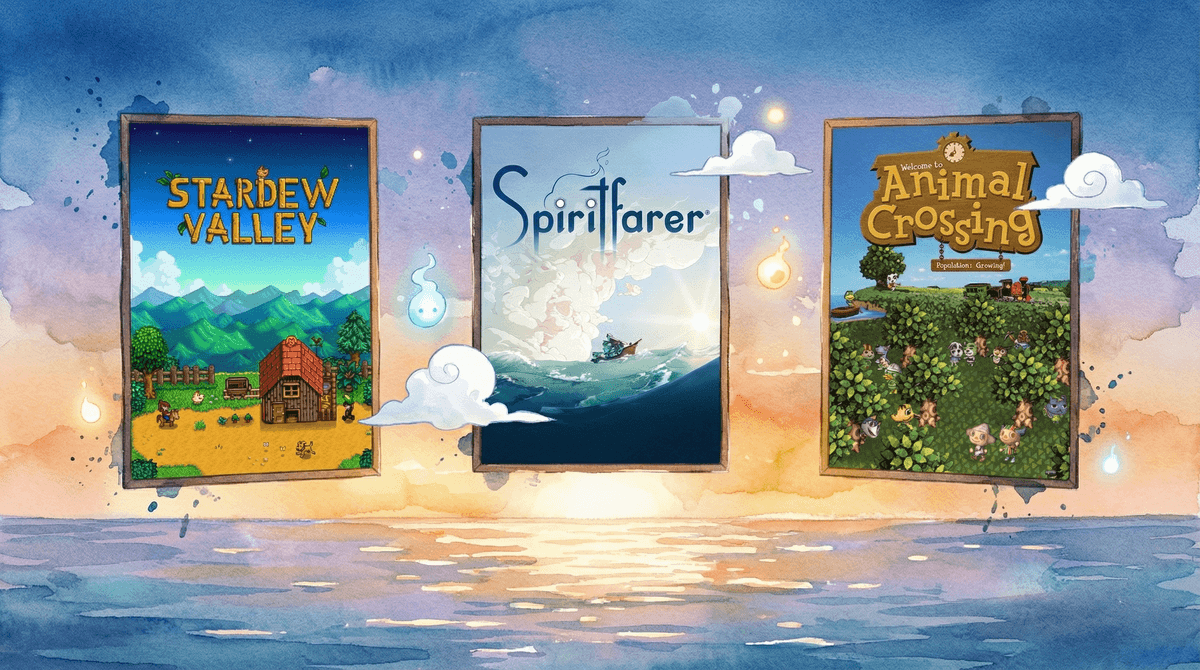
Spiritfarer is a "cozy management game about dying" (yes, that's how the developers describe it). You play as Stella, a ferrymaster to the deceased, who guides spirits through the afterlife on a customizable boat. Think Stardew Valley meets Animal Crossing, but instead of just farming and fishing, you're helping anthropomorphic animal characters process their deaths and find peace before they pass on to the afterlife.
It's a side-scrolling adventure where you build structures on your boat, grow gardens, cook meals, mine resources, and most importantly—build relationships with spirits who each have their own stories, regrets, and unfinished business. The art style is hand-drawn and gorgeous, the music is soothing, and the gameplay loop is genuinely relaxing. Until it absolutely wrecks you emotionally.
It's cozy with purpose. Unlike many management games that can feel like endless chores, Spiritfarer gives every task emotional weight. You're not just cooking food—you're making someone's favorite meal from their childhood. You're not just building a house—you're creating a comfortable space for a spirit who's scared of what comes next.
The characters are unforgettable. Each spirit has a fully developed personality and backstory. There's Gwen, your childhood best friend who's dealing with terminal illness. There's Alice, who has dementia and keeps forgetting who you are. There's Gustav, a pompous art critic learning humility. Kids get genuinely attached to these characters, which makes the inevitable goodbyes hit hard.
It treats death with respect and nuance. This isn't a game where death is a game-over screen or a combat mechanic. It's about acceptance, closure, and love. When you finally take a spirit to the Everdoor (where they pass on), it's bittersweet and beautiful. Kids report that these moments make them cry—and that they appreciate the game for it.
Best for ages 10+, though emotionally mature 8-9 year olds might be ready with parent involvement.
Why the age floor matters: This game deals with death, grief, terminal illness, dementia, infidelity, and abandonment. It's all handled with incredible sensitivity, but these are heavy topics. A child who hasn't yet grappled with loss might not connect with the emotional core. A child who's recently experienced a death might find it either healing or too raw—you know your kid best.
Content considerations:
- No violence, no combat, no scary imagery
- Mild language (very occasional)
- Themes of illness, aging, regret, and mortality throughout
- Some spirits have tragic backstories (abuse, addiction, family estrangement)
- The game expects you to say goodbye to characters you've grown to love
Playing together: This is an excellent co-play experience. The gameplay is simple enough that younger kids can handle the controls while you help them process the emotional beats. Many parents report that Spiritfarer opened up conversations about death and loss that they'd been struggling to initiate.
This is grief education disguised as a video game. In a culture that often shields children from death, Spiritfarer does the opposite—it shows that death is a natural part of life, that saying goodbye is painful but necessary, and that we honor people by remembering them and letting them go.
It's genuinely therapeutic. Child psychologists have praised games like this for giving kids a safe space to explore difficult emotions. If your family has experienced loss, or if a grandparent or pet is aging, this game can be a tool for processing those feelings. Learn more about how games can support emotional development .
.
The pacing is slow and intentional. This isn't a game about winning or achieving high scores. It's about the journey. Some kids who are used to fast-paced action games might find it boring at first. Others will find it refreshingly calm—especially kids who get overstimulated by typical gaming experiences.
It's available on everything. Nintendo Switch, PlayStation, Xbox, PC, and even mobile devices. Among families in your community, about 55% have gaming consoles at home, and this is one of those rare games that works beautifully on any platform.
If your kid is playing Spiritfarer, check in with them about how they're feeling. Some questions that can open up conversation:
- "Which spirit are you closest to? What do you like about them?"
- "Has anyone said goodbye yet? How did that feel?"
- "Does this game remind you of anyone in our family?"
- "What do you think happens after someone goes through the Everdoor?"
Be prepared for real answers. This game has a way of surfacing feelings kids didn't know they had.
Spiritfarer is that rare thing: a game that's both entertaining and emotionally enriching. It won't teach your kid math or coding, but it might teach them something more valuable—that loss is part of love, that grief is normal, and that saying goodbye doesn't mean forgetting.
In a gaming landscape where 55% of kids are gaming regularly, it's worth being intentional about which games get their time and emotional attention. Spiritfarer is one of the good ones.
If your kid is ready: Play the first hour together. See how they respond to the themes before letting them continue solo.
If you're unsure: Watch a let's-play video together first (just the opening, to avoid spoilers).
If they love it: Ask them to tell you about each spirit before they say goodbye. These conversations might surprise you.
And maybe keep tissues nearby. For them. And for you.