

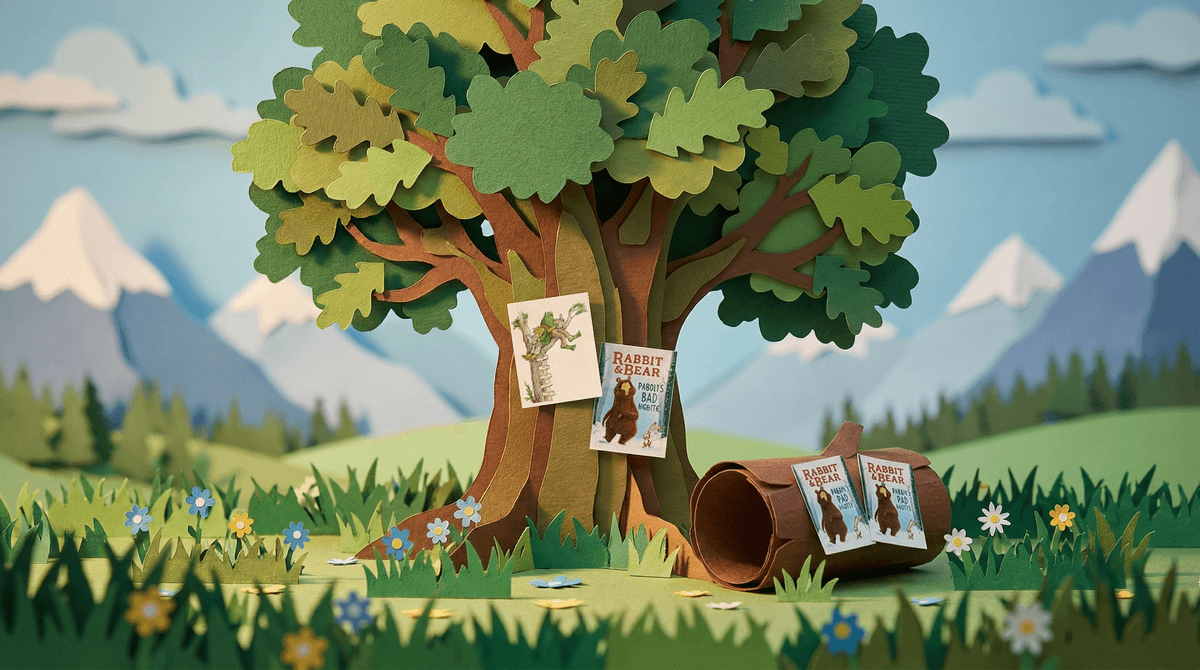
Rabbit and Bear by Julian Gough is a chapter book series that follows the unlikely friendship between an anxious, bossy rabbit and a calm, philosophical bear who's just woken from hibernation. Written by Irish novelist Julian Gough and illustrated by Jim Field, these books hit that sweet spot between picture books and full chapter books—think Dog Man meets Frog and Toad, but with more plot and longer chapters.
The series includes titles like "Rabbit's Bad Habits," "The Pest in the Nest," and "Attack of the Snack," and each book is around 100-120 pages with illustrations on nearly every spread. The stories are genuinely funny (parents, you'll actually laugh too), surprisingly wise about friendship and emotions, and perfectly paced for kids who are ready to read longer stories but still want pictures to break things up.
The humor lands. Rabbit is hilariously neurotic and self-centered in a way that feels real—he's constantly making plans, worrying about everything, and being kind of a jerk to his friends. Bear is the opposite: chill, kind, and prone to philosophical musings that go right over Rabbit's head. Kids find this dynamic absolutely hilarious, especially the physical comedy and silly dialogue.
It's actually about friendship. Unlike some early reader series that feel more like "adventures happen to characters who happen to be friends," Rabbit and Bear is genuinely about how these two very different personalities learn to understand each other. Rabbit slowly (very slowly) learns to be less selfish. Bear learns to be more assertive. It's character development that even 6-year-olds can track and appreciate.
The illustrations do heavy lifting. Jim Field's artwork is expressive and funny, with tons of visual jokes that kids will catch on re-reads. For kids transitioning from picture books, having substantial illustrations makes the chapter book format less intimidating.
It's not dumbed down. The vocabulary is rich without being show-offy, and the humor works on multiple levels. There are jokes about existentialism and references to classic literature that will sail over kids' heads but make parents smile.
Ages 5-7 (Read-Aloud): Perfect for reading together at bedtime. The chapters are short enough (5-10 minutes each) that you can do one per night, and the cliffhangers keep kids engaged. The emotional themes—dealing with annoying friends, managing anxiety, learning to share—are very relevant for this age group.
Ages 6-8 (Early Independent Readers): This is the sweet spot. Kids who've graduated from Elephant and Piggie or Mercy Watson but aren't quite ready for Magic Tree House will find these books challenging but achievable. The font is large, there's plenty of white space, and the illustrations provide context clues.
Ages 8-10: Older readers who are still building stamina or who just prefer lighter, funnier books will enjoy these too. No shame in reading "younger" books if they're genuinely good stories—and these are.
These books have emotional intelligence. Rabbit's anxiety and self-centeredness aren't played just for laughs—the stories gently show how these traits affect his friendships and how he can grow. Bear's patience and kindness are modeled without being preachy. If you're working on social-emotional learning at home, these books are sneaky-good conversation starters.
They're British, but not inaccessibly so. There are some British spellings and occasional vocabulary (like "rubbish" instead of "garbage"), but nothing that will confuse American kids. If anything, it's nice exposure to different English variants.
The series has staying power. There are currently seven books in the series, with more likely coming. Unlike some early reader series where the quality drops off after book three, these maintain their charm throughout. Once your kid is hooked, you've got a reliable gift option for birthdays and holidays.
They're great for reluctant readers. The humor and illustrations make these books feel less intimidating than pure text-heavy chapter books. Kids who resist reading often respond well to the short chapters and immediate payoff of funny moments.
They work for mixed-age read-alouds. If you've got a 5-year-old and an 8-year-old, these books can engage both. The younger kid gets the physical comedy and pictures; the older kid catches the more subtle humor and character development.
Rabbit and Bear is one of those rare series that's legitimately good literature disguised as silly animal stories. If your kid loved The Bad Guys or Narwhal and Jelly but is ready for something with more depth, this is your next move.
These books prove that transitional chapter books don't have to be boring or formulaic. They can be funny, smart, beautifully illustrated, and emotionally resonant all at once. Start with "Rabbit's Bad Habits" and see if your kid connects with Rabbit's chaos and Bear's calm—chances are, you'll be reading the whole series.
And honestly? You might find yourself looking forward to bedtime reading again, which is worth the price of the book alone.
Start with book one: "Rabbit's Bad Habits" introduces the characters and their dynamic—don't skip ahead.
Check your library: Most library systems have these in both physical and digital formats. See if your library has the series before buying.
Consider the audiobooks: The narration is excellent and adds another dimension to the humor—great for car rides or quiet time.
Use them as a gateway: Once your kid finishes the series, they'll likely be ready for other chapter book series like Mercy Watson, Ivy and Bean, or The Wild Robot.