

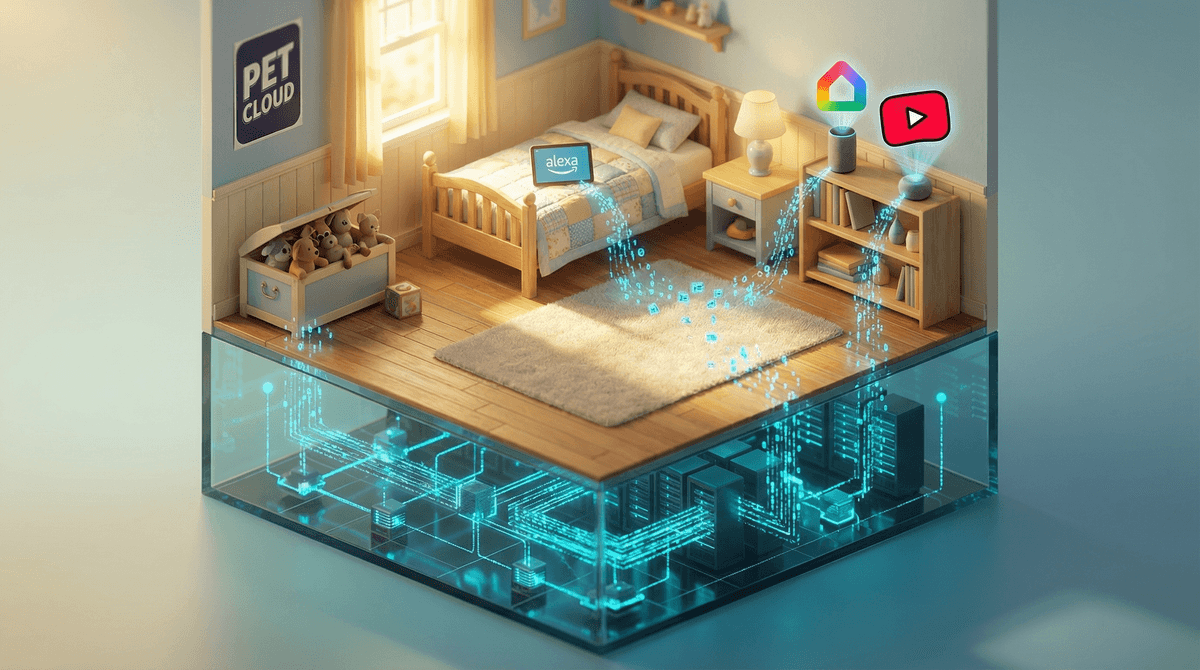
Here's the thing: when we were kids, "stranger danger" meant not getting into unmarked vans. Now? It means understanding that the cute educational app your 5-year-old loves might be collecting their voice recordings, tracking their location, and building a behavioral profile to sell to data brokers.
Digital privacy for young kids isn't just about keeping creeps away (though yes, that too). It's about understanding that in 2026, your child's data—their face, their voice, their interests, their location, their learning patterns—is incredibly valuable. And a shocking number of "free" apps, smart toys, and platforms are in the business of collecting and monetizing that data.
The tricky part? Most of this data collection happens invisibly, wrapped in friendly cartoon characters and the promise of "personalized learning experiences."
Let's be real: most of us didn't grow up thinking about digital privacy because it wasn't really a thing. But here's what's happening right now with young kids:
Smart toys are listening. That interactive doll? That voice-activated learning companion? They're often connected to the internet, recording conversations, and sometimes storing them on servers with questionable security. Remember the CloudPets breach where millions of kids' voice recordings were exposed? Yeah.
"Free" educational apps aren't free. They're funded by data collection and advertising. Many apps marketed to preschoolers track everything from how long your kid plays to what they tap on, then use that data to serve ads or sell to third parties. The FTC has repeatedly fined major companies for violating children's privacy laws, and those are just the ones that got caught.
Voice assistants are always listening. Alexa, Siri, Google Home—they're in millions of homes with young kids. Every "Hey Alexa, play Baby Shark" is potentially being recorded, stored, and analyzed. Amazon has admitted that humans review some Alexa recordings. Do you know if your kid's voice is in that pile?
YouTube and YouTube Kids collect data too. Google paid $170 million to settle FTC allegations that YouTube illegally collected kids' data. The platform still uses viewing history to recommend videos, which means it's tracking what your 6-year-old watches, even in "Kids" mode.
School apps are a privacy nightmare. From classroom management tools to reading apps, schools are handing out logins to platforms that may not have strong privacy protections. Some educational platforms have been caught selling student data to third parties.
The Law Is Supposed to Protect Kids (But It's Complicated)
COPPA (Children's Online Privacy Protection Act) requires websites and apps to get parental consent before collecting data from kids under 13. Sounds great, right?
The reality: Companies get around this by either claiming they're not "directed at children" (even when kids are clearly the audience) or by making the consent process so confusing that parents just click "agree" without reading. That 47-page privacy policy? Nobody's reading that.
What Data Are We Talking About?
When apps and devices collect data on young kids, they're grabbing:
- Location data (where your child goes, when they're home)
- Voice recordings (what they say, their speech patterns)
- Facial recognition data (from photos and video)
- Behavioral data (what they click, how long they engage, what they struggle with)
- Biometric data (in some cases, even fingerprints or retina scans)
- Contact lists (yes, some apps ask for access to your entire phone contact list)
This data can be used to build incredibly detailed profiles of your child—profiles that could follow them for years.
The "Personalized Learning" Trap
Companies love to say they need all this data for "personalized learning experiences." And sure, adaptive learning can be valuable. But ask yourself: does a matching game for 4-year-olds really need to track my child's location? Does a drawing app need access to their camera and microphone?
The answer is almost always no. Most of the data collection is about monetization, not education.
Ages 2-5: Lock It Down
At this age, you have complete control. Use it.
- Choose apps carefully. Look for apps that explicitly say "no ads, no in-app purchases, no data collection." Yes, you might need to pay $3.99. It's worth it.
- Disable voice assistants in play areas. Or at minimum, review and delete voice recordings regularly in your device settings.
- Read toy privacy policies before buying. If a toy connects to the internet or has a microphone, google "[toy name] privacy concerns" before purchasing.
- Create a separate kids profile on tablets that limits what apps can access (camera, microphone, location).
Ages 6-8: Start the Conversation
Kids this age are starting to use more apps independently and may be getting school-issued devices.
- Teach the concept of "digital footprints." Explain that computers remember what we do, and sometimes they share that information with other people.
- Review school app permissions together. Ask your school what data is collected and how it's used. You have a right to know.
- Use kid-safe browsers like Kiddle or enable strict filtering on regular browsers.
- Turn off "personalized" ads in device settings. iOS and Android both have options to limit ad tracking.
Ages 9-12: Build Critical Thinking
Older elementary kids can start understanding why privacy matters and making some decisions.
- Talk about why "free" isn't really free. Explain that when something is free, they are the product being sold (their attention, their data, their behavior).
- Practice reading permissions together. When downloading a new app, look at what it's asking to access. Does a calculator app need your location? No? Then deny it.
- Discuss facial recognition. Talk about how photos can be used to identify people, and why they should be thoughtful about posting pictures of themselves or friends.
- Review privacy settings on any platforms they use (Roblox, Minecraft, etc.). Make this a regular check-in, not a one-time thing.
This week:
- Audit your home. Make a list of every connected device, toy, or app your young kids use regularly.
- Google each one with the words "privacy concerns" or "data collection" and see what comes up.
- Check your voice assistant settings. Delete stored recordings and adjust privacy settings (yes, this is annoying, but it takes 10 minutes).
This month:
- Review app permissions on all devices your kids use. Revoke anything that seems excessive.
- Talk to your kid's school about what apps they're using and what privacy protections are in place.
- Set up a family media plan that includes privacy boundaries (like "we don't give out our real names or locations online").
Ongoing:
- Make privacy part of the conversation. When your kid asks to download a new app, talk through what information it might collect.
- Model good privacy habits. Kids learn from watching us. If we're cavalier about our own privacy, they will be too.
- Stay informed. Privacy threats evolve quickly. Follow tech news sources that cover children's digital privacy.
Look, I'm not saying you need to go full off-the-grid and ban all technology. That's not realistic or even necessarily beneficial. But we need to stop treating children's privacy as an afterthought.
Your 5-year-old can't consent to having their voice recorded and analyzed. Your 8-year-old doesn't understand that their learning app is building a behavioral profile. Your 10-year-old doesn't realize that the "fun personality quiz" is actually a data harvesting operation.
As parents, we need to be the gatekeepers. Not perfect gatekeepers—that's impossible—but intentional ones. Ask questions. Read the fine print (or at least skim it). Choose paid apps over "free" ones when it matters. Teach your kids that their information has value and they get to decide who gets access to it.
Because here's the truth: the data collected about your child today could affect their college admissions, their job prospects, their insurance rates, and their digital reputation for decades to come. The companies collecting this data aren't thinking about your child's future. But you are.
And that makes all the difference.