

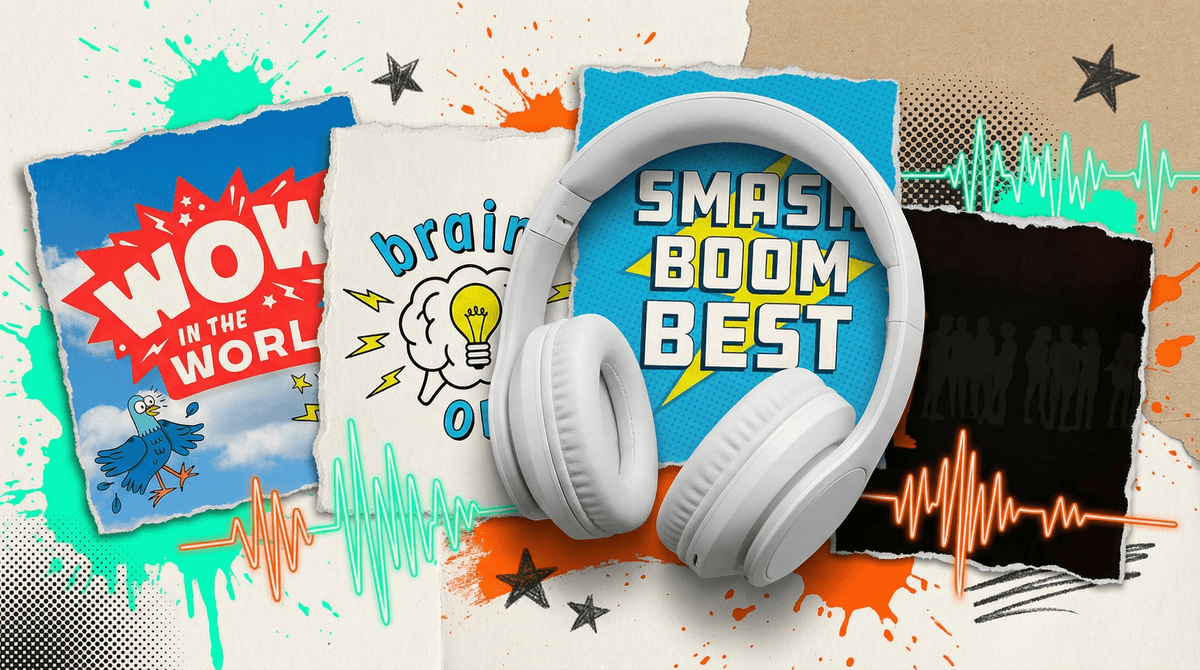
Look, I get it. When your kid asks for more screen time and you're already maxed out on your internal "yes" quota for the day, it feels like you're just saying no to everything. But here's the thing: podcasts are the loophole we've all been waiting for.
Audio content—podcasts specifically—gives kids entertainment, education, and even that parasocial relationship they crave with creators, all without the zombie-stare at a glowing rectangle. They can listen while doing chores (optimistic, I know), during car rides, before bed, or while building yet another elaborate Lego creation.
The podcast landscape for young people has absolutely exploded in the past few years. We're not just talking about repackaged educational content that sounds like it was produced in 1987. There are genuinely engaging, well-produced shows covering everything from comedy to mystery to science to social justice to... yes, even gaming (but we'll get to that).
Podcasts feel like a secret. Unlike TV shows that everyone's watching, podcasts have this intimate, "I discovered this cool thing" vibe. Kids can listen with headphones and feel like they're in their own world—which, let's be honest, is exactly what tweens and teens are trying to create anyway.
They're portable and flexible. Your kid can pause, rewind, speed up (Gen Z loves 1.5x speed, it's wild), or listen to the same episode seventeen times if they want. There's no FOMO about missing the latest episode drop because it's all on-demand.
The topics are genuinely interesting. We're past the era of "educational content for kids" that talks down to them. Modern podcasts for this age group tackle real issues, tell compelling stories, and trust young listeners to keep up with complex narratives.
Science & Learning (That Doesn't Feel Like School)
Brains On! is the gold standard for ages 8-12. It's science-focused but genuinely funny, with kid co-hosts asking the questions your own kids would ask. Topics range from "Why do we have butts?" to deep dives on space exploration.
Wow in the World brings that same energy with hosts Mindy and Guy taking kids through the latest scientific discoveries with infectious enthusiasm. Fair warning: the sound effects and voices can be A LOT for some parents, but kids eat it up.
For older teens, Radiolab is where they should graduate to—it's NPR-level production exploring science, philosophy, and human experience in ways that will absolutely spark dinner table conversations.
Storytelling & Fiction
The Unexplained Disappearance of Mars Patel is a full-cast audio drama that plays like a movie in your kid's head. It's got mystery, adventure, and enough twists to keep even reluctant listeners hooked. Ages 8-13 will devour this.
The Two Princes is a fantasy adventure romance (yes, with LGBTQ+ representation) that's beautifully produced and genuinely heartwarming. Great for ages 10+.
For teens ready for something meatier, Welcome to Night Vale is the weird, wonderful, community radio show from a desert town where every conspiracy theory is true. It's absurdist, inclusive, and has a massive teen following.
Real Talk & Social Issues
But Why: A Podcast for Curious Kids lets kids submit questions about anything—and I mean anything. "Why do people have different religions?" "How do you know if you're ready to get married?" It's Vermont Public Radio, so you know it's going to handle sensitive topics thoughtfully.
KidNuz is a daily news podcast specifically for kids that explains current events without the doom-scrolling anxiety. It's short (under 10 minutes) and actually helps kids understand what's happening in the world.
Comedy & Entertainment
Smash Boom Best is debate-style comedy where two things go head-to-head (Pizza vs. Tacos! Cats vs. Dogs!) with kid judges deciding the winner. It's from the Brains On! team, so you know it's quality.
Story Pirates takes stories written by kids and turns them into sketch comedy with professional actors and musicians. It celebrates creativity and is genuinely hilarious for both kids and parents.
Ages 8-10: Stick with shows explicitly made for this age group like Brains On!, Wow in the World, and Story Pirates. They can handle serialized fiction like Mars Patel but might need help processing some of the suspense.
Ages 11-13: This is the sweet spot for most "family-friendly" podcasts. They're ready for more complex narratives, can handle news content with context, and will start developing their own tastes. This is when they might discover gaming podcasts or fan podcasts about their favorite shows—which is fine, just preview them first because production quality and content vary wildly.
Ages 14+: Teens can handle most adult podcasts, but that doesn't mean they should listen to everything. True crime is hugely popular with this age group (we can talk about why that might not be great ), but there are also amazing options like This American Life or interview shows that expose them to diverse perspectives.
Podcasts aren't automatically "safe" content. Unlike TV-Y or PG ratings, podcast content ratings are inconsistent at best. Always preview a few episodes before handing your kid headphones and unlimited access. The Apple Podcasts and Spotify apps have "explicit" tags, but they're not comprehensive.
Ads can be weird. Many podcasts have ad reads that might not be age-appropriate—think mattress companies, therapy apps, or alcohol brands. Some shows have "clean" feeds for schools, but most don't. This is worth a conversation with your kid about how to mentally skip ads.
Listening habits matter. Just like screen time, audio time can become isolating if it's 24/7. Podcasts during transitions (car rides, chores, before bed) are great. Podcasts instead of family interaction or during meals? Maybe not.
They might ask hard questions. Good podcasts make kids think, which means they're going to come to you with questions about topics you might not have planned to discuss yet. This is actually a feature, not a bug—you get to frame these conversations rather than having them learn from TikTok.
Co-listen to the first episode. Make it a thing—car ride, folding laundry together, whatever. Get their reaction, gauge if it's the right fit, and show you're interested in their media consumption.
Create a shared playlist. Most podcast apps let you share episodes. If you hear something great, send it to them. If they love something, ask them to share it with you. This keeps the conversation going.
Use it as a carrot, not a stick. "You can listen to your podcast while you clean your room" works way better than "No podcast until your room is clean." Trust me on this.
Check their subscriptions occasionally. Not in a surveillance way, but in a "what are you into lately?" way. You'll learn a lot about what they're curious about and concerned with.
Podcasts are one of the rare wins in the digital parenting landscape. They're engaging without being addictive, educational without being preachy, and they don't come with the comparison-culture baggage of social media or the overstimulation of YouTube.
Are they perfect? No. Will your kid sometimes listen to something cringey or inappropriate? Probably. But compared to the alternative of more passive screen time, podcasts are a solid choice that actually delivers on the promise of "educational entertainment."
Start with one of the shows mentioned here, listen together, and see where it goes. Worst case scenario? You've got something to talk about besides school and chores. Best case? You've opened up a whole new world of curiosity and learning that doesn't require a screen.
Try these starter podcasts based on your kid's interests:
- Science nerds: Brains On!
- Story lovers: The Unexplained Disappearance of Mars Patel
- Comedy fans: Smash Boom Best
- News curious: KidNuz
Want more recommendations? Get podcast suggestions based on your kid's specific interests and age.
Set up listening boundaries the same way you would screen time—decide together when and where podcast listening makes sense for your family, and when it's time to be present without audio input.