

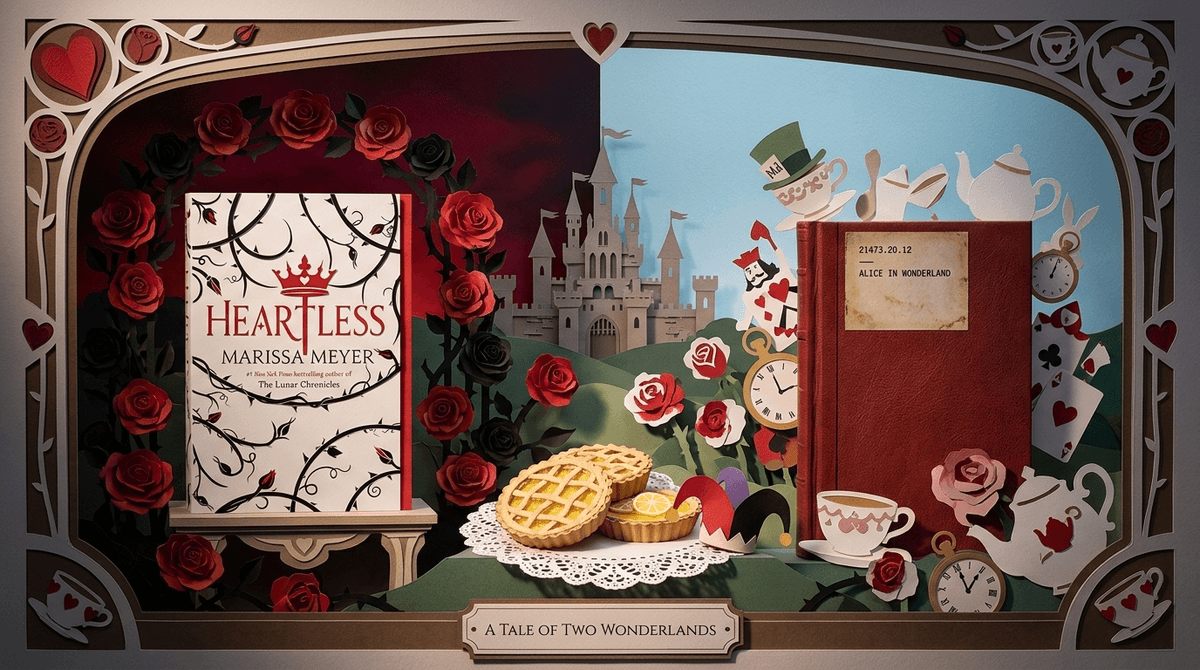
Heartless is the ultimate "villain origin story" for the YA set, taking the one-dimensional, head-chopping Queen of Hearts from Alice in Wonderland and giving her a backstory that is equal parts charming, romantic, and eventually, devastating. If your kid is into retellings, baking, or "clean" romances that still pack an emotional wallop, this is likely already on their radar. It’s a standalone novel, which is a rare gift in a world of endless trilogies, and it serves as a perfect bridge for readers moving from middle-grade fantasy into more complex young adult themes.
Heartless by Marissa Meyer is a "clean" YA romance that explains how a girl who loved baking became the infamous Queen of Hearts; it’s appropriate for most readers aged 12 and up who can handle a tragic ending. While the romance is sweet and the Wonderland setting is whimsical, the book doesn't shy away from the darker elements of the source material—expect some beheadings, creature violence, and a heavy emotional finish. For fans of The Lunar Chronicles, it’s a must-read that trades sci-fi for high-fantasy tragedy.
One of the main reasons Heartless hits so hard with teens is the central romance between Catherine (the future Queen) and Jest (the court joker). If you’re worried about "spice" levels, you can breathe easy. Marissa Meyer is known for writing "clean" romance—think longing glances, witty banter, and meaningful kisses rather than anything graphic.
The tension in the book doesn't come from physical explicitness; it comes from the impossible choice Catherine has to make between her own dreams (opening a bakery) and the expectations of her noble parents (marrying the dim-witted King of Hearts). It’s a classic "duty vs. desire" setup that lands perfectly for the digital guide for middle school demographic. Jest is a fan-favorite character because he’s mysterious and supportive, making the inevitable tragic turn of the story feel personal for the reader.
Since this is Wonderland, the violence has a specific, almost surreal flavor. Yes, there are beheadings. Yes, the Jabberwock makes appearances and causes some genuine carnage. However, because it's Wonderland, the gore often feels stylized rather than visceral.
That said, the final third of the book gets significantly darker. As Catherine loses her grip on her dreams and her happiness, the tone shifts from "whimsical baking competition" to "psychological descent into bitterness." If your kid is particularly sensitive to "sad endings," you might want to give them a heads-up that this isn't a "happily ever after" story. We know where Catherine ends up—screaming "Off with their heads!"—and Meyer does a masterful job of making that transition feel earned and tragic. It’s a masterclass in how grief can change a person, which makes for a much better conversation than just counting the number of sword fights.
There’s a reason Heartless remains a staple on TikTok (or "BookTok") years after its release. Teens are often drawn to tragedy because it validates the intensity of their own emotions. In Heartless, the stakes feel cosmic even when the characters are just talking about lemon tarts.
Marissa Meyer tapped into the same energy that made The Song of Achilles or They Both Die at the End viral sensations. There is a certain "aesthetic" to the tragedy here—the rose gardens, the black-and-white motifs, the courtly intrigue. For a teenager navigating the pressures of school and social hierarchies, Catherine’s struggle against a system that wants to put her in a box (or on a throne) is deeply relatable, even if the consequences in the book are a bit more... permanent.
If Heartless was a hit, your kid is likely a fan of "retellings"—stories that take familiar fairy tales or myths and flip the perspective. Here are a few deeper cuts and fan favorites that hit the same notes:
The "I Want More Marissa Meyer" Category
- Cinder: This is the start of The Lunar Chronicles. It’s Cinderella as a cyborg in a futuristic New Beijing. It’s less tragic than Heartless but has the same "clean" romance and great world-building.
- Gilded: Meyer’s take on Rumpelstiltskin. It’s got a darker, gothic atmosphere that fans of the later chapters of Heartless will appreciate.
The "Villain Perspective" Category
- Stepsister by Jennifer Donnelly: This follows one of Cinderella's "ugly" stepsisters as she tries to find her own path after the story we all know ends. It deals with beauty standards and redemption in a really smart way.
- Circe by Madeline Miller: Better for the digital guide for high school crowd, this is a beautiful, sometimes heavy retelling of the Greek enchantress’s life.
The "High Stakes & Snark" Category
- Six of Crows by Leigh Bardugo: If they liked the banter between Catherine and Jest, they will love the "found family" and heist vibes of this series. It’s a bit more intense on the violence but top-tier for teen readers.
If your kid just finished the book and is currently staring at a wall in emotional shock (the standard reaction to the ending), here are a few ways to turn that into a conversation:
- Talk about the "Point of No Return": Ask them at what point they think Catherine truly became the Queen of Hearts. Was it a specific event, or a slow burn? This is a great way to talk about how choices and circumstances shape our character.
- Compare the Source Material: If they haven't seen the classic Disney movie or read the original Alice in Wonderland, now is the time. Seeing how Meyer planted "Easter eggs" (like the origin of the Cheshire Cat or the Mad Hatter) makes the reading experience much richer.
- The Baking Connection: Catherine’s dream is to open a bakery. If your kid is inspired, spend an afternoon making lemon tarts. It sounds cheesy, but it’s a great way to bridge the gap between a digital or book-based interest and a real-world skill.
The hardest part of Heartless isn't the "inappropriate" content—there really isn't much—it’s the emotional weight. Unlike many YA novels where the hero finds a third way out of a bad situation, this book is a tragedy by design. If your kid is going through a particularly rough time socially or emotionally, just be aware that the ending is a bit of a "gut-punch." It’s a beautiful book, but it’s a heavy one.
Q: What age is Heartless appropriate for? Heartless is a sweet spot for ages 12-16. Younger readers (10-11) who are advanced readers can certainly handle the text, but the romantic longing and the tragic ending might land with less impact than it does for a teen.
Q: Is Heartless a "clean" romance? Yes. Marissa Meyer stays firmly in the "clean" YA category. There is plenty of romance, pining, and kissing, but no graphic sexual content. It’s a safe bet for families who prefer to keep things PG or PG-13.
Q: Do you need to read Alice in Wonderland before Heartless? You don't need to, but it helps. The book works as a standalone story, but the emotional payoff and the "aha!" moments come from knowing who these characters are destined to become.
Q: Is Heartless part of a series? No, it is a standalone novel. This makes it a great "low-commitment" pick for kids who are overwhelmed by 10-book fantasy sagas.
Heartless is a rare bird: a popular YA novel that actually lives up to the hype. It’s well-written, emotionally resonant, and stays true to the weirdness of Wonderland while adding a layer of heart that the original was missing. It’s a fantastic choice for any teen who loves a story that makes them feel everything at once.
- Check out our best books for kids list for more age-appropriate picks.
- Explore more retellings in our digital guide for high school.
- Get help picking a next book series
