

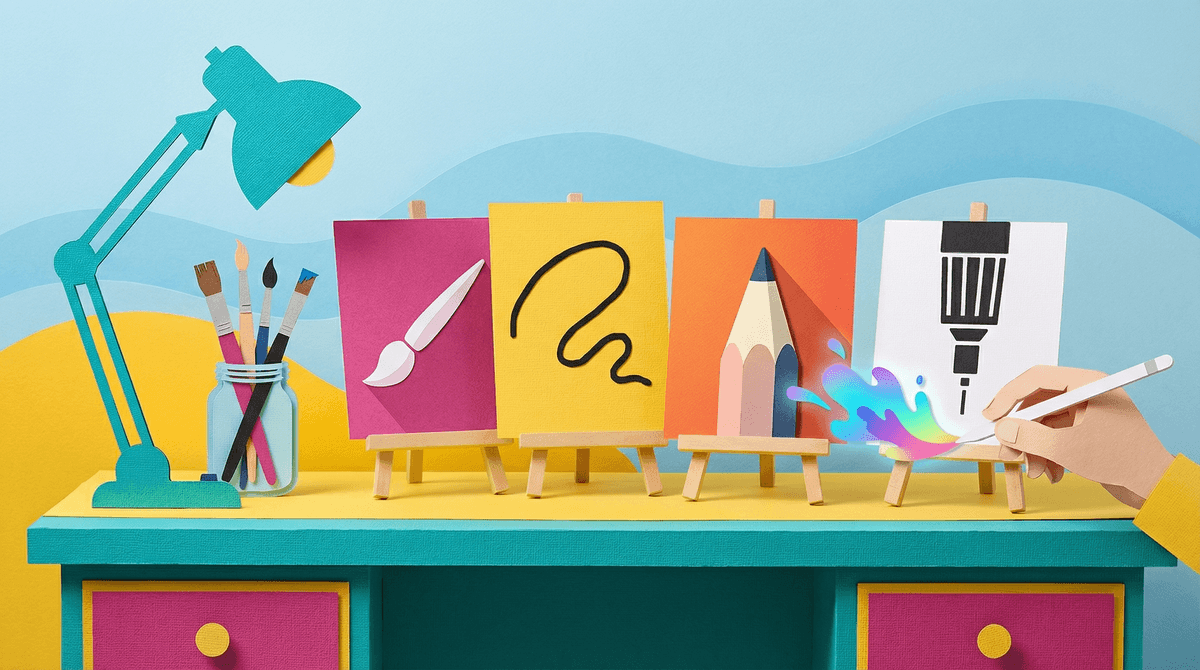
Digital painting apps are exactly what they sound like—art studios on a screen. Kids can draw, paint, sketch, and create without needing a single paintbrush, smock, or roll of paper towels. Apps like Procreate, Tayasui Sketches, and Drawing Pad offer everything from realistic watercolor effects to glitter pens that would make a craft store jealous.
The best part? When your kid decides to experiment with "mixing ALL the colors," you're not scrubbing purple paint out of the grout for three weeks.
But here's the thing: not all painting apps are created equal. Some are legitimately teaching artistic skills—color theory, layering, shading techniques. Others are basically digital coloring books with in-app purchase traps every three taps. Let's talk about what's actually worth the download.
Immediate gratification. There's no waiting for paint to dry, no "oops I messed up the whole thing" moments that can't be undone. Kids can experiment freely, which is honestly how creativity thrives.
Infinite supplies. No running out of their favorite color. No dried-up markers. No fighting over the ONE good eraser. Every tool is always available, always fresh.
Sharing is actually easy. They can save their work, send it to grandma, or post it to a family album without you needing to figure out where to store 47 pieces of construction paper art.
It feels professional. Real artists use digital tools. Kids know this. Using the same app that actual illustrators use? That's legitimately cool to them.
Look, I know you're wondering if this counts as "good" screen time or if you should feel guilty about it. Here's the deal: digital art apps can actually teach legitimate skills.
- Fine motor control: Especially on tablets with styluses, kids are developing the same hand-eye coordination they'd get with traditional art supplies
- Color theory and composition: Good apps teach why certain colors work together, how to balance a composition, and basic design principles
- Layers and process: Understanding how to build a piece in layers is a fundamental skill in both digital and traditional art
- Experimentation without waste: Kids can try techniques they'd be too nervous to attempt with expensive art supplies
That said, not every painting app is educational. Some are just... fine. A digital time-waster that's no better or worse than a physical coloring book. The key is knowing which is which.
Ages 3-6: Look for apps with big, forgiving brushes and simple interfaces. Drawing Pad is great for this age—lots of fun stamps and effects, easy to navigate. Avoid apps with complicated menus or too many tools that'll just frustrate them.
Ages 7-10: This is when kids can handle more sophisticated tools. Tayasui Sketches offers realistic media (watercolors, pencils, markers) without overwhelming them. Toca Boca's painting apps are also solid—playful but with room to actually create.
Ages 11+: If they're serious about art, Procreate is the gold standard. Yes, it costs money upfront (around $13), but it's a one-time purchase with NO in-app purchases, NO ads, and it's the same tool professional illustrators use. It's complex enough to grow with them but has tons of tutorials available.
The Good Apps Share These Features:
- One-time purchase or truly free (not "free" with constant purchase prompts)
- Actual artistic tools that behave like real media
- Undo/redo functions (because mistakes are part of learning)
- Ability to save and export work without watermarks or paywalls
- No social features for younger kids (you don't need your 8-year-old's doodles on a public feed)
Red Flags to Watch For:
- Constant in-app purchase prompts ("Unlock the sparkle brush for $2.99!")
- Ads every 30 seconds (looking at you, "free" apps)
- Coloring book apps disguised as painting apps (these are fine, but they're not teaching the same skills)
- Apps that require accounts for young kids
- "AI art generators" marketed to kids—these aren't teaching artistic skills, just prompt engineering
The Stylus Question
Can kids use painting apps with their finger? Sure. Will it be frustrating after about 10 minutes? Also yes.
If your kid is genuinely interested in digital art, a basic stylus makes a huge difference. You don't need an Apple Pencil (though if you have one, great). A $15-30 third-party stylus will dramatically improve their experience and let them actually develop technique.
Best Overall: Procreate (iPad only, ~$13, ages 10+)
- Industry-standard tools, one-time purchase, no nonsense
Best for Younger Kids: Drawing Pad (iOS/Android, free with optional purchases, ages 4-8)
- Fun, approachable, not overwhelming
Best Free Option: Tayasui Sketches (iOS/Android, free with pro upgrade option)
- Realistic tools, clean interface, genuinely useful in free version
Best for Learning: Sketchbook (iOS/Android/Windows, free)
- Professional-grade, totally free, tons of tutorials available online
Digital painting apps can be legitimately creative, skill-building screen time—if you choose the right ones. The difference between a good painting app and a cash-grab coloring book with in-app purchases is massive.
Look for apps that give kids real tools and real creative freedom. Be willing to spend a few bucks upfront to avoid the constant "Mom, can I unlock this brush?" requests. And if your kid gets really into it, consider it a genuine hobby worth supporting—digital art is a real career path for a lot of people now.
Is it the same as physical painting? No. Should it replace all hands-on art? Also no. But as a complement to traditional art supplies, or as an option for kids who find physical art frustrating or messy, digital painting apps are absolutely worth it.
Just maybe don't let them use Procreate on your work iPad without a backup. Trust me on this one.
- Try before you buy: Most paid apps have lite versions or trial periods—test them out before committing
- Check your device: Some apps (like Procreate) are iOS-only, so know what you're working with
- Set boundaries: Even creative screen time needs limits—learn more about balancing creative vs. consumptive screen time

- Show interest: Ask to see what they're working on, learn about the tools they're using—it matters
And hey, if they create something truly awful and want to show you? It's digital. You can smile, say it's wonderful, and you don't have to figure out where to hang it.