

Look, this is one of those topics where good intentions can lead to some truly cringey family movie nights if you're not careful. There are genuinely beautiful, culturally authentic films that honor Indigenous stories, perspectives, and experiences—and then there are the Disney-fied, white-savior-adjacent ones that... well, let's just say they haven't aged well.
The best Indigenous films are ones created by Indigenous filmmakers, featuring Indigenous actors, and centering Indigenous stories without the white protagonist filter. They're not about teaching your kids to feel guilty or checking a diversity box—they're about expanding the stories your family knows, hearing voices that have been systematically excluded from mainstream media, and honestly, watching some really excellent cinema.
Here's the thing: most kids' media diet is overwhelmingly centered on one cultural perspective. Even well-meaning "multicultural" content often reduces Indigenous peoples to historical footnotes (usually involving Thanksgiving) or mystical side characters.
Your kids are growing up in a diverse world, and Indigenous peoples aren't a relic of the past—they're contemporary communities with vibrant cultures, languages, and stories. Plus, if you're in North America, your family literally lives on Indigenous land. Understanding that context isn't "political"—it's just... accurate.
Also? Many of these films are genuinely gorgeous and tell compelling stories. You're not doing homework here—you're discovering great cinema.
Ages 5-8: Starting Gentle
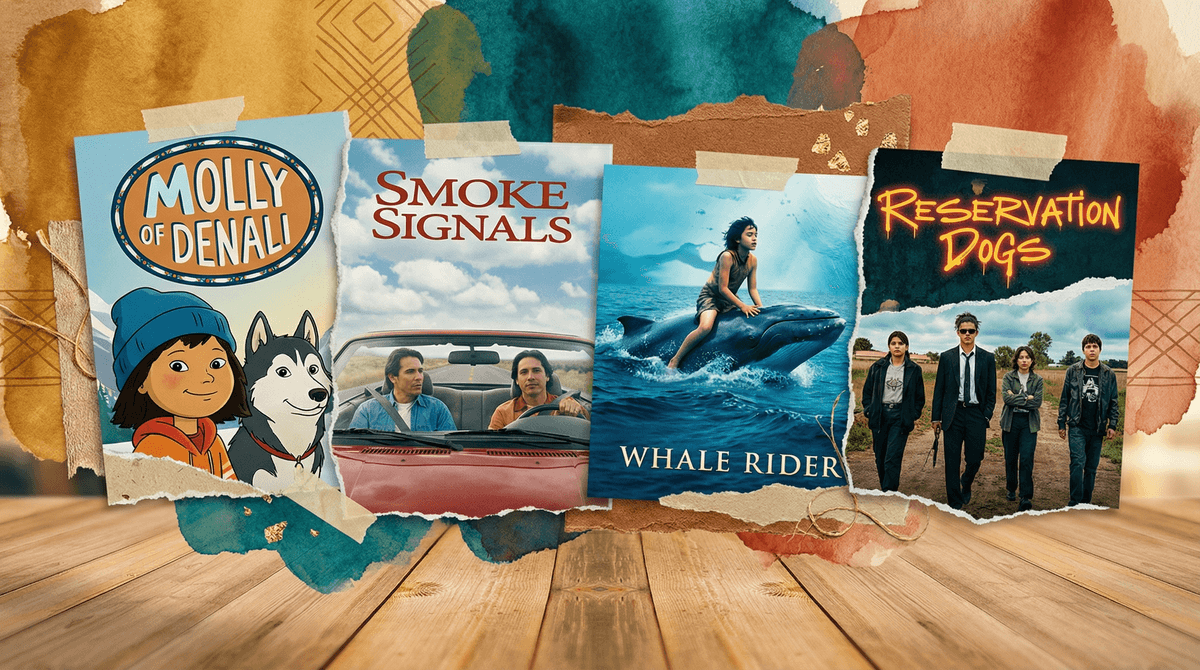
Molly of Denali (PBS series) - Okay, this is technically a show, not a movie, but it's the gold standard for young kids. Created with Alaska Native advisors, it features an Alaska Native girl solving problems in her community. Zero condescension, just good storytelling.
Oki's Oasis - A short film about a Mi'kmaq girl's summer adventure. Sweet, simple, culturally grounded.
Ages 8-12: Building Understanding
Beans - This one's powerful. It follows a Mohawk girl during the 1990 Oka Crisis in Quebec. It's intense (there's racism, violence, family stress), but it's an important window into recent Indigenous history that most kids never learn about in school. Watch it with your kids and be ready to talk.
The Grizzlies - Based on a true story about a teacher who starts a lacrosse program in a Nunavut community dealing with a youth suicide crisis. It's hopeful without being saccharine, and it centers Inuit youth experiences. Some heavy themes, but age-appropriate for mature tweens.
Whale Rider - A Māori girl in New Zealand challenges tradition to become her tribe's leader. Beautiful cinematography, strong female protagonist, and genuinely moving. Your 10-year-old will love it.
Ages 13+: Going Deeper
Smoke Signals - The breakthrough 1998 film written by Sherman Alexie and directed by Chris Eyre (both Indigenous). It's funny, heartbreaking, and real. Two young Native men road-trip to collect one's father's ashes. It's about identity, forgiveness, and contemporary Native life—not buckskin and tipis.
Reservation Dogs - Again, a series not a movie, but if your teen hasn't watched this yet, stop everything. Created by Sterlin Harjo (Seminole/Muscogee) and Taika Waititi, it follows four Indigenous teenagers in rural Oklahoma. It's hilarious, heartfelt, and the most authentic depiction of contemporary Native life you'll find on screen.
Rhymes for Young Ghouls - This one's rough. It's about a Mi'kmaq girl dealing with Canada's residential school system in the 1970s. Only for older teens who can handle heavy content about cultural genocide, but it's an important film.
Don't default to Pocahontas. Just... don't. If your kid brings it up because they saw it at a friend's house, fine—use it as a teaching moment about how Hollywood has historically romanticized and distorted Indigenous stories. But it's not a starting point for learning about Indigenous cultures.
Context is everything. Many of these films deal with historical trauma, ongoing colonialism, and systemic racism. That's not "too heavy" for kids—it's reality. But you need to be ready to have conversations. If you're watching Beans, your kid is going to have questions about why those white people are throwing rocks and screaming slurs. Have answers ready.
Indigenous cultures are not monolithic. A film about Mohawk experience in Quebec is different from Inuit life in Nunavut is different from Diné (Navajo) stories in the Southwest. Don't treat "Indigenous films" as one category—these are distinct nations, languages, and cultures.
Support Indigenous creators. When possible, choose films made BY Indigenous people, not just ABOUT them. The perspective shift matters enormously.
Adding Indigenous films to your family's viewing rotation isn't about performative allyship or checking a box during Native American Heritage Month. It's about expanding your kids' understanding of whose stories matter, whose perspectives count, and what the actual history and present reality of this continent looks like.
Start with one film that matches your kid's age and interests. Watch it together. Talk about it. Then find another. You're not trying to become experts—you're just trying to raise kids who understand that Indigenous peoples are real, contemporary, and have stories worth hearing.
And honestly? You might just discover some of your family's new favorite films in the process.
Not sure where to start? Find Indigenous film recommendations based on your kids' ages and interests .
.
Looking for more diverse content? Check out our guides on movies celebrating Black stories, Asian Pacific American films, and Latine family films.