

Look, representation matters. And while Hollywood has come a long way from the days when Asian characters were either martial arts masters or tech nerds (or both), there's still something powerful about watching stories that center Asian American experiences — especially the messy, complicated, beautiful reality of navigating multiple identities.
These aren't "issue movies" that feel like homework. They're films that happen to feature Asian American characters dealing with real stuff: family expectations, cultural identity, racism, belonging, and yes, resilience. The kind of movies that can spark a conversation with your kid about why their friend's grandma doesn't speak English, or why someone at school made a "joke" about their eyes, or what it means to be American when you don't look like what some people think "American" looks like.
Here's the thing: even if your family isn't Asian American, these movies are valuable. Because resilience isn't a single-culture concept, and empathy grows when kids see experiences different from their own.
And if you ARE raising Asian American kids? These films can be validating in a way that's hard to overstate. Seeing yourself reflected on screen — not as a stereotype or a sidekick, but as a full human with a complex story — that matters at every age.
Plus, with the rise in anti-Asian hate incidents over the past few years, these conversations aren't optional anymore. Kids are seeing and hearing things, and they need context, language, and examples of strength to process it all.
Elementary (Ages 6-10)
Raya and the Last Dragon is your Disney gateway drug here. It's set in the fantasy world of Kumandra (inspired by Southeast Asian cultures), and while it's not explicitly about Asian American identity, it deals with trust, community, and rebuilding after division. The action might be intense for sensitive younger kids, but it's a solid starting point for conversations about different cultures and working together.
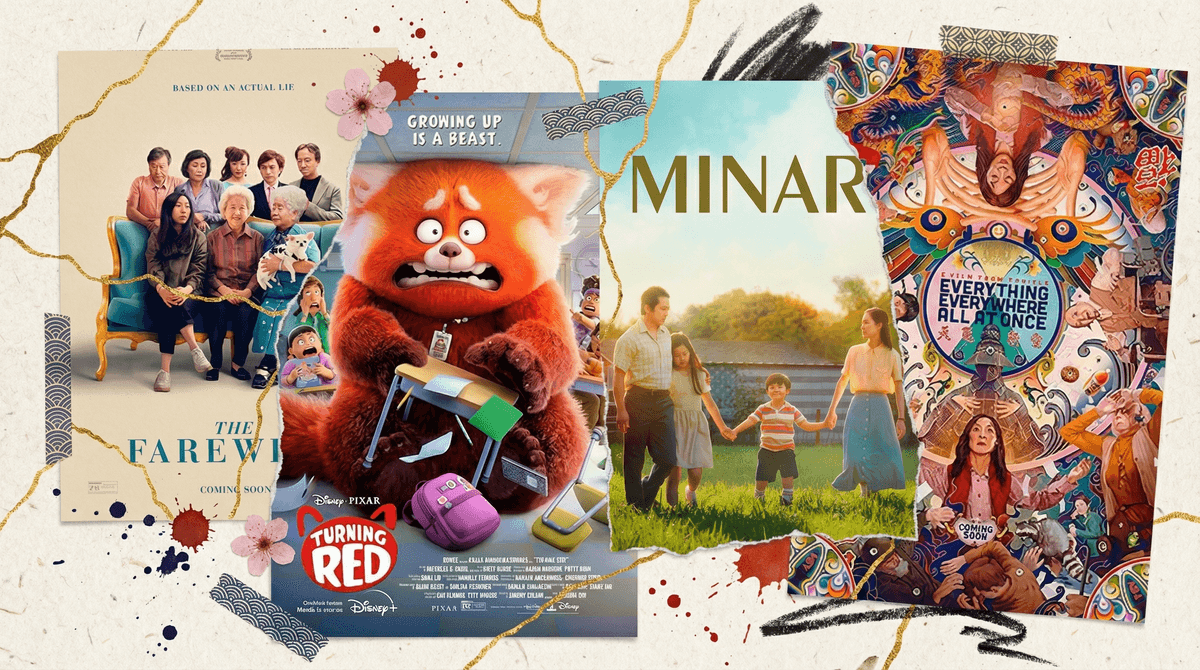
Turning Red is the real MVP for this age group. Pixar's story about 13-year-old Mei Lee, a Chinese Canadian girl who turns into a giant red panda when she gets emotional, is basically a love letter to immigrant family dynamics, generational trauma, and finding your own path while honoring your heritage. Yes, it's about puberty. Yes, some parents were weird about it. But it's genuinely excellent and handles complex themes with humor and heart. Ages 8+ will get the most out of it.
Middle School (Ages 11-14)
Everything Everywhere All at Once — okay, hear me out. This is rated R, and yes, there's violence and some mature content. But for mature 13-14 year olds (and honestly, many adults I know), this movie about a Chinese American laundromat owner jumping through multiverses to save her family is profound. It's about immigrant parents who sacrificed everything, kids who feel like disappointments, and the exhausting work of just existing. Watch it first yourself to decide if it's right for your teen, but this is the kind of film that stays with you.
The Farewell (PG) is more accessible for this age group. It's about a Chinese American family who decides not to tell their grandmother she's dying, and instead stages a wedding to bring everyone together one last time. It's quiet, funny, and heartbreaking — and it beautifully captures the tension between American individualism and Chinese collectivism. Great for kids who can handle emotional complexity.
High School (Ages 15+)
Minari (PG-13) follows a Korean American family trying to make it work on a farm in 1980s Arkansas. It's slow and contemplative, but it's also one of the most honest depictions of immigrant family life you'll find. The grandmother character alone is worth the watch — she's not the stereotype you expect.
The Half of It (PG-13) is a Netflix gem that reimagines Cyrano de Bergerac with a queer Asian American teen girl in a small town. It's about identity, friendship, love, and what it means to be yourself when you're already "other" in multiple ways. Smart, tender, and perfect for thoughtful teens.
Crazy Rich Asians (PG-13) gets a lot of credit for being the first major Hollywood film with an all-Asian cast in 25 years, and while it's primarily a rom-com, it does tackle themes of belonging, class, and what "Asian enough" means. It's fun, it's gorgeous, and it opened doors for other Asian-led films.
These aren't all happy stories. Resilience, by definition, means there's something to overcome. Some of these films deal with racism, discrimination, family conflict, and cultural trauma. That's kind of the point. But it also means you should watch first or at least read detailed reviews before showing them to younger kids.
The "model minority" myth is complicated. Some of these films push back against the idea that Asian Americans are all high-achieving, rule-following success stories. That stereotype is harmful even when it seems "positive," and these movies explore the pressure and pain it creates.
Language matters. Several of these films use subtitles or mix English with other languages (Mandarin, Korean, Cantonese). If your kid isn't used to reading subtitles, start with something like Turning Red that's fully in English, then work up to films like The Farewell or Minari.
Not all Asian experiences are the same. These films represent Chinese, Korean, Southeast Asian, and Chinese Canadian experiences — but there's no single "Asian American" story. Use these as starting points for conversations about diversity within diversity.
Don't just press play and zone out. These films work best when you're engaged too. Pause if your kid has questions. Ask what they notice. Talk about what feels familiar or different from your own family's experience.
Follow up afterward. "What did you think?" is fine, but try something more specific: "Why do you think Mei's mom was so strict?" or "Have you ever felt like you had to choose between two parts of yourself?"
Connect it to real life. If your kid has Asian American friends, they might have new insight into their experiences. If they don't, talk about what it might feel like to be one of the only kids who looks different or has a "weird" lunch.
Acknowledge the hard stuff. If racism comes up in these films (and it does), don't skip over it. Kids notice. They need to know you notice too.
Movies aren't going to solve racism or magically teach your kid empathy. But they're a tool — a really good one — for opening conversations that might otherwise feel awkward or forced.
Asian American resilience isn't about being perfect or never struggling. It's about navigating systems that weren't built for you, honoring your family while finding your own path, and showing up even when it's hard. That's a lesson every kid can learn from, regardless of their background.
Start with one film that feels right for your family's age and comfort level. Watch it together. Talk about it. Then keep going. Because representation isn't a one-time thing — it's an ongoing conversation, and these films are a great place to start.
Not sure where to start? Try Turning Red if you've got elementary or middle schoolers — it's accessible, fun, and deeper than it looks. For teens, The Half of It or The Farewell are solid entry points.
And if you want more recommendations for films that tackle identity, belonging, and resilience from other perspectives, check out our guide to movies about immigration and identity or films that feature strong BIPOC characters.