

Let's just get this out there: reading your kid's texts, DMs, and group chats feels weird. It feels invasive. It feels like the exact thing your parents would have done if they could have read your diary, listened to your phone calls, or hidden in your locker.
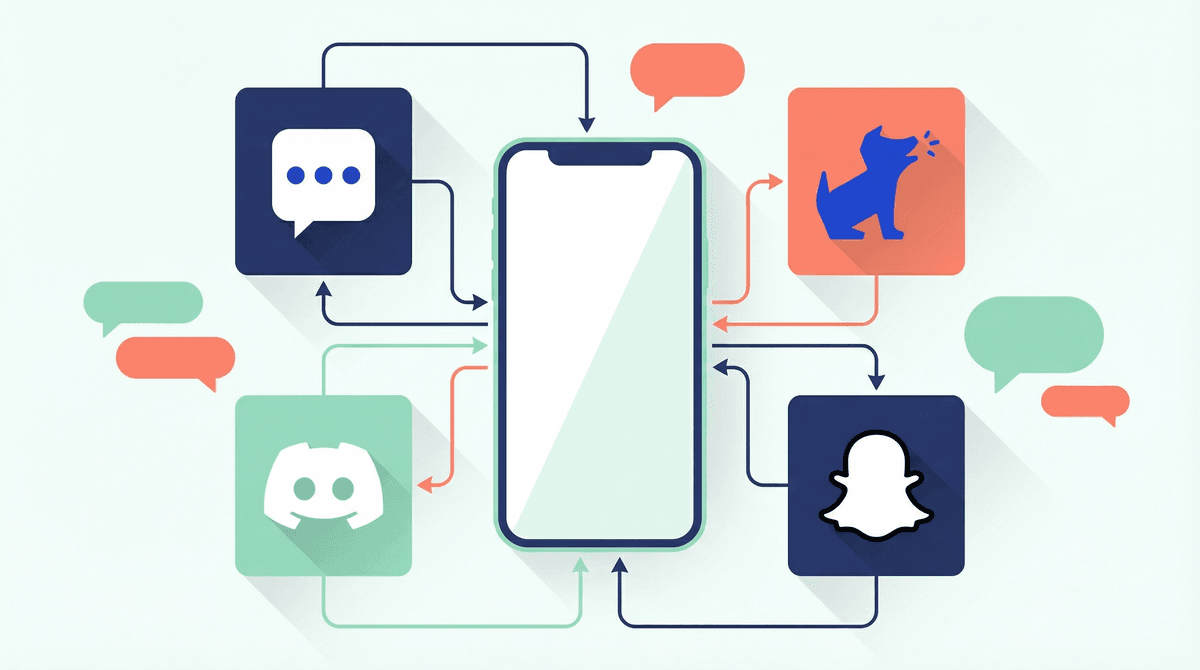
But here's the thing — those conversations happened in your bedroom with the door closed, or on a landline in the kitchen, or in notes passed in class. Today's conversations happen on Snapchat, Discord, Roblox chat, iMessage group threads, Instagram DMs, and about seventeen other platforms your kid probably has access to.
Monitoring online conversations means having some level of visibility into what your kids are saying, who they're talking to, and what's being said to them across all these platforms. The question isn't really whether to monitor — it's how much, at what age, and in what way that doesn't completely destroy the trust you've built.
The stakes are legitimately different than they were for us. Your kid's "friend group" chat might include:
- Their actual friends from school
- That kid they met once at camp
- Someone's cousin who's 16 (your kid is 11)
- A username they don't actually know IRL
And those conversations can go from "what's the homework" to sharing explicit content, coordinating to exclude someone, or an adult pretending to be a peer in about 30 seconds.
The real risks include:
- Predatory behavior — adults posing as kids, grooming, solicitation
- Cyberbullying — both your kid being targeted or your kid participating (yes, your sweet child can be mean online)
- Exposure to inappropriate content — porn, violence, self-harm content shared casually
- Social pressure — requests for photos, participation in challenges, sharing personal info
- Mental health concerns — conversations about depression, anxiety, self-harm that you'd want to know about
But also — and this is important — most of their conversations are completely normal. Memes. Inside jokes. Complaining about teachers. Making plans. The boring stuff of friendship.
Here's the core dilemma: Kids need privacy to develop independence and healthy relationships. But they also need protection from dangers they're not equipped to handle yet.
The younger the kid, the more monitoring makes sense. An 8-year-old getting their first device? Yeah, you're reading everything. That's not invasive, that's parenting. They're learning how digital communication works, and you're the training wheels.
As they get older, the monitoring should shift. By middle school, you're ideally moving from "reading every message" to "spot checks and conversations." By high school, you're hopefully at "I trust you, but I reserve the right to check if I'm concerned."
The goal isn't to monitor forever. The goal is to teach them to navigate these spaces safely so eventually they don't need monitoring.
Ages 6-9: Full Transparency
At this age, there should be zero expectation of privacy on devices. You're reading messages, you know every app, you have all passwords.
What this looks like:
- Devices stay in common areas
- You're literally sitting next to them when they're texting or playing online games
- They know you can see everything — it's not a secret
- Use parental controls like Apple's Screen Time or Google Family Link
Ages 10-12: Supervised Independence
They're starting to have real friendships that happen partly online. They need some space, but you're still actively involved.
What this looks like:
- Regular spot checks — maybe weekly, maybe random
- You have passwords and they know you'll use them
- Read group chats more than 1:1 friend conversations
- Check who they're following and who's following them
- Talk about what you're seeing: "I noticed this conversation, let's talk about it"
Ages 13-15: Trust with Verification
They're in middle school or early high school. They need privacy to develop their identity, but you're still the parent.
What this looks like:
- You have passwords but don't use them unless there's a reason
- Look for behavioral changes that might warrant checking (mood shifts, withdrawal, secretiveness)
- Focus on who they're talking to more than what they're saying
- Have conversations about what's happening in their digital life
- Check in on apps you're less familiar with
Ages 16+: Earned Privacy
If you've done the work up to this point, they should have the skills to navigate most situations. But you're still available.
What this looks like:
- They have privacy, but it's conditional on trust and transparency
- You're available to talk when they encounter something concerning
- You might still have access "in case of emergency" but rarely use it
- Focus shifts to teaching them to self-monitor and make good choices
Built-in parental controls:
- Apple Screen Time — can limit communication to known contacts
- Google Family Link — similar features for Android
- Both let you see app usage without reading actual messages
Third-party monitoring apps:
- Bark — monitors texts, emails, and social media for concerning content (bullying, violence, sexual content) and alerts you
- Qustodio — tracks activity and lets you read messages
- Net Nanny — filters content and monitors conversations
The honest truth about monitoring apps: They're helpful for younger kids, but they're not foolproof. Kids can delete apps, use friends' devices, create secret accounts you don't know about. Technology is a tool, not a replacement for relationship and conversation.
1. Be transparent from the start Don't secretly monitor. Tell them: "I'm going to check your messages sometimes because my job is to keep you safe while you're learning how to do this."
2. Explain why "I'm not trying to invade your privacy. I'm making sure no one is being mean to you, that you're not being mean to others, and that no adults are trying to talk to you inappropriately."
3. Follow through on what you say If you say you'll do random checks, do them. If you say you'll only look if you're concerned, don't violate that without cause.
4. When you find something, don't ambush "Hey, I saw this conversation and I want to talk about it" is way better than "I KNOW WHAT YOU DID."
5. Distinguish between mistakes and danger Your kid said something mean in a group chat? That's a teaching moment. An adult is asking for photos? That's a call-the-police moment. React proportionally.
6. Increase privacy as they earn it "You've been really responsible with your phone. I'm going to check less often." Let them know trust is being built.
You're not reading every message looking for perfect behavior. You're scanning for:
Red flags:
- Conversations with people you don't know
- Adults messaging your child privately
- Requests for photos, personal information, or to meet up
- Talk about self-harm, suicide, or serious depression
- Coordination to exclude, mock, or target another kid
- Sharing or requesting explicit content
- Hiding apps, using secret accounts, or clearing history obsessively
Yellow flags (worth a conversation):
- Intense drama or conflict with friends
- Pressure to participate in something they seem uncomfortable with
- Spending lots of time talking to one person you've never heard of
- Language or content that doesn't match your family values
- Changes in tone — suddenly more secretive, more anxious
Don't panic. Most of what you find will be awkward, not dangerous.
Do have a conversation. "I saw this and I'm concerned. Help me understand what's happening."
Listen first. There's usually context you don't have from reading messages.
Decide together what to do. For minor stuff, involve them in the solution. For serious stuff, you're making the call but explain why.
Follow up. If you restricted something or had a serious talk, check back in. "How are things going now?"
Monitoring isn't about control — it's about coaching them through situations they're not ready to handle alone yet.
The best monitoring strategy is one your kid knows about, understands the reasons for, and sees decrease over time as they prove they can handle more independence. It's paired with ongoing conversations about what they're experiencing online, what's normal, what's not, and what to do when something feels off.
You're not trying to read every message forever. You're trying to be present and aware during the years when they're learning to navigate digital relationships, so that eventually they can do it safely on their own.
- Have the conversation this week about what monitoring looks like in your house — even if you've already been doing it, make it explicit
- Set up parental controls if you haven't already — here's how to set up Apple Screen Time
- Do a spot check of the apps on your kid's device — you might be surprised what's there
- Talk about what to do if they see something concerning — who do they tell? How do they report it?
- Revisit the plan every six months — what worked for a 10-year-old doesn't work for a 12-year-old
And remember: if your kid is mad that you're monitoring, that's not necessarily a sign you're doing it wrong. Sometimes parenting means doing the thing that keeps them safe even when they don't like it.