

TL;DR
Madden NFL 24 is the gold standard for football fans, offering a deep, realistic simulation of the NFL. It’s great for sports literacy and strategic thinking, but it carries two major "yellow flags" for parents: Madden Ultimate Team (MUT), which uses loot-box mechanics that feel a lot like gambling, and cross-play voice chat, which opens the door to unfiltered interactions with strangers across different consoles.
Quick Links for the Sports-Minded Family:
- The Main Event: Madden NFL 24
- The Soccer Alternative: EA Sports FC 24
- The Hoop Dreams: NBA 2K24
- The "Arcade" Choice: Rocket League
- The Retro Vibe: Retro Bowl
If you’ve been around a middle schooler in the last decade, you know the drill. Every August, EA Sports releases a new Madden. Madden NFL 24 is the 2023-2024 iteration of the long-running franchise. On the surface, it’s a football simulator where kids can play as their favorite teams, manage a roster in Franchise mode, or take a custom player from the NFL Combine to the Hall of Fame in Superstar mode.
Technically, this version introduced "SAPIEN technology" (fancy talk for more realistic body skeletons) and "FieldSENSE" (better control over tackles and throws). For the kids, it just means the players look less like robots and the gameplay feels "smoother."
It’s not just about the football; it’s about the culture. Madden is a social currency. Being "good at Madden" is a point of pride in many friend groups.
- The Fantasy Element: Kids love the "What if?" scenarios. What if Patrick Mahomes played for the Bears? (A Chicago fan can dream).
- The Competitive Rush: Madden is "sweaty." That’s gamer-speak for highly competitive. The adrenaline of a last-second field goal is a real dopamine hit.
- The Grind: There is a constant stream of new "content"—special player cards, seasonal events, and challenges—that keeps them coming back daily.

We need to talk about Madden Ultimate Team (MUT). This is where the game moves from "fun sports sim" to "digital casino."
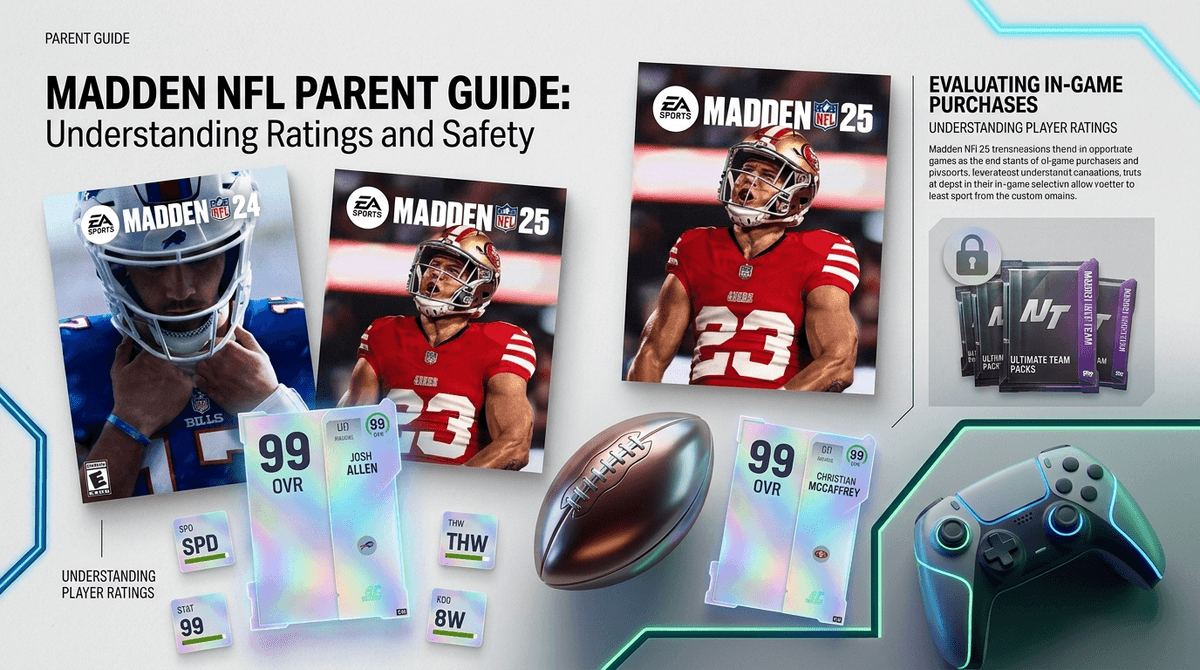
In MUT, players build a "dream team" by collecting digital cards of current stars and NFL legends. How do they get these cards? They buy "packs." These packs are the definition of a loot box. You don't know what's inside. Your kid is hoping for a 99-rated Deion Sanders, but they usually end up with a punter from the practice squad.
The psychological loop here is intense. The game uses bright lights, celebratory sounds, and "limited time offers" to encourage kids to spend Madden Points (which, let's be clear, are bought with your credit card). It’s very easy for a kid to think, "Just one more $5 pack and I'll get the card I need to win."
If your kid is playing MUT, you aren't just managing screen time; you're managing a budget.
For the first time in the series, Madden NFL 24 introduced full cross-play. This means a kid on an Xbox Series X can play against a kid on a PlayStation 5 or a PC.
While this is great for playing with friends, it also expands the pool of strangers your child might encounter. Madden's community is notorious for "trash talk." While a little "you can't stop my run game" is part of the sport, it can quickly devolve into toxic behavior, including racial slurs or aggressive bullying, especially in the competitive online divisions.
Pro-tip: You can disable voice chat in the game settings or through the console’s system-level parental controls. If your kid is under 13, I’d highly recommend keeping the chat to "Friends Only."
Ages 7-10
At this age, the mechanics of Madden NFL 24 might actually be a bit frustrating. It’s a complex game. If they’re interested, steer them toward Franchise Mode where they can play against the computer at an easy difficulty. Avoid Ultimate Team entirely. They don't have the impulse control yet to navigate the "buy more packs" pressure.
Ages 11-14
This is the prime Madden demographic. They will likely want to play online against friends. This is a great time to have the "digital citizenship" talk about how to handle losing (and winning) gracefully. Keep a very close eye on the spending. If they have their own money from chores or birthdays, this is a "teachable moment" about the ROI of digital goods that disappear when the next game comes out in 12 months.
Ages 15+
By high school, they’re likely looking for the "meta"—the most effective plays and strategies found on YouTube. The main concern here is the "time suck." Madden games can take 30-45 minutes. "Just one more game" can easily turn into a 2:00 AM session.
One thing that frustrates parents (and players) is that Madden is essentially a subscription disguised as a $70 purchase. When Madden NFL 25 comes out, almost nothing from Madden NFL 24 carries over. The Ultimate Team they spent months (and potentially dollars) building? It stays in the old game.
If you’re trying to be intentional with your budget, you don't have to buy the new one every year. The "roster updates" are the main change, and for a casual player, the 2024 version is still perfectly playable in 2026.
Instead of just hovering and asking "Are you winning?", try these conversation starters to get a feel for their digital well-being:
- "I saw you opening those packs earlier. Did you get anyone good, or was it a bunch of 'filler' cards?" (This opens the door to talking about the odds of loot boxes).
- "Who's the most 'toxic' player you've run into today? What did they do?" (This helps them process online interactions).
- "How does the game decide who wins a tackle? Is it just random, or is there a stat for that?" (This encourages them to think about the game's underlying logic/math).
Madden NFL 24 is a high-quality, high-intensity sports simulator. It’s not "brain rot" in the way some mindless scrolling apps are—it requires strategy, timing, and a deep understanding of football.
However, the Ultimate Team mode is a predatory monetization machine. If you can keep the credit card locked and the voice chat moderated, it’s a fantastic way for a sports-loving kid to engage with their hobby. Just be prepared for the inevitable "I need the new one" conversation every August.
Next Steps for Intentional Parents:
- Check the Settings: Ensure "In-Game Purchases" are password-protected on your console.
- Set a "Pack Budget": If you allow spending, set a hard monthly limit (e.g., $10/month) so they learn to prioritize.
- Play a Game: Ask them to teach you how to play. You’ll likely get crushed, but you’ll see exactly what the interface looks like and how the game nudges them toward spending.
Explore more sports games for your family Learn about the psychology of loot boxes