

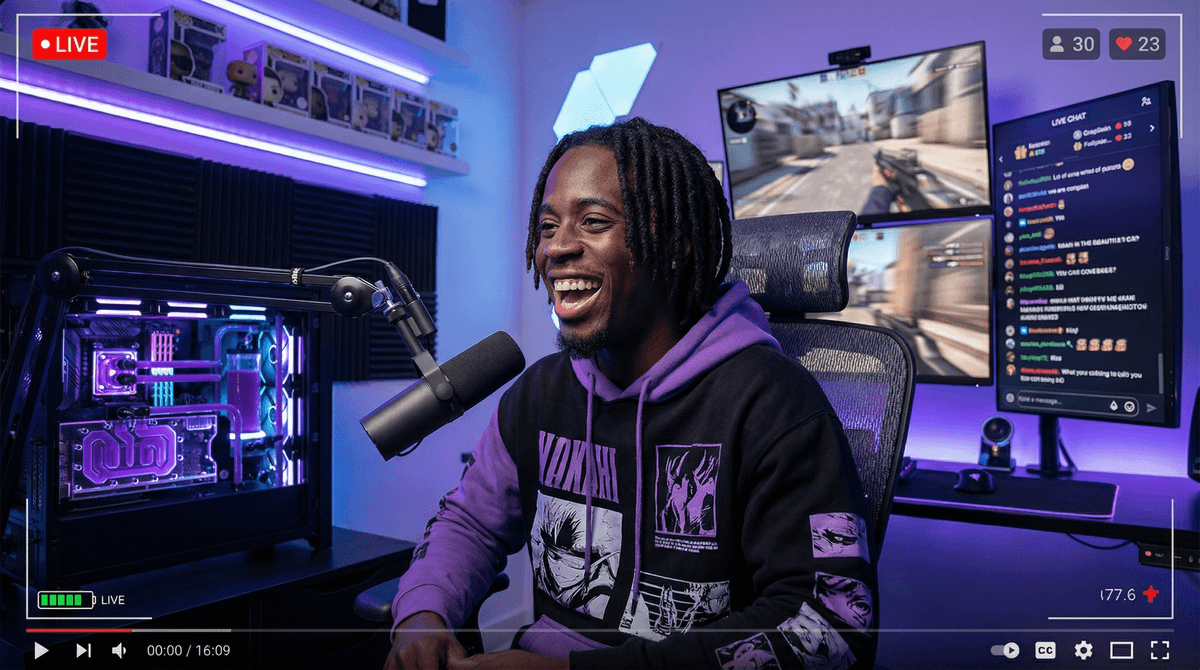
Kai Cenat's Twitch Streams: What Parents Need to Know
Kai Cenat is the biggest streamer on Twitch right now, with millions of followers watching him play games, react to videos, and hang out with celebrity guests. His content is not appropriate for kids under 13, and even for teens, it requires serious parental consideration. The streams feature frequent strong language, adult humor, chaotic energy, and unpredictable content that can shift from PG-13 to decidedly not in seconds.
If your middle or high schooler is watching: Have a conversation about what they're seeing, set clear boundaries around language and behavior they're absorbing, and consider watching a stream together to understand the appeal.
Kai Cenat is a 22-year-old content creator who became the most-subscribed Twitch streamer in the world. He streams for hours at a time (we're talking 8-12 hour sessions), playing games like GTA V, Fortnite, and Minecraft, reacting to videos, pranking friends, and hosting celebrity guests ranging from rappers to athletes to other streamers.
His rise has been meteoric. In 2023 and 2024, he broke Twitch subscription records multiple times during his "subathons" (marathon streaming events where the stream stays live as long as people keep subscribing). He's won Streamer of the Year at the Streamer Awards. He's collaborated with everyone from Lil Baby to Kevin Hart.
For context on his reach: when Kai Cenat announced a giveaway in New York City's Union Square in 2023, thousands of teenagers showed up, leading to a riot that resulted in arrests and injuries. That's the level of influence we're talking about.
The appeal is pretty straightforward: Kai Cenat is genuinely entertaining. He's charismatic, funny, and brings an infectious energy to everything he does. His streams feel like hanging out with friends—there's banter, inside jokes, spontaneous moments, and a sense of community.
Unlike traditional celebrities, he's accessible. He streams regularly, interacts with chat, and creates content that feels authentic rather than produced. For kids who spend hours online, this parasocial relationship feels real.
The gaming content is also legitimately engaging. When he plays games, he's fully committed—reacting dramatically, getting genuinely invested in storylines, and creating memorable moments that become viral clips across TikTok and YouTube.
Plus, there's the celebrity factor. When your favorite rapper shows up on stream to play NBA 2K with Kai, that's appointment viewing for teens who care about hip-hop culture.
Here's where parents need to pay attention: Kai Cenat's streams are not kid-friendly content, even if your kid insists "everyone watches him."
Language
The streams feature constant profanity. Not just the occasional curse word, but pervasive strong language including F-bombs, N-words (Kai is Black and uses the word frequently), and other explicit terms. This isn't censored or bleeped—it's live streaming.
Adult Themes
The humor frequently veers into sexual territory, with jokes about relationships, explicit discussions, and content that would make most parents uncomfortable. There are often female guests or friends on stream, and the dynamic can include flirting, innuendo, and mature relationship discussions.
Chaotic and Unpredictable
The unscripted nature means anything can happen. A stream might start with Minecraft and suddenly shift to watching explicit music videos or discussing adult topics. There's no content warning system, no way to know what's coming next.
Prank Culture
Many streams involve pranks that range from harmless to genuinely concerning. Some pranks involve fake scenarios, jump scares, or situations that could normalize boundary-crossing behavior.
Parasocial Intensity
The community around Kai Cenat is intensely devoted. The chat moves at lightning speed with its own culture, inside jokes, and sometimes toxic behavior. Kids watching aren't just consuming content—they're being socialized into a specific online culture with its own values and norms.
Under 13: Hard no. The content is simply not appropriate, full stop. If your elementary or middle schooler is watching, they're being exposed to adult language, themes, and behavior that they're not developmentally ready to process.
Ages 13-15: Proceed with extreme caution. At this age, kids are absolutely watching (let's be real), but they need active parental involvement. This means:
- Watching streams together to understand what they're seeing
- Having explicit conversations about language, behavior, and what's acceptable in your family
- Setting boundaries around when and how much they can watch
- Discussing the difference between entertainment and real-life behavior
Ages 16+: Still requires conversation and context. Older teens have more capacity to distinguish entertainment from reality, but they're still absorbing values and normalizing behavior. Talk about:
- Why the content is entertaining but not a model for real-world interaction
- The performative nature of streaming and online personas
- How parasocial relationships work and their limitations
- Media literacy and understanding what's being sold (merchandise, subscriptions, lifestyle)
The Business Model
Kai Cenat makes money through Twitch subscriptions ($5-25/month), donations during streams, sponsorships, and merchandise. When kids are watching, they're being constantly encouraged to subscribe, donate, buy merch, and participate financially. The chat spams subscription notifications, and there's social pressure to be a "real fan" by paying.
The Clips vs. Full Streams
Many kids encounter Kai Cenat through short clips on TikTok or YouTube rather than full streams. These clips are often the most viral, extreme moments—which means they might be seeing the most outrageous content without any context. Ask your kid: are you watching clips or full streams? The answer matters.
The Community Culture
The Kai Cenat fan community has its own language, memes, and culture. Kids watching are learning social scripts—how to talk, what's funny, what's cool. Some of this is harmless (catchphrases, inside jokes), but some reinforces problematic attitudes about women, relationships, and masculinity.
The Comparison Trap
Watching someone live a lifestyle of celebrity guests, expensive purchases, and constant entertainment can create unrealistic expectations and dissatisfaction with regular life. Talk to your kids about the curated nature of content creation and the business behind the persona.
Kai Cenat represents a fundamental shift in entertainment and celebrity. He's not on TV with network standards and practices. He's not making YouTube videos that can be demonetized for inappropriate content. He's live, unfiltered, and building direct relationships with millions of viewers.
This is the media landscape our kids are growing up in—parasocial relationships with creators who feel like friends, content that's unregulated and unpredictable, and communities that form around shared viewing experiences.
You can't put this genie back in the bottle, and honestly, trying to completely ban it will likely backfire with teens. But you can be informed, involved, and intentional about how your family engages with this content.
Instead of leading with judgment, try curiosity:
"I've heard about Kai Cenat—what do you like about his streams?"
"What's the funniest thing you've seen him do?"
"Do your friends watch him too? What do you all talk about?"
Then share your concerns directly:
"I watched some of his content, and I'm concerned about the language and some of the topics he discusses. Let's talk about what's okay in our family and what's not."
"I get that it's entertaining, but I want to make sure you understand that this is a performance and not how people should treat each other in real life."
"The constant pressure to subscribe and donate concerns me. Let's talk about the business model and how creators make money."
Kai Cenat is talented, entertaining, and genuinely funny. He's also creating content for adults and older teens, not kids. If your child is watching, they're being exposed to adult language, themes, and culture that requires parental context and conversation.
The worst thing you can do is ignore it or assume it's harmless because "it's just gaming streams." The best thing you can do is stay informed, watch with your kids when possible, and have ongoing conversations about what they're seeing and absorbing.
This isn't about being the fun police—it's about helping your kids develop media literacy and critical thinking about the content they consume and the communities they're part of online.
- Ask your kids what streamers they watch
 and why they find them entertaining
 - Watch a Kai Cenat stream yourself (start with a gaming stream, which tends to be less chaotic than react content)
- Set up Twitch parental controls if your kids are using the platform
- Have a conversation about parasocial relationships and online communities
- Explore age-appropriate gaming content creators if you're looking for alternatives
Remember: you don't have to understand every reference or find it funny yourself. You just need to know what's happening in your kid's media diet and help them process it thoughtfully.