

Juneteenth—June 19th—marks the day in 1865 when enslaved people in Galveston, Texas finally learned they were free, more than two years after the Emancipation Proclamation. It's a celebration of freedom, resilience, and Black joy, and since becoming a federal holiday in 2021, more families are looking for age-appropriate ways to help kids understand what it means.
Books are honestly one of the best entry points. They give kids a way to learn about this pivotal moment in American history through stories—some joyful, some sobering, all important. And unlike that one conversation you're dreading having, books let you revisit the topic naturally, at your kid's pace, with beautiful illustrations or compelling narratives doing some of the heavy lifting.
The right Juneteenth book can spark questions, build empathy, and help kids understand that freedom isn't just something that happened once—it's something people fought for, celebrated, and continue to protect.
Let's be real: teaching kids about slavery, freedom, and racial justice is hard. It's uncomfortable. You're worried about saying the wrong thing, traumatizing them, or oversimplifying something incredibly complex. But here's the thing—not talking about it doesn't protect kids, it just leaves them unprepared for a world where these conversations are happening everywhere, from school to social media to the news.
Juneteenth books give you a framework. They're written by people who've thought deeply about how to make these stories accessible without being sanitized. They show Black excellence, resistance, and celebration alongside the hard truths. And they help kids—Black kids especially—see themselves in stories of triumph, not just trauma.
Plus, if your kid is in elementary or middle school, there's a good chance Juneteenth is already being taught. Having books at home means you can reinforce what they're learning, answer their questions, and make sure they're getting the full story—not just whatever made it into a 20-minute social studies lesson.
Ages 3-7: Picture Books with Big Hearts
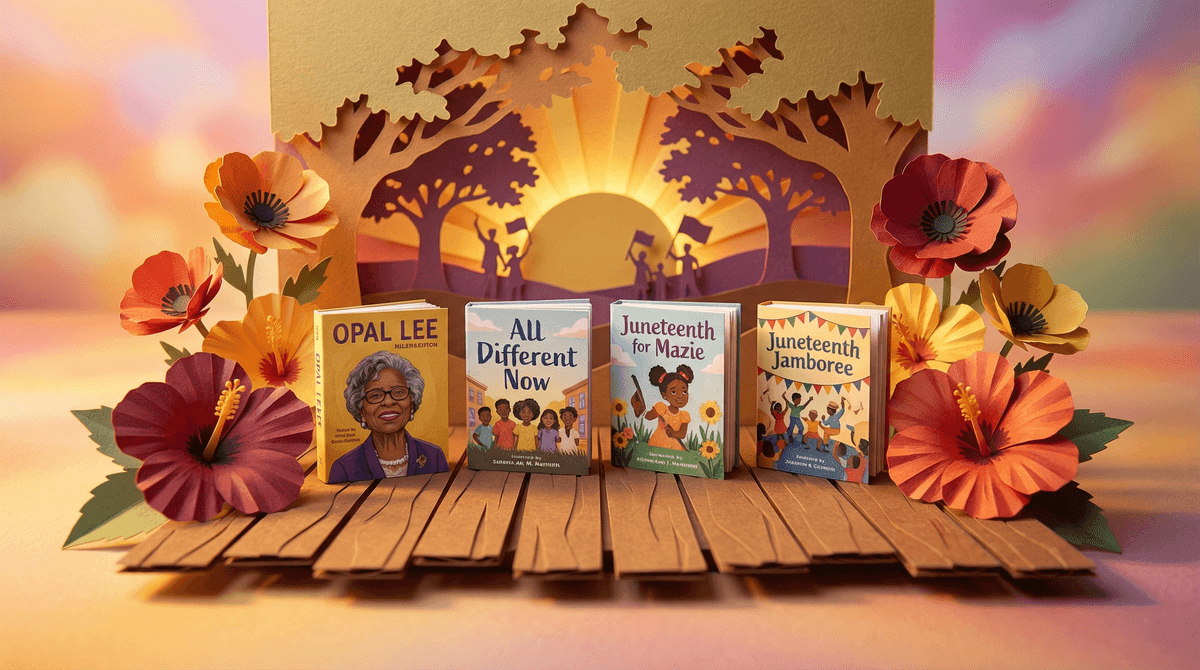
All Different Now: Juneteenth, the First Day of Freedom by Angela Johnson
This one's beautiful and gentle—it follows a little girl imagining what that first Juneteenth must have felt like. The language is poetic without being over kids' heads, and it focuses on the feeling of freedom rather than the details of enslavement. Perfect for introducing the concept to younger kids.
Juneteenth for Mazie by Floyd Cooper
Mazie's dad explains Juneteenth through a conversation, and the illustrations are stunning. It's warm, celebratory, and gives just enough historical context for little ones to grasp why this day matters. Great for kids who ask "but why?" about everything.
The Story of Juneteenth by Jennifer Taylor
This is more straightforward—less narrative, more informational—but still age-appropriate. If your kid likes nonfiction or is already asking direct questions about history, this is a solid pick.
Ages 8-12: Chapter Books and Deeper Dives
Juneteenth Jamboree by Carole Boston Weatherford
This one follows a family preparing for a Juneteenth celebration, weaving in history, food, music, and community. It's joyful and educational without feeling like a textbook. Kids in this age range love the mix of story and real-world connection.
Freedom's Gift: A Juneteenth Story by Valerie Wesley
This chapter book follows a girl named June who learns about her great-great-grandfather's experience on the first Juneteenth. It's a great bridge between picture books and middle-grade novels—accessible but with emotional depth.
Opal Lee and What It Means to Be Free by Alice Faye Duncan
Opal Lee is the 95-year-old activist who walked from Texas to Washington D.C. to advocate for Juneteenth to become a federal holiday. This book tells her story and is incredibly inspiring. If your kid loves stories about real people doing extraordinary things, this is it.
Ages 13+: Young Adult Reads
On Juneteenth by Annette Gordon-Reed
This is more of an essay/memoir hybrid, written by a Pulitzer Prize-winning historian who grew up in Texas. It's thoughtful, nuanced, and perfect for teens ready to engage with the complexities of history, memory, and what freedom actually means. Not a quick read, but a meaningful one.
The 1619 Project: Born on the Water by Nikole Hannah-Jones
Okay, this isn't specifically about Juneteenth, but it's essential context. It traces the journey of enslaved people from Africa to America and forward through history. Beautifully illustrated, deeply moving, and a great companion to any Juneteenth conversation.
The biggest mistake parents make? Thinking you need to have all the answers before you crack open the book. You don't. In fact, reading together and figuring it out together is often more powerful than a perfectly crafted lecture.
Here's what works:
- Let the book do the teaching first. Read it through without stopping to explain everything. Let your kid absorb the story.
- Then ask questions. "What do you think freedom meant to those people?" "How do you think they felt?" "Why do you think we celebrate this day?"
- Be honest when you don't know something. "That's a great question—let's look that up together."
- Connect it to today. Talk about how people still fight for freedom and justice. Ask what freedom means to them.
And if your kid is Black, center joy and pride, not just pain. Yes, the history is hard, but Juneteenth is a celebration. It's about resilience, community, and Black people claiming their freedom and building something beautiful from it.
Juneteenth books aren't just for June 19th. They're part of a bigger conversation about history, justice, and what it means to be free. Whether your kid is 4 or 14, there's a book that can meet them where they are and help them understand why this day matters.
You don't have to be perfect at this. You just have to start. Grab a book, sit down together, and see where the conversation goes. That's the whole point—freedom is something we learn about, talk about, and keep building toward, together.
- Pick one book from the list above based on your kid's age and reading level.
- Read it together this week—don't wait for June. These stories matter year-round.
- Follow up with a conversation, a craft, or even a Juneteenth celebration of your own (red foods, music, family stories).
- If your kid wants to learn more, explore books about civil rights and Black history or talk about how to discuss race and justice with kids
 .
.
You've got this.