

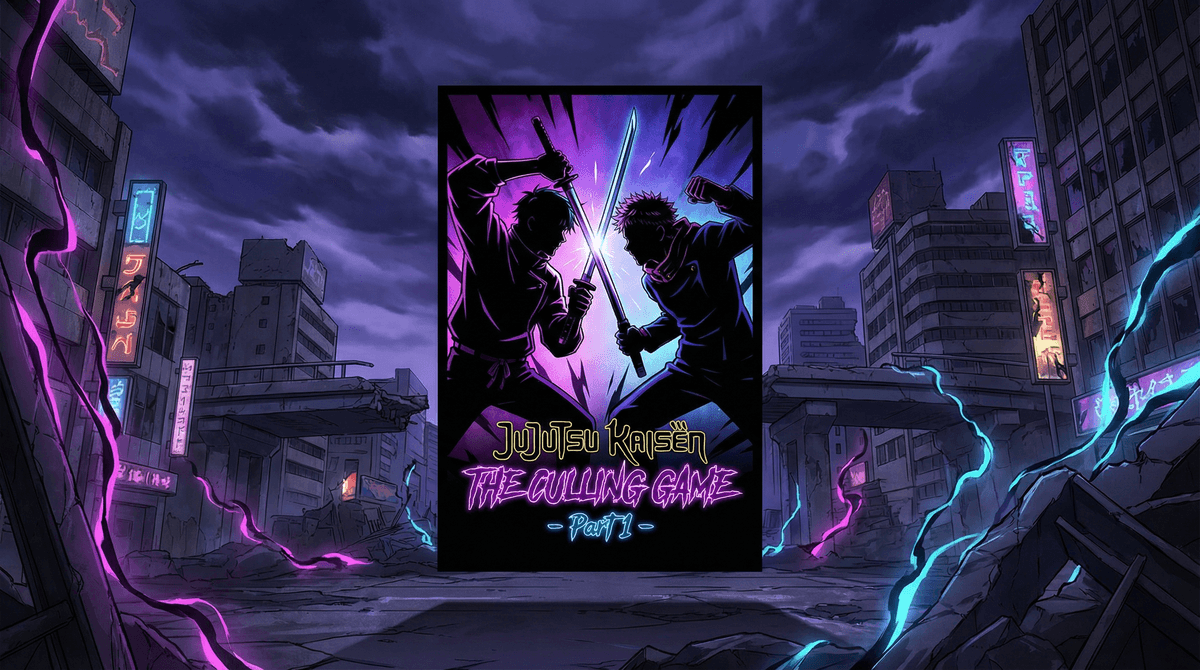
Jujutsu Kaisen Season 3: A Parent's Guide to the Culling Game
TL;DR: Jujutsu Kaisen Season 3 premieres January 8, 2026 on Crunchyroll, picking up with the intense Culling Game arc. This is a dark, violent anime rated TV-MA (think Squid Game meets X-Men) that's genuinely not appropriate for younger teens despite its massive popularity. If your 13+ is already invested in the series, now's the time to watch together and talk about the themes. Here's what you need to know before it drops.
If you haven't been paying attention to what your teen's been watching, Jujutsu Kaisen (often shortened to "JJK" by fans) is one of the biggest anime series of the past few years. Think of it as a supernatural battle anime where high school students fight cursed spirits—malevolent creatures born from negative human emotions. The main character, Yuji Itadori, swallows a cursed finger to gain power and protect his friends, which sets off a chain of increasingly dark events.
Screenwise Parents
See allSeason 1 introduced the world and characters. Season 2 delivered the Shibuya Incident arc, which... honestly traumatized a lot of viewers with its brutality and major character deaths. Now Season 3 is adapting the Culling Game arc, which is essentially a battle royale where sorcerers are forced to fight each other to survive.
The Culling Game arc is where the series shifts from "dark shonen anime" to "genuinely disturbing." The premise: a villain has trapped thousands of people (including civilians who were forced to become sorcerers) in a deadly game with complex rules. Players must kill each other to earn points, or they die. There's no opt-out.
This means:
- More graphic violence than previous seasons
- Psychological horror elements as characters grapple with being forced to kill
- Morally complex situations where "good guys" make terrible choices
- A general sense of hopelessness that pervades the arc
The manga readers know what's coming, and it's... a lot. If Season 2's Shibuya arc had your teen upset, Season 3 will be more intense.
Season 3 will be exclusively on Crunchyroll, which is the primary anime streaming platform. Here's what matters for parents:
The good: Crunchyroll clearly rates content (JJK is TV-MA) and doesn't autoplay into wildly different shows. About 42% of families in our community let kids use streaming platforms solo, but anime streaming is different from general streaming—the content ranges from G-rated slice-of-life to extremely violent.
The reality check: If your teen watches anime, they're probably already on Crunchyroll or finding episodes through... other means. The piracy situation with anime is real, and sometimes those sites have way worse ads and security issues than just subscribing to Crunchyroll. Learn more about anime streaming safety .
.
The YouTube factor: With 42% of kids in our community using YouTube solo, your teen is definitely seeing JJK content. Clips, analysis videos, spoilers, fan theories—it's everywhere. The algorithm loves anime content.
The official rating: TV-MA (17+)
The realistic breakdown:
- Under 13: No. Hard pass. The violence is graphic, the themes are mature, and the psychological horror elements are genuinely disturbing.
- Ages 13-15: Probably not, unless they're mature, you're watching together, and you've already established they can handle intense content. Even then, be prepared for nightmares and heavy conversations.
- Ages 16+: More appropriate, but still worth watching the first few episodes together to gauge their reaction and discuss themes.
What makes it TV-MA:
- Graphic violence including dismemberment, blood, and death
- Body horror (characters transform in disturbing ways)
- Dark psychological themes including PTSD, survivor's guilt, and moral ambiguity
- Some language (though the subtitled version is generally less explicit than the dubbed version)
- No sexual content (not that kind of anime)
The violence isn't gratuitous for shock value—it serves the story—but it's still a lot. Characters your teen has grown attached to will die, often brutally.
It's genuinely popular for good reasons. JJK has complex characters, smart writing, incredible animation, and explores real themes about mortality, sacrifice, and what it means to save people when you can't save everyone. It's not "just violence." The manga has sold over 90 million copies worldwide, and the anime adaptation is considered one of the best in recent years.
The fandom is massive. Your teen is probably seeing JJK content constantly—on TikTok (8% of our community), YouTube, Discord servers (4% usage), and at school. The characters are meme-ified, the fights are analyzed frame-by-frame, and the theories are endless. This isn't a niche interest.
The emotional investment is real. If your teen has watched Seasons 1 and 2, they're attached to these characters. Season 3 will put those characters through hell. Be prepared for genuine grief when favorite characters die or suffer. This isn't something to mock—these stories matter to them.
The themes are worth discussing. JJK tackles heavy questions: Is it worth sacrificing yourself to save others? What do you do when there are no good choices? How do you keep fighting when everything seems hopeless? These are valuable conversations to have with your teen, even if the delivery mechanism is a violent anime.
If they haven't watched JJK yet: This isn't the time to start. If they're interested, watch Season 1 together first and see how they handle it. The series gets progressively darker.
If they're caught up and excited:
- Watch the first episode together when it drops on January 8. Gauge their reaction and your comfort level.
- Establish check-ins. Make it clear they can talk to you if something bothers them, and create space for those conversations.
- Set boundaries around watching. Maybe they watch in common areas, or you watch together weekly, or they can watch solo but you discuss each episode afterward.
- Be aware of spoilers. The manga is finished, so spoilers are everywhere online. Talk about whether they want to avoid spoilers or if they're okay with knowing what's coming.
If you're uncomfortable with them watching: That's completely valid. TV-MA means what it says. But also recognize that if they're determined to watch, they'll find a way. Sometimes "let's watch together so we can talk about it" is more effective than a hard no that drives them to watch secretly.
Jujutsu Kaisen Season 3 is not for younger teens, full stop. It's dark, violent, and emotionally heavy. But for older teens who can handle mature content, it's also a well-crafted story that explores meaningful themes.
The average screen time in our community is 4.2 hours daily, and a significant chunk of that is streaming content. The question isn't whether your teen will encounter intense media—it's whether you'll be part of the conversation when they do.
If your 16-year-old wants to watch Season 3, consider making it a shared experience. Watch together, pause to discuss, and use it as a springboard for conversations about violence in media, moral complexity, and how fiction helps us process difficult emotions.
And if you decide it's not appropriate for your family? That's fine too. There are plenty of great anime alternatives that deliver compelling stories without the graphic violence.