

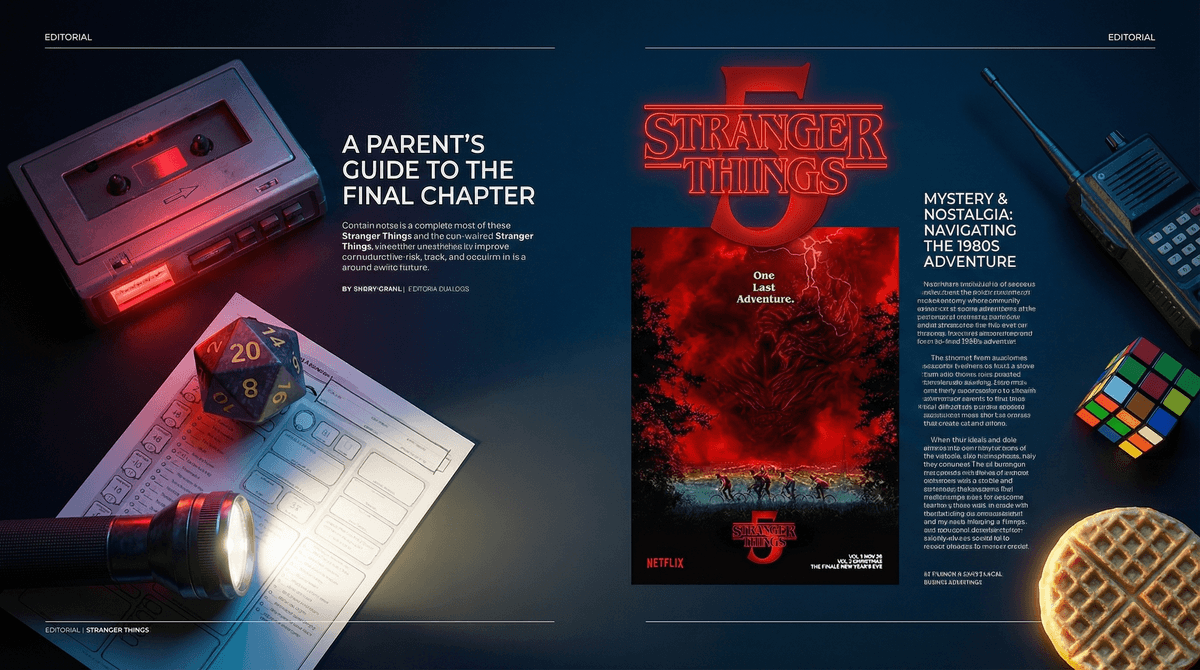
Is Stranger Things Safe for a 9-Year-Old?
No, Stranger Things is not appropriate for most 9-year-olds. Despite the nostalgic 80s vibes and kid protagonists, this show features intense horror elements, graphic violence, and psychological terror that escalates significantly across seasons. The TV-14 rating is generous—this skews closer to mature teen territory (14-15+).
If your 9-year-old is asking about it because "everyone at school" is watching, they're probably not—but we'll get into that. For actual kid-friendly sci-fi and adventure, check out alternatives to Stranger Things for younger kids.
Stranger Things isn't your typical "kids on bikes" adventure show, even though that's how it markets itself. Yes, the main characters start as middle schoolers. Yes, there's friendship and D&D references. But this is fundamentally a horror show that happens to feature young protagonists.
The horror escalates dramatically across seasons:
Season 1 opens with a child being dragged into an alternate dimension by a faceless monster, sets multiple scenes in a dark, decaying parallel universe filled with viscous substances and lurking creatures, and features extended sequences of a young girl with a shaved head being experimented on in a lab. There's a bathtub sensory deprivation scene that's genuinely disturbing, and the Demogorgon—the main monster—is nightmare fuel that appears suddenly and violently throughout.
By Season 3, we're watching people get literally melted into piles of organic matter that then merge into a giant flesh monster. Teens and adults are graphically possessed, their bodies contorting unnaturally. A major character is tortured on-screen. The body horror is no longer subtle.
Season 4 includes extended flashbacks to a massacre at a psychiatric hospital where children were murdered, bones snapping in graphic detail, eyes exploding, and a villain whose whole thing is psychologically torturing teens before killing them in the most visually disturbing ways the show has attempted yet.
This isn't "scary but fun" like Goosebumps or even A Quiet Place. This is sustained dread, jump scares designed for adult tolerance levels, and graphic violence that would get an R rating in theaters.
If your 9-year-old is begging to watch Stranger Things, it's usually because:
-
They've seen clips on TikTok or YouTube - The show's most iconic moments (Eleven's powers, the Demogorgon, "friends don't lie") circulate widely in edited, context-free clips that look way less intense than the actual show.
-
Older siblings are watching - This is the most common scenario. A 14-year-old is watching in the living room, and the 9-year-old catches glimpses or hears about it constantly.
-
The merch is everywhere - Target sells Stranger Things t-shirts, Funko Pops, and Halloween costumes. The branding makes it look like a kid show.
-
They genuinely think "everyone" is watching - But when you actually poll 4th graders, you'll find that maybe 2-3 kids in a class of 25 have seen it, and they're usually the kids with significantly older siblings or very permissive screen time policies.
The cultural penetration of Stranger Things makes it feel more ubiquitous among elementary schoolers than it actually is. Your kid isn't being left out of some universal shared experience.
Some parents reading this are thinking, "My 9-year-old loves horror and isn't easily scared." That's valid—some kids have higher tolerance for scary content. But Stranger Things isn't just about being scared in the moment.
Consider these factors beyond the jump scares:
Sustained psychological tension: This isn't a 90-minute movie where the scary part ends and you process it together. This is 8-9 hour seasons of compounding dread. The Upside Down is persistently threatening. Characters are in danger constantly. For a 9-year-old brain still developing emotional regulation, that's a lot to carry.
Complex trauma themes: The show deals with PTSD, government experimentation on children, parental abuse, grief, and survivor's guilt. These aren't background elements—they're central to character development. A 9-year-old who "can handle" a monster probably can't yet process Eleven's complex trauma or Hopper's depression arc with appropriate context.
Graphic violence with consequence: People don't just get scared—they die, often brutally. Bodies are shown. Blood is abundant. The show doesn't cut away. By Season 4, the violence is legitimately shocking even for adult viewers.
Romantic/sexual content: As the characters age into high school, there's increasing sexual content, drinking, and mature relationship dynamics that aren't appropriate for elementary schoolers.
If your kid genuinely loves scary content, there are much better options that provide age-appropriate thrills without the graphic violence and mature themes: Coraline, Goosebumps, The Spiderwick Chronicles, or even Gravity Falls for creepy mystery vibes.
Some parents consider watching Stranger Things with their 9-year-old as a compromise—you're there to pause, discuss, and fast-forward through the worst parts.
This can work for some families with some kids, but be realistic about what you're signing up for:
-
You'll be fast-forwarding a lot. The violence isn't confined to a few scenes—it's woven throughout. You're not watching a show together at that point; you're curating a highlight reel.
-
The scary images stick around. Even if you skip the goriest parts, the Demogorgon's face, the Mind Flayer, the Upside Down itself—these are designed by professional horror creators to be maximally disturbing. Your kid will see them in their mind when they're trying to fall asleep.
-
You're setting a precedent. If Stranger Things is okay at 9, what's the argument against other TV-14 or TV-MA content? You're making future boundary-setting harder.
-
The plot won't make sense. If you're skipping all the intense parts, the story becomes incomprehensible. The show's appeal is in the sustained tension and character development through trauma—remove that and you're left with disconnected scenes of kids riding bikes.
If you're going to co-view, wait until at least 12-13, when your kid has more emotional maturity and you're not spending half the runtime with your finger on the pause button.
If your kid wants the "kids on an adventure" vibe without the horror:
- The Mysterious Benedict Society - Gifted kids solving puzzles and saving the world, genuinely clever writing, zero nightmare fuel
- Percy Jackson (Disney+ series) - Mythology, adventure, humor, age-appropriate danger
- Avatar: The Last Airbender - Epic quest, complex characters, some scary moments but nothing graphic
- Gravity Falls - Mystery, humor, creepy elements that are actually age-appropriate for tweens
- Hilda - Magical creatures, adventure, beautifully animated, gentle stakes
For kids who specifically want scary:
- Goosebumps (either version) - Age-appropriate horror that doesn't traumatize
- Coraline - Genuinely creepy but designed for kids
- The House With a Clock in Its Walls - Magic, mystery, some scares, PG rating
Check out this guide to sci-fi shows for kids for more options.
When your 9-year-old asks why they can't watch Stranger Things, here's a framework that respects their feelings without over-explaining the graphic content:
"Stranger Things is made for teenagers and adults, not kids your age. It has really intense scary scenes and violence that aren't appropriate yet. The people who made it designed it to be scary for grown-ups—that's way more intense than what's good for a 9-year-old brain."
"I know it seems like everyone's watching it, but most kids your age actually aren't. The kids who are watching it usually have older siblings or different family rules than we have."
"When you're older—probably around 13 or 14—we can revisit it. Your brain will be more ready to handle scary content without it sticking with you in ways that aren't fun."
"Let's find something that has the adventure and friendship parts you're interested in, without the parts that are too intense."
Then actually follow through and find that alternative show. Half the battle is offering something compelling, not just saying no.
If they push back with "but I can handle it," you can acknowledge that: "I believe you think you can handle it, and you might be braver than a lot of kids. But being able to watch something and it being good for you are different things. My job is to make sure the media you're watching is actually right for where you are developmentally, not just whether you can get through it without crying."
Stranger Things is not appropriate for 9-year-olds. The TV-14 rating is the bare minimum, and honestly, it's better suited for 15+. The horror is genuine, the violence is graphic, and the psychological themes are complex.
Your kid will survive not watching it. They're not missing out on some essential cultural experience—they're avoiding nightmares, graphic violence, and content that's genuinely designed for much older audiences.
The good news: There are dozens of incredible shows that offer adventure, mystery, friendship, and even age-appropriate scares without the trauma. Gravity Falls, Avatar: The Last Airbender, Hilda—these aren't consolation prizes. They're genuinely great television that respects your kid's intelligence without exposing them to content they're not ready for.
Save Stranger Things for a few years from now. When your kid is 13 or 14, you can revisit it together, and it'll actually be an appropriate shared experience rather than an exercise in covering their eyes every ten minutes.
- Browse sci-fi and adventure shows for kids to find age-appropriate alternatives
- Check out how to talk to kids about scary media for more conversation strategies
- Read about age-appropriate horror for tweens when they're ready for slightly scarier content
- Ask our chatbot specific questions about what makes a show too scary for elementary schoolers
