

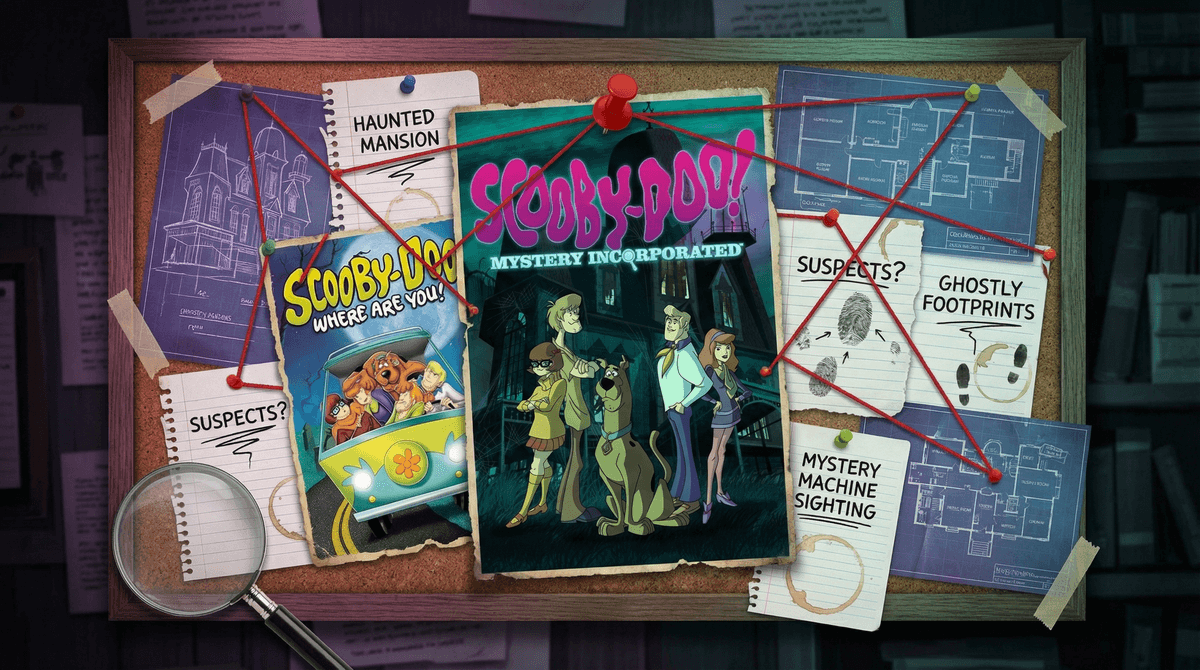
So you thought you were putting on a classic Scooby-Doo cartoon for your kids, and suddenly you're watching what feels like Twin Peaks meets Riverdale with a talking dog. Welcome to Scooby-Doo: Mystery Incorporated.
This 2010-2013 Cartoon Network series is not your Saturday morning Scooby-Doo. While it features the familiar gang solving mysteries in Crystal Cove, this version has ongoing storylines, genuine horror elements, complex character development, romantic drama, and a mythology that gets progressively darker as the series goes on. Think of it as what happens when the writers who grew up on classic Scooby-Doo get to make a version for themselves—and their kids come along for the ride.
The show ran for two seasons (52 episodes total) and has a TV-Y7-FV rating, which technically means it's approved for kids 7 and up. But here's the thing: that rating is doing a lot of heavy lifting.
The original Scooby-Doo formula was comforting in its predictability: gang arrives, mystery happens, they split up, chase scene with groovy music, unmask the villain who's always the grumpy caretaker, "and I would have gotten away with it too!" The end.
Mystery Incorporated throws that formula in a blender:
Serialized storytelling: There's an overarching mystery about the original mystery-solving group that disappeared, ancient curses, and a genuinely creepy conspiracy involving the entire town. Kids can't just drop in and out—you need to watch in order.
Relationship drama: Fred and Daphne's will-they-won't-they, Shaggy and Velma dating (yes, really), jealousy, breakups, and emotional complexity that rivals teen dramas. Your 7-year-old probably doesn't care about Fred's commitment issues.
Actually scary moments: Not "guy in a mask" scary. We're talking body horror, psychological manipulation, characters getting genuinely hurt, and imagery that lingers. The show doesn't shy away from creating atmosphere and dread.
Darker themes: Parental manipulation (Fred's relationship with his "dad" is messed up), corporate corruption, obsession, betrayal, and some legitimately tragic backstories. Season 2 gets into cosmic horror territory that would make H.P. Lovecraft nod approvingly.
Meta humor and references: The show is packed with references to horror movies, other Hanna-Barbera properties, and jokes aimed squarely at adults who grew up with the original. Kids will miss 90% of these.
Despite all this, many kids do genuinely enjoy Mystery Incorporated, especially:
Ages 10-14: This is the sweet spot. Kids old enough to appreciate serialized storytelling, handle genuine scares, and enjoy the character development without needing the simpler episodic format.
Kids who like "real" mysteries: If your kid has graduated from Encyclopedia Brown and is ready for something with actual stakes and consequences, this delivers.
Tweens ready for more mature content: This can be a great stepping stone between kids' cartoons and teen shows. It's got edge without being inappropriate, complexity without being incomprehensible.
The animation is genuinely good, the voice acting is excellent (Frank Welker has been voicing Fred since 1969 and Scooby since 2002), and when the show leans into its mystery-solving, it's really engaging.
The age rating is misleading: TV-Y7-FV technically means "directed to older children" with fantasy violence. But this show pushes that rating to its absolute limit. Some episodes feel more like TV-PG territory.
It gets progressively darker: Season 1 is relatively tame. Season 2 goes places. There's an episode where characters are literally consumed by an ancient evil entity. The finale involves apocalyptic stakes and genuine peril.
The romance stuff is a lot: If you're expecting classic Scooby-Doo dynamics, be prepared for Fred being emotionally unavailable because of his obsession with traps (not a joke), Velma being jealous and manipulative, and Daphne dealing with genuine heartbreak. It's well-written, but it's not what you signed up for.
Some genuinely creepy imagery: The show uses shadows, atmosphere, and creature design effectively. There are episodes that gave me the creeps, and I'm an adult who loves horror. Your sensitive 7-year-old might have nightmares.
It rewards binge-watching: This isn't background noise. It's a show that demands attention and benefits from watching episodes close together. That means more screen time investment than typical cartoons.
Ages 6-8: Probably not. The serialized format will frustrate them, the scary elements might be too intense, and they won't care about the relationship drama. Stick with classic Scooby-Doo, Bluey, or even the newer Scooby-Doo and Guess Who? which is much more traditional.
Ages 9-11: Maybe, depending on the kid. If they handle scary content well, enjoy serialized shows like Gravity Falls or The Owl House, and are ready for more complex storytelling, this could work. Watch together and be ready to skip episodes if needed.
Ages 12+: This is really the ideal audience. Tweens and young teens will appreciate the sophistication, handle the scares, and actually care about the character arcs. It's a great show for this age group.
The caveat: Every kid is different. Some 8-year-olds will be fine; some 12-year-olds will find it too intense. You know your kid best.
If you're considering this show:
Watch a few episodes first: Start with early Season 1 episodes to get a feel for the tone. "Beware the Beast from Below" (the pilot) and "The Creeping Creatures" are good indicators.
Co-view, especially early on: Watch together so you can gauge reactions and answer questions about the ongoing plot. This also lets you fast-forward through anything that feels too intense.
Be ready for questions: The show deals with complicated family dynamics, toxic relationships, and moral ambiguity. Your kid might have questions about why Fred's dad is so manipulative or why Velma is acting jealous.
Consider it a gateway: If your kid loves it, you've got a path to shows like Gravity Falls, Avatar: The Last Airbender, and other sophisticated animated series. Check out alternatives to Scooby-Doo for more age-appropriate mystery shows.
Set expectations: If younger siblings want to watch because "it's Scooby-Doo," be clear that this version is different and might be too scary for them. This prevents the 6-year-old from wandering in during a particularly creepy episode.
Is Scooby-Doo: Mystery Incorporated actually for kids? Yes, but older kids than the rating suggests.
This is a genuinely well-crafted show that respects its audience's intelligence and isn't afraid to take risks. But it's not the comfort food cartoon you might be expecting when you see "Scooby-Doo" in the title. It's more sophisticated, darker, and more emotionally complex than any previous iteration of the franchise.
For kids 10 and up who can handle scares and serialized storytelling, it's actually excellent. For younger kids or those expecting traditional Scooby-Doo, you'll be better served by the many other Scooby series that stick closer to the classic formula.
The show is currently streaming on various platforms (availability changes), so you can easily preview it before committing. And honestly? If you grew up with Scooby-Doo, you might find yourself genuinely enjoying this one—even without the kids.
Just maybe don't start it at bedtime.
- Preview first: Watch 2-3 episodes from Season 1 without your kids to gauge appropriateness
- Check out the Scooby-Doo: Mystery Incorporated guide for episode-by-episode breakdowns and specific content warnings
- Looking for actual kid-friendly Scooby? The classic "Where Are You!" series and "What's New, Scooby-Doo?" are much safer bets for younger viewers
- Want more sophisticated animation for tweens? Explore shows like Gravity Falls that nail this same balance